

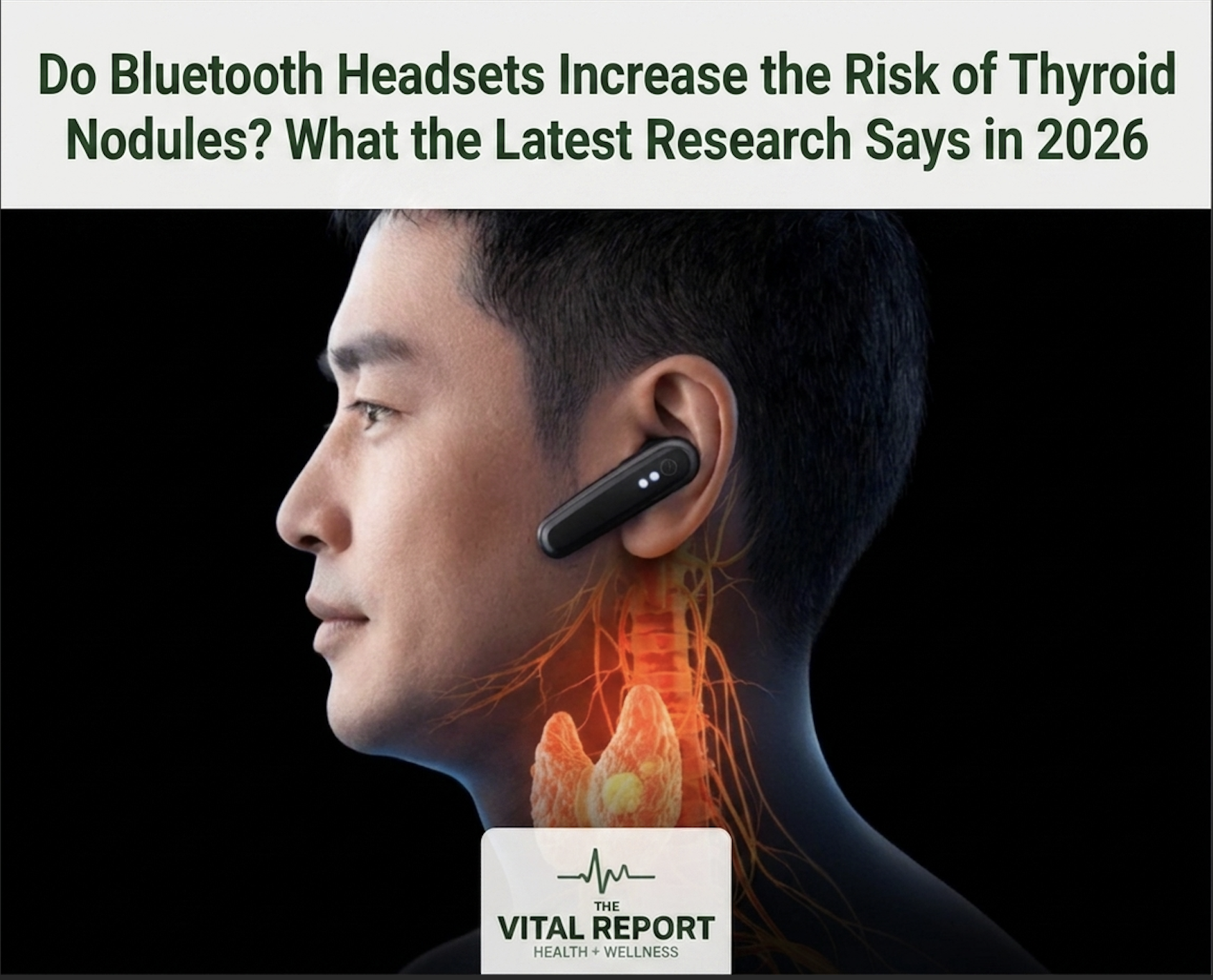
Bluetooth headphones and wireless earbuds have become part of everyday life. Millions of people wear them for work, exercise, commuting, and entertainment, often for several hours every day. As their popularity has grown, so have questions surrounding their long-term health effects. One topic that has recently attracted attention is whether Bluetooth headsets could be associated with thyroid nodules.

A 2024 study published in Scientific Reports sparked discussion after researchers reported an association between frequent Bluetooth headset use and an increased prevalence of thyroid nodules. While the findings are intriguing, they should be interpreted carefully. The study does not prove that Bluetooth devices cause thyroid nodules, but it does raise important questions that deserve further investigation.
As more consumers become interested in preventive health, this research highlights the importance of understanding both the potential risks and the limitations of emerging scientific evidence.
For readers interested in other technologies that are reshaping preventive healthcare, check out Vital Report’s article on Neko Health, which explores how comprehensive whole body scans are changing early disease detection.
What Are Thyroid Nodules?
Thyroid nodules are small growths that develop within the thyroid gland, located at the front of the neck. They are incredibly common, particularly as people age. In fact, many people have thyroid nodules without ever knowing it because they often produce no symptoms.
Most thyroid nodules are benign, meaning they are not cancerous. However, physicians may recommend ultrasound imaging, blood work, or occasionally a biopsy to determine whether additional evaluation is necessary.
Risk factors for thyroid nodules include:
- Increasing age
- Female sex
- Family history
- Iodine deficiency
- Prior radiation exposure
- Certain autoimmune thyroid conditions

Why Are Researchers Studying Bluetooth Devices?
Bluetooth devices communicate using low-power radiofrequency electromagnetic fields (RF-EMFs). These emissions are substantially weaker than those produced by mobile phones because Bluetooth operates at much lower power levels.
Although current international safety standards consider Bluetooth exposure to be well below established limits, researchers continue studying whether chronic, long-term exposure could have subtle biological effects that are not yet fully understood.
As wireless technology becomes increasingly integrated into daily life, understanding any potential long-term health implications remains an active area of research.
What Did the 2024 Study Find?
The 2024 Scientific Reports study evaluated adults undergoing thyroid ultrasound examinations while also collecting information about Bluetooth headset use.
Researchers reported that individuals who frequently used Bluetooth headsets appeared more likely to have thyroid nodules than participants who reported little or no Bluetooth headset use.
Importantly, the study identified an association, not proof that Bluetooth exposure caused the nodules. Observational studies can identify patterns between two factors but cannot establish cause and effect because many other variables may influence the results.
Lifestyle, occupation, age, overall technology use, environmental exposures, and other health conditions may all contribute to differences observed between groups.
Why the Study Has Limitations
While the findings generated headlines, several limitations are important to understand.
The researchers relied on self-reported Bluetooth headset use, which introduces the possibility of inaccurate recall.
The study population also represented one specific group rather than a broad global population, making it difficult to generalize the findings.
Perhaps most importantly, observational research cannot eliminate every potential confounding factor. People who wear Bluetooth headsets for several hours each day may differ from non-users in numerous ways unrelated to Bluetooth exposure itself.
Because of these limitations, additional studies from multiple research groups are needed before any firm conclusions can be drawn.
What Does the Broader Scientific Community Say?
Current evidence has not established that Bluetooth headsets cause thyroid nodules.
Bluetooth devices emit radiofrequency energy at extremely low power levels, typically far below those produced by smartphones during active phone calls.
Major health organizations continue to state that current consumer wireless devices operating within established safety guidelines have not been shown to cause thyroid disease.
That does not mean research should stop. Instead, scientists continue investigating whether long-term cumulative exposure to various forms of wireless technology could have biological effects that existing studies have not yet fully captured.
Science often advances through exactly this process: one study raises an interesting question, and additional research either strengthens or weakens the initial findings over time.
Should Consumers Be Concerned?
Based on today’s evidence, there is no reason for most people to panic or immediately stop using Bluetooth headphones.
However, individuals who prefer to minimize unnecessary exposure can easily adopt practical habits without significantly affecting convenience.
These include:
- Taking listening breaks throughout the day.
- Using speakerphone when appropriate.
- Alternating between earbuds and over-ear headphones.
- Removing earbuds when they are not actively being used.
- Limiting continuous all-day wear when possible.
These habits may improve comfort regardless of any future research findings.
Popular Bluetooth Headset Brands
Consumers looking for high-quality wireless audio often choose products from companies including:
These manufacturers continue investing heavily in battery efficiency, connectivity, and ergonomic design while complying with international wireless safety standards.
The Bigger Picture
The Bluetooth-thyroid discussion reflects a larger trend within preventive healthcare.
Consumers today are asking more questions about environmental exposures, wearable technology, air quality, nutrition, sleep, and metabolic health than ever before.
Companies developing advanced health monitoring technologies are helping individuals better understand their overall wellness through continuous data collection, advanced imaging, and comprehensive diagnostics.
Rather than focusing on fear, experts increasingly recommend concentrating on well-established health behaviors such as regular exercise, quality sleep, balanced nutrition, stress management, and routine preventive medical care.
Frequently Asked Questions
Can Bluetooth headphones cause thyroid nodules?
Current research has not demonstrated that Bluetooth headphones cause thyroid nodules. One observational study reported an association, but additional research is needed to determine whether any causal relationship exists.
Are Bluetooth devices considered safe?
Current Bluetooth products operate within internationally recognized safety standards and emit very low levels of radiofrequency energy compared with many other wireless devices.
Should I stop using wireless earbuds?
Most experts do not recommend discontinuing Bluetooth headphone use based solely on the current evidence. Individuals who remain concerned can reduce usage or alternate listening methods while additional research continues.

Final Thoughts
The 2024 study examining Bluetooth headset use and thyroid nodules has generated understandable interest because wireless devices have become an everyday part of modern life. While the research identified an association worth exploring, it should not be interpreted as evidence that Bluetooth headsets directly cause thyroid nodules.
As with many emerging areas of health research, one study rarely provides definitive answers. Future investigations involving larger populations, longer follow-up periods, and stronger study designs will help clarify whether the observed relationship represents a true biological effect or simply reflects other underlying factors.
Until then, consumers should stay informed, follow evolving research, and prioritize evidence-based preventive healthcare while continuing to enjoy the convenience that Bluetooth technology provides.