

The Most Important Nutrition Debate Isn’t About Carbs or Fat
For decades, nutrition debates have focused on individual nutrients.
Should you eat more protein?
Are carbohydrates the problem?
Is saturated fat dangerous?
How much sugar is too much?
While these questions remain important, a growing number of researchers believe we may have been overlooking a bigger issue altogether.
The focus is shifting from nutrients to food processing.
Specifically, scientists are paying closer attention to a category known as ultra-processed foods.
Over the last several years, a growing body of evidence has linked high consumption of ultra-processed foods to obesity, metabolic dysfunction, cardiovascular disease, type 2 diabetes, and other chronic health conditions.
The findings have sparked intense discussion among nutrition researchers, physicians, and public health experts.
Some now argue that the degree of processing may be just as important as calories, macronutrients, or ingredient labels.
So what exactly are ultra-processed foods?
And what does the science actually say about their impact on metabolic health?
Here’s what we know so far.
What Are Ultra-Processed Foods?
Not all processed foods are unhealthy.
In fact, nearly all foods undergo some level of processing.
Frozen vegetables, canned beans, yogurt, and olive oil are technically processed foods.
Ultra-processed foods represent a distinct category.
Researchers commonly use the NOVA classification system, which categorizes foods based on how extensively they have been modified from their original state.
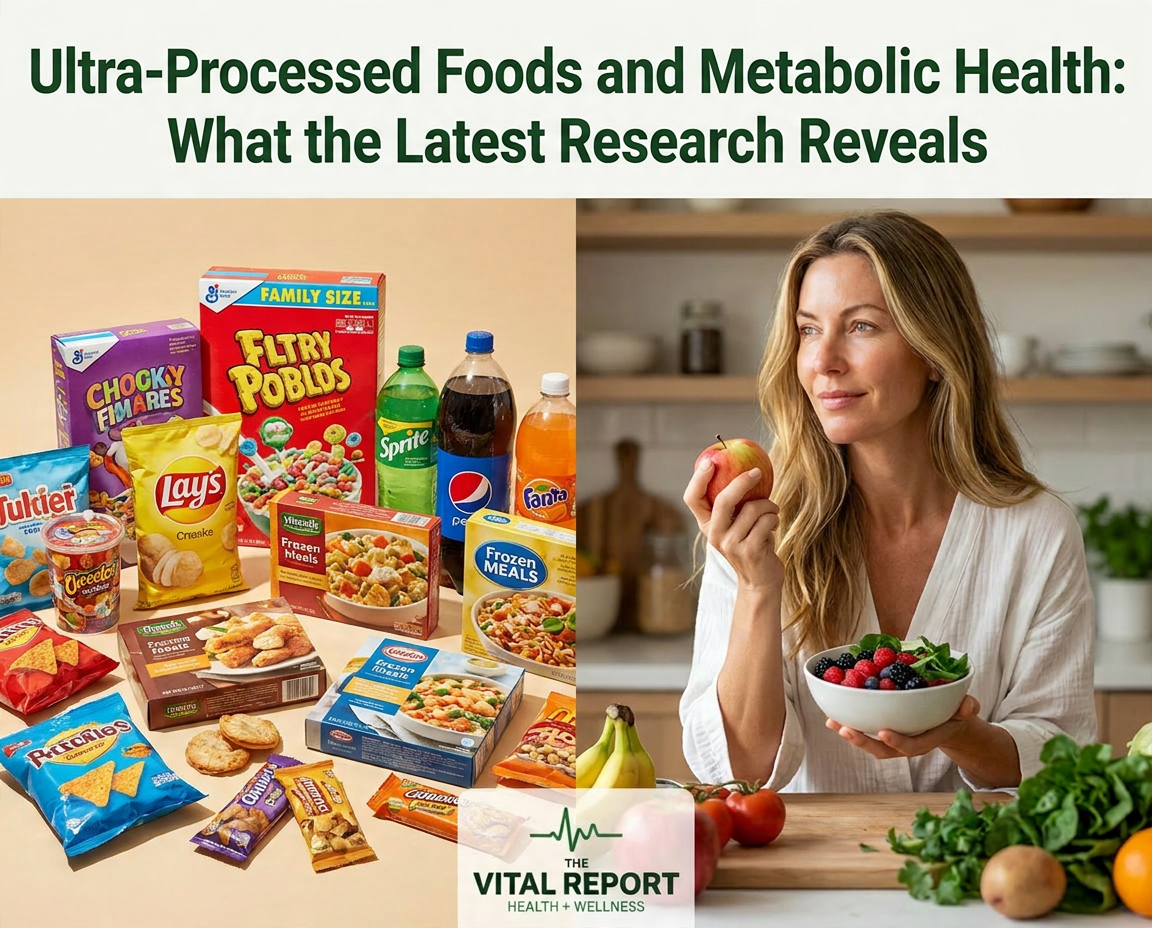
Ultra-processed foods are typically industrial formulations made primarily from refined ingredients, additives, flavor enhancers, preservatives, and substances extracted from foods rather than whole foods themselves.
Common examples include:
- Sugary breakfast cereals
- Soft drinks
- Packaged snack foods
- Candy
- Fast food items
- Sweetened yogurts
- Energy drinks
- Frozen ready-to-eat meals
- Processed meats
- Commercial baked goods
These products are often engineered to maximize convenience, shelf life, taste, and palatability.
They are also increasingly dominating modern food environments.
Why Researchers Are Concerned
The concern isn’t simply that ultra-processed foods contain more calories.
Many researchers believe these foods may affect health through multiple pathways simultaneously.
Ultra-processed foods tend to be:
- Lower in fiber
- Higher in added sugars
- Higher in refined carbohydrates
- More energy dense
- Easier to overconsume
- Less satiating
Additionally, they often contain combinations of ingredients rarely encountered in nature.
Scientists are investigating whether these characteristics may influence appetite regulation, metabolism, gut health, and inflammation.
The result is growing interest in understanding how food processing affects human physiology.
The Rise of Ultra-Processed Foods
The modern food system has changed dramatically over the last century.
Historically, most diets consisted primarily of minimally processed foods prepared at home.
Today, ultra-processed foods account for a significant portion of daily calorie intake in many countries.
In some populations, estimates suggest that more than half of total calories come from ultra-processed products.
This shift has occurred alongside increases in:
- Obesity rates
- Type 2 diabetes
- Metabolic syndrome
- Cardiovascular disease
While correlation does not prove causation, researchers have become increasingly interested in whether these trends may be connected.
What Is Metabolic Health?
Before discussing the research, it’s important to understand metabolic health.
Metabolic health refers to how efficiently the body regulates energy, blood sugar, and other physiological processes.
Key markers include:
- Blood glucose
- Insulin sensitivity
- Blood pressure
- Triglycerides
- HDL cholesterol
- Body composition
When metabolic health begins to decline, individuals may develop insulin resistance, increased abdominal fat, elevated blood sugar, and chronic inflammation.
Over time, these changes increase the risk of numerous chronic diseases.
Because metabolic dysfunction often develops gradually, researchers are increasingly focused on identifying lifestyle factors that contribute to its progression.
Diet remains one of the most important.
The Landmark Study That Changed the Conversation
One of the most influential studies on ultra-processed foods was conducted by researchers at the National Institutes of Health.
Participants were assigned either an ultra-processed diet or a minimally processed diet.
Importantly, both diets were matched for calories, sugar, fat, fiber, and other nutritional variables.
The results surprised many researchers.
Participants consuming the ultra-processed diet ate significantly more calories and gained weight.
Those consuming minimally processed foods naturally ate less and lost weight.
This suggested that factors beyond calorie content alone may influence eating behavior.
The study helped shift the conversation from simply “what” people eat to “how” foods are constructed and consumed.
Why Ultra-Processed Foods May Promote Overeating
One of the strongest theories involves satiety.
Many ultra-processed foods are designed to be highly palatable.
They often combine:
- Fat
- Sugar
- Salt
- Refined starches
in ways that stimulate reward pathways in the brain.
Researchers sometimes refer to this phenomenon as hyper-palatability.
Because these foods require less chewing and digest more quickly, they may not trigger the same fullness signals as whole foods.
As a result, people may consume more calories before feeling satisfied.
This could help explain why diets rich in ultra-processed foods are often associated with weight gain.
The Blood Sugar Connection
Metabolic health depends heavily on glucose regulation.
Many ultra-processed foods contain rapidly digestible carbohydrates that can cause substantial increases in blood sugar levels.
Repeated glucose spikes may contribute to:
- Insulin resistance
- Increased hunger
- Energy fluctuations
- Elevated triglycerides
Over time, poor glucose regulation can place significant strain on metabolic systems.
Researchers continue to investigate whether reducing ultra-processed food intake can improve blood sugar control and insulin sensitivity.
Early evidence suggests it may.
Ultra-Processed Foods and Inflammation
Inflammation has become a major focus of longevity and chronic disease research.
While acute inflammation helps the body heal and defend itself, chronic low-grade inflammation can contribute to numerous health problems.
Researchers have linked chronic inflammation to:
- Cardiovascular disease
- Type 2 diabetes
- Cognitive decline
- Obesity
- Certain cancers
Some studies have found associations between high ultra-processed food consumption and elevated inflammatory markers.
The reasons are likely multifactorial.
Potential contributors include:
- Poor nutrient density
- Excess calorie intake
- Gut microbiome disruption
- Blood sugar instability
Although more research is needed, inflammation remains one of the most frequently discussed mechanisms.
What Happens to the Gut Microbiome?
The microbiome has become one of the most exciting areas of health research.
Trillions of microorganisms reside within the digestive tract, influencing metabolism, immunity, and overall wellness.
Many ultra-processed foods contain limited amounts of dietary fiber, which serves as fuel for beneficial gut bacteria.
At the same time, diets rich in processed products may reduce microbial diversity.
Researchers are investigating how these changes influence:
- Gut barrier integrity
- Inflammation
- Appetite regulation
- Metabolic health
Emerging evidence suggests that diet quality plays a major role in shaping the microbial ecosystem.
This has made gut health an important part of the ultra-processed food conversation.
Are All Processed Foods Bad?
Absolutely not.
This distinction is often lost in public discussions.
Processing itself is not the problem.
Many processed foods support healthy eating patterns.
Examples include:
- Frozen vegetables
- Greek yogurt
- Canned fish
- Nut butters
- Whole-grain breads
- Frozen fruit
These foods can be nutritious, convenient, and valuable components of a healthy diet.
The concern centers specifically on heavily industrialized products that are far removed from their original food sources.
Understanding this distinction is critical.
Why Convenience Matters
One reason ultra-processed foods dominate modern diets is convenience.
They are:
- Affordable
- Accessible
- Shelf-stable
- Quick to prepare
For many people, these advantages are significant.
Nutrition recommendations that ignore economic realities are unlikely to be successful.
Researchers increasingly recognize that improving public health requires practical solutions rather than unrealistic expectations.
The goal is not necessarily eliminating all processed foods.
Instead, many experts advocate gradually increasing the proportion of minimally processed foods within the diet.
What About Weight Loss?
Weight loss remains one of the most common reasons people reevaluate their diets.
Research consistently shows that dietary patterns emphasizing whole foods tend to support better weight management.
Several factors may contribute:
- Increased satiety
- Higher fiber intake
- Better blood sugar regulation
- Reduced calorie density
- Improved food quality
Importantly, weight loss is not the only goal.
Many researchers view metabolic health improvements as equally valuable, even when body weight changes are modest.
Practical Ways to Reduce Ultra-Processed Foods
For most people, dramatic dietary overhauls are unnecessary.
Small, sustainable changes often produce the best long-term results.
Strategies may include:
Prioritize Protein
Protein helps support satiety and metabolic health.
Good sources include:
- Eggs
- Fish
- Poultry
- Greek yogurt
- Legumes
Increase Fiber Intake
Fiber-rich foods support both gut health and blood sugar regulation.
Examples include:
- Vegetables
- Fruits
- Beans
- Lentils
- Whole grains
Build Meals Around Whole Foods
Rather than focusing on restriction, focus on adding nutrient-dense foods.
A plate centered around whole foods naturally leaves less room for heavily processed products.
Read Ingredient Lists
Long ingredient lists are not automatically unhealthy, but they can provide useful context about the degree of processing.
What the Research Still Doesn’t Know
Despite growing evidence, several questions remain.
Researchers continue investigating:
- Which components of ultra-processed foods are most problematic
- Whether certain products are more harmful than others
- Long-term effects on different populations
- Interactions with genetics and microbiome composition
Nutrition science is rarely simple.
Individual responses can vary significantly.
However, the overall direction of the evidence has become increasingly consistent.
Diets emphasizing minimally processed foods appear to support better metabolic health outcomes.
The Future of Nutrition Research
The conversation around ultra-processed foods reflects a larger shift in nutrition science.
Researchers are moving beyond isolated nutrients and exploring broader dietary patterns.
Questions such as:
- How does food structure influence metabolism?
- How does processing affect satiety?
- What role does the microbiome play?
- How do eating patterns influence longevity?
are becoming central to modern health research.
The answers may reshape nutritional recommendations for years to come.
The Bottom Line
Ultra-processed foods have become one of the most discussed topics in modern nutrition research.
While not all processed foods are harmful, growing evidence suggests that diets heavily reliant on ultra-processed products may negatively affect metabolic health, appetite regulation, inflammation, and long-term disease risk.
The science continues to evolve, but one message appears increasingly clear.
The healthiest dietary patterns consistently emphasize foods that look more like their original ingredients and less like industrial formulations.
That doesn’t mean perfection is necessary.
Occasional convenience foods can fit within a healthy lifestyle.
But as researchers continue to investigate the relationship between food processing and human health, the importance of whole, minimally processed foods remains one of the most consistent findings in nutrition science.
For those seeking better metabolic health, longevity, and overall wellness, the simplest advice may still be the most effective: eat more real food.