


Speedo has spent nearly a century designing equipment to help swimmers move faster through the water.
Now it wants to tell them exactly how they’re doing it.
Speedo has launched Speedo iQ, a new smart-goggle system that brings detailed performance tracking directly into the company’s popular Vanquisher 3.0 goggles.
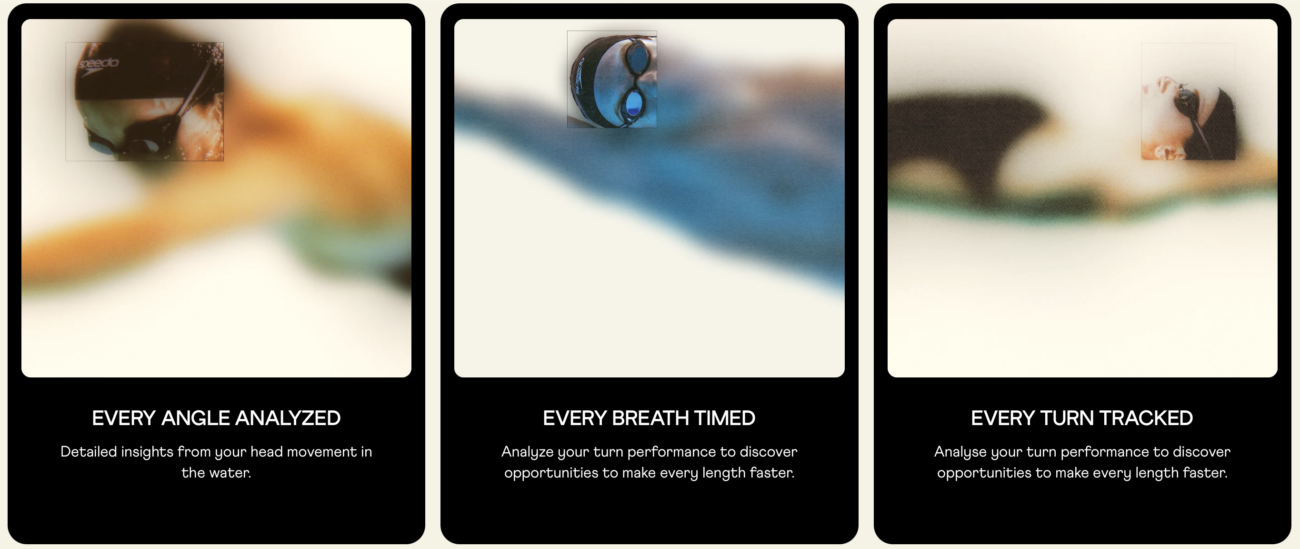
The technology can track everything from pace and distance to breathing patterns, head position and turns across all four competitive strokes.
But there’s one particularly important difference between Speedo iQ and some of the smart goggles already on the market.
There is no screen inside the goggles.
Instead of displaying numbers in front of a swimmer’s eye during a workout, Speedo iQ quietly records performance in the background. After the swim, the data syncs with the Speedo iQ app, where athletes can replay sessions, identify patterns and see where they may be losing time.
And unlike many pieces of wearable fitness technology, these goggles aren’t limited to training.
Speedo iQ is World Aquatics approved for competition.
That means swimmers can collect performance data during an actual race—not just practice.

What Is Speedo iQ?
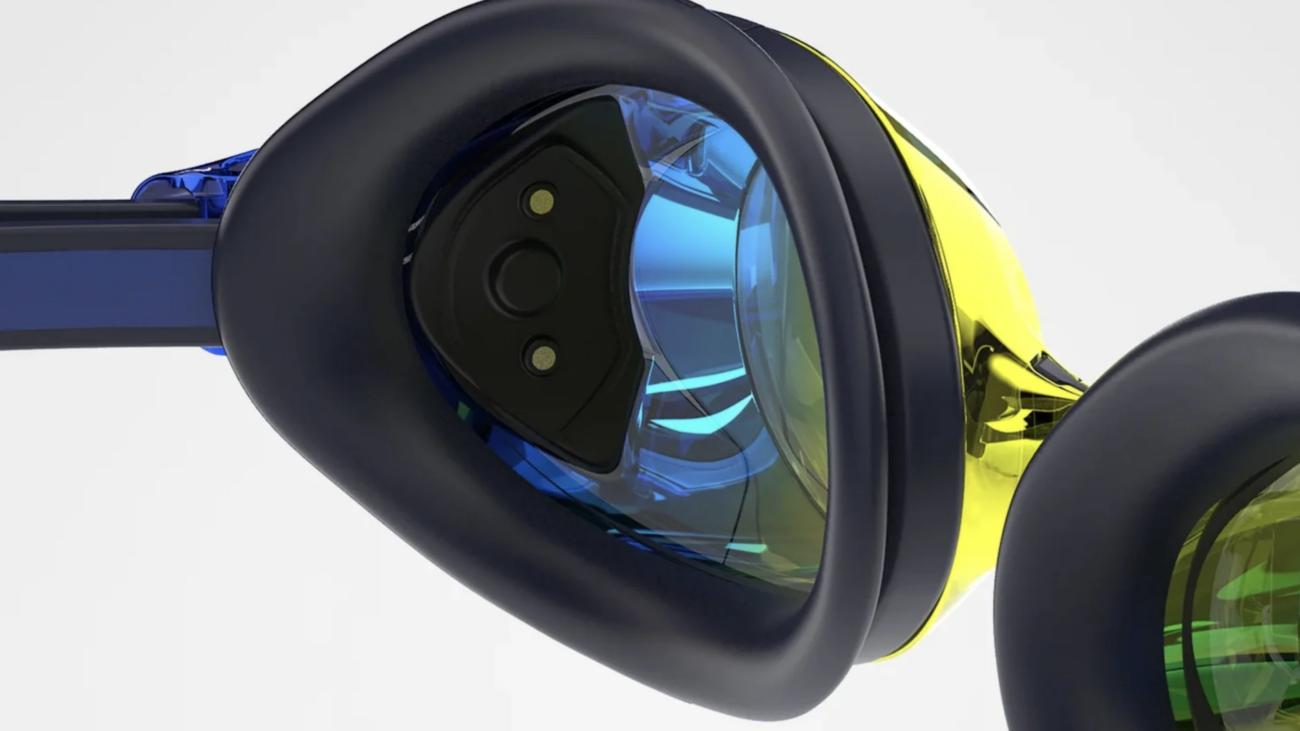
Speedo iQ combines the company’s Vanquisher 3.0 goggles with a removable sensor module and companion smartphone app.
The module sits inside the goggles and uses swim-specific sensors to record how an athlete moves through the water.
Speedo says the system can track metrics including:
- Pace
- Distance
- Stroke
- Distance per stroke
- Head position
- Breathing
- Breathing angle
- Turn performance
- Turn time
- Carry angle
It works across freestyle, backstroke, breaststroke and butterfly.
Once the swimmer leaves the pool, the session syncs to the Speedo iQ app.
That’s where the raw information becomes more useful.
The app lets swimmers review their performance, compare sessions, identify patterns and receive targeted recommendations for areas that may need improvement.
Instead of simply answering How fast did I swim?, Speedo is trying to answer a more complicated question:
Why did I swim that fast?
Your Stopwatch Can’t Tell You Everything
Swimming has always been obsessed with time.
A stopwatch can tell you exactly how long it took to swim 100 meters.
It can’t necessarily tell you why one 100-meter swim was faster than another.
Maybe the swimmer’s turn was tighter.
Maybe their breathing changed.
Maybe their head position created more drag.
Maybe their distance per stroke improved.
Maybe they lost momentum coming off the wall.
Those tiny differences can become significant in competitive swimming, where races can be decided by fractions of a second.
Speedo iQ is designed to capture more of that information.
Instead of looking only at the final time, swimmers can break down the individual components that produced it.
The Biggest Difference: There’s No Display
Speedo’s approach becomes particularly interesting when compared with FORM, one of the best-known companies already making smart swim goggles.
FORM’s Smart Swim goggles use an augmented-reality display to put metrics directly into the swimmer’s field of view.
Depending on the model and setup, swimmers can see information such as pace, distance, stroke rate and heart rate without stopping.
Speedo went the other direction.
There is no heads-up display.
There are no numbers floating in front of your eye while you’re racing.
Instead, the technology operates in the background.
You swim.
Speedo iQ records.
Then you analyze.
That may sound less futuristic, but for competitive swimmers it has a potential advantage: less distraction.
During a race, an athlete doesn’t necessarily want another screen demanding attention.
Speedo describes the system as "invisible tech, visible insight."
That’s a surprisingly good description of what the company is trying to accomplish.
And You Can Actually Race in Them
This may be Speedo iQ’s most important feature.
The Track versions of Speedo iQ are approved by World Aquatics, meaning competitive swimmers can use the goggles during sanctioned races.
That’s significant because it changes the type of data athletes can collect.
Training data is useful.
Race data can be even more revealing.
Technique can change under pressure.
Breathing patterns can change.
Turns can get rushed.
Stroke efficiency can deteriorate as fatigue sets in.
An athlete might execute something perfectly during practice and differently when racing at full intensity.
Speedo iQ potentially gives swimmers and coaches another way to compare the two.
How did you swim in practice?
Versus:
How did you actually swim when the race mattered?
The Removable Sensor Is a Smart Design Choice
There’s another feature that could make Speedo iQ more practical over time.
The tracking technology isn’t permanently built into the goggles.
The sensor module is removable.
When the goggles eventually wear out, swimmers can remove the technology and transfer it rather than replacing the entire smart system.
That’s particularly relevant for competitive swimmers.
Goggles are consumable equipment.
Straps stretch.
Seals wear down.
Lenses scratch.
Anti-fog coatings deteriorate.
Building expensive electronics permanently into something that eventually needs replacing isn’t ideal.
Speedo separates the two.
The goggles can wear out.
The technology can stay.
Speedo Is Entering a Much Bigger Wearable Race
Smart swim goggles are part of a much larger transformation happening across sports.
Athletes increasingly expect equipment to do more than simply perform its original function.
Watches became health monitors.
Rings became sleep trackers.
Shoes gained sensors.
Cycling computers became performance platforms.
And now goggles can analyze swimming technique.
Garmin has built advanced swimming metrics into multisport and swimming watches.
WHOOP has centered its platform around strain, recovery and physiological readiness.
Apple has continued expanding swim and health tracking through Apple Watch.
COROS has built GPS watches around detailed endurance-performance data.
And FORM has already demonstrated that swimmers are willing to put sophisticated technology directly into their goggles.
Speedo’s entrance is different because of the company’s history.
This isn’t a wearable startup moving into swimming.
It’s one of swimming’s most recognizable brands moving into wearables.
From Fitness Tracking to Technique Tracking
The first generation of fitness wearables largely focused on quantity.
How many steps?
How many miles?
How many calories?
How long did you exercise?
The next generation is becoming much more interested in quality.
How efficiently did you move?
How well did you recover?
What changed in your technique?
Where did performance break down?
What should you change next time?
Speedo iQ fits directly into that evolution.
Knowing that you completed 2,000 meters isn’t particularly sophisticated.
Knowing how your breathing angle, head movement, stroke efficiency and turns changed throughout those 2,000 meters is much more interesting.
The value of wearables is shifting from simply recording activity to interpreting performance.
The App Becomes the Coach
Collecting more data doesn’t automatically make an athlete better.
Someone still has to interpret it.
That’s where Speedo’s companion app becomes an important part of the product.
The Speedo iQ app analyzes the information collected by the goggles and highlights potential opportunities for improvement.
It can also recommend drills designed to address specific areas.
That means Speedo isn’t just entering the hardware business.
It’s moving toward digital coaching.
The goggles collect information.
The software interprets it.
The swimmer acts on it.
Then the next session produces another set of data.
A Different Kind of Wearable
As Vital Report has covered across products like Oura, WHOOP and other next-generation wearables, wearable technology is becoming increasingly specialized.
A smartwatch tries to do almost everything.
Newer wearables often do the opposite.
Oura focuses heavily on sleep and recovery.
Continuous glucose monitors focus on metabolic information.
Running watches specialize in endurance performance.
Smart goggles can focus entirely on swimming.
That specialization allows companies to collect information a general-purpose device may struggle to capture.
A watch can know that you’re swimming.
A sensor attached directly to your goggles can potentially understand much more about how you’re swimming.
That’s the opportunity Speedo is pursuing.
What Does Speedo iQ Cost?
The Speedo iQ Vanquisher 3.0 Track goggles are priced at $189 in the United States.
Speedo currently offers six color options across mirrored and standard versions.
There is also another notable detail:
No subscription is required.
That’s becoming an increasingly important differentiator in wearables.
Consumers are already paying subscriptions for fitness platforms, recovery trackers, health apps and other digital services.
Speedo’s model keeps the experience tied primarily to the initial hardware purchase rather than another monthly payment.
The Bigger Picture
Speedo iQ isn’t going to replace coaches.
It isn’t going to replace training.
And it certainly isn’t going to turn an average swimmer into an Olympian because they suddenly have more data.
But that’s not really the point.
The most interesting thing about Speedo iQ is what it says about where athletic wearables are heading.
The next frontier isn’t necessarily collecting more generic health metrics.
It’s collecting sport-specific information that athletes previously couldn’t easily measure.
For swimming, that means looking beyond total distance and lap times.
It means breathing.
Turns.
Head position.
Stroke efficiency.
Movement through the water.
And eventually, turning all of that information into actionable feedback.
The Bottom Line
Speedo has spent generations building products designed to make swimmers faster.
Speedo iQ adds a new layer to that strategy.
The $189 smart-goggle system tracks performance across all four competitive strokes, collecting information about pace, distance, breathing, head position, stroke technique and turns.
Its removable sensor can move between compatible goggles.
Its companion app analyzes performance and provides recommendations.
It doesn’t require a subscription.
And most importantly for competitive swimmers, the Track goggles are World Aquatics approved for race day.
Speedo also made an interesting choice by leaving out the screen.
Instead of asking swimmers to stare at metrics while they’re in the water, Speedo iQ quietly collects the information and lets them analyze it afterward.
That’s less about turning goggles into another screen.
It’s about turning them into another set of eyes.
And for a sport where hundredths of a second can separate winning from losing, seeing what the stopwatch misses could be the most useful feature of all.