
“Detox” may be one of the most overused words in wellness.
Detox teas promise to cleanse the body. Juice cleanses claim to remove toxins. Infrared saunas advertise detoxification through sweat. Lymphatic drainage massages have exploded across social media. Meanwhile, supplements containing sulforaphane and glutathione are increasingly marketed around the body’s natural detoxification pathways.
But there is an important distinction between wellness marketing and human biology.
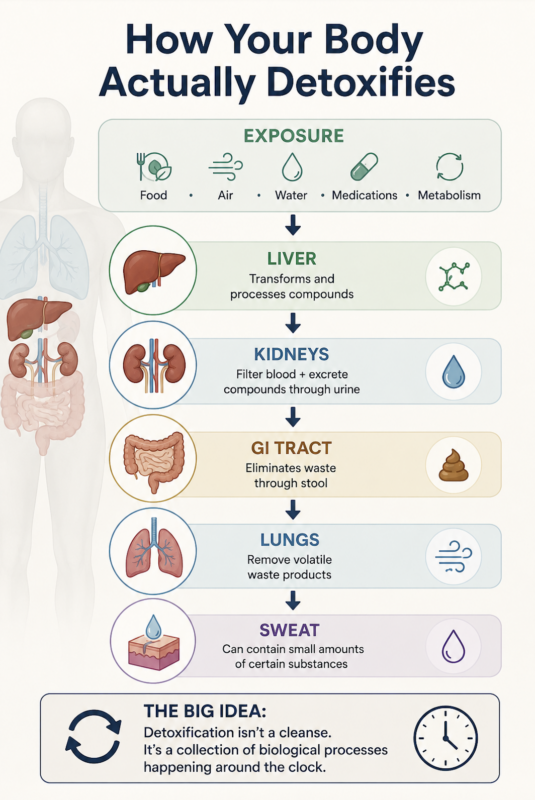
Your body already has an extraordinarily sophisticated detoxification system.
The liver chemically processes numerous compounds. The kidneys filter blood and produce urine. The gastrointestinal tract eliminates waste. The lungs remove volatile substances such as carbon dioxide. The lymphatic system helps maintain fluid balance and participates in immune function.
So the real question isn’t:
“How do I detox my body?”
It is:
“Can certain behaviors or compounds meaningfully support the biological systems the body already uses to process and eliminate substances?”
When you look at sauna use, lymphatic drainage, sulforaphane, and glutathione through that lens, the science becomes much more interesting — and much less gimmicky.
What Does “Detoxification” Actually Mean?
In popular wellness culture, “toxins” can mean almost anything.
That is part of the problem.
Scientifically, detoxification generally involves the body’s processes for transforming, neutralizing, transporting, and eliminating potentially harmful compounds.
The liver is particularly important.
It uses networks of enzymes to chemically modify compounds so they can ultimately be eliminated. These processes are commonly discussed in terms of Phase I and Phase II metabolism, although real human biochemistry is substantially more complicated than the simplified “two-phase detox” diagrams often circulated online.
The kidneys then play another enormous role by filtering blood and excreting many waste products and metabolites through urine.
That means detoxification is happening continuously.
You don’t need a three-day cleanse to switch it on.
But researchers are studying whether nutrition, heat exposure, exercise, and other interventions can influence specific components of these pathways.
And that brings us to one of the wellness industry’s favorite detox tools.
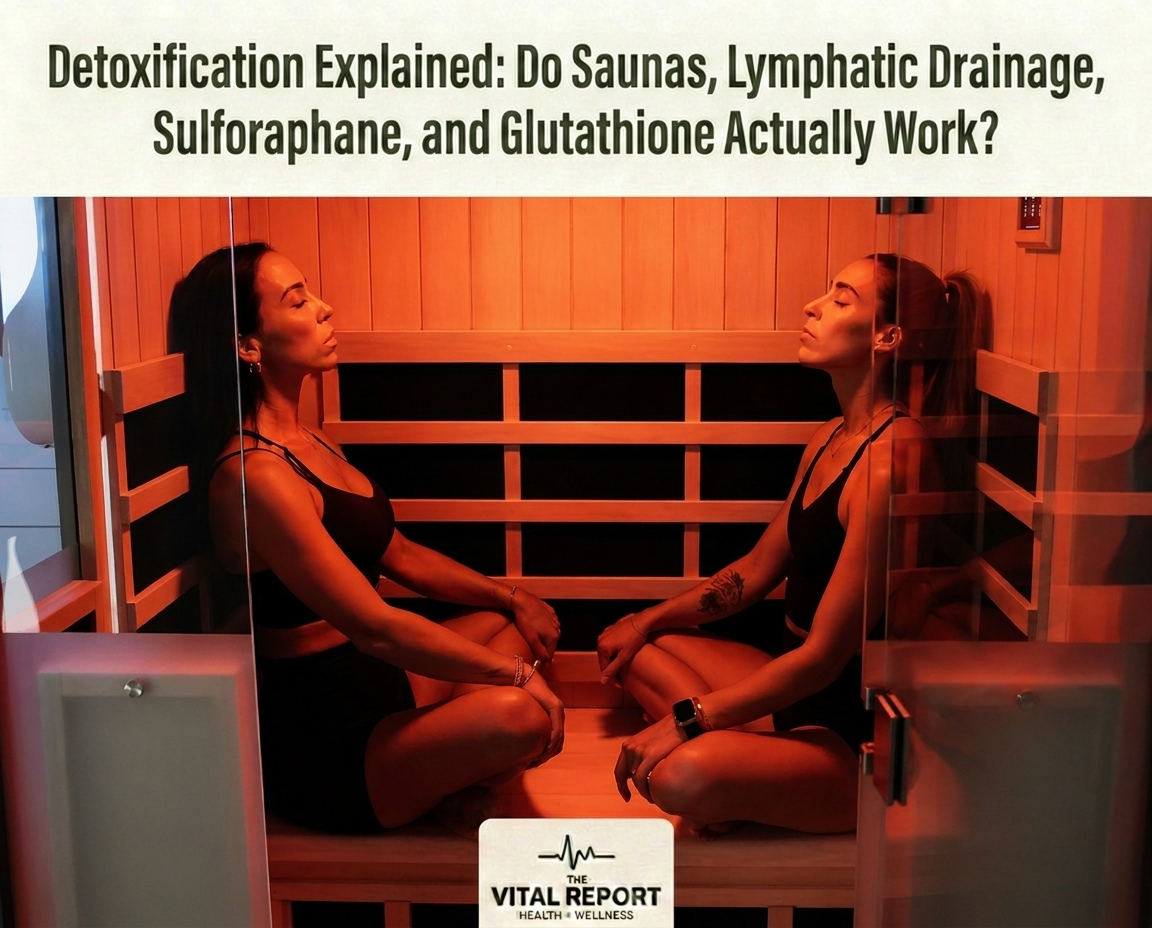
1. Sauna: Can You Actually Sweat Out Toxins?
The idea behind sauna detoxification sounds straightforward.
You enter a hot environment.
Your body temperature rises.
You sweat heavily.
And unwanted compounds supposedly leave your body through that sweat.
There is at least some biological basis for part of this claim.
Sweat isn’t simply water.
Researchers have detected substances including arsenic, cadmium, lead, and mercury in human sweat. A systematic review examining toxic elements in sweat evaluated 24 studies and concluded that sweating deserves further investigation as a potential pathway for eliminating certain toxic elements.
However, that does not mean sauna use has been proven to “detox” healthy people in the broad way wellness marketing often suggests.
The studies included different populations, exposures, sweat-collection techniques, and methodologies, and researchers specifically called for larger studies capable of establishing effective and safe protocols.
Your kidneys and liver remain the body’s primary systems for processing and eliminating many unwanted compounds.
Sweating should therefore be viewed as one excretory pathway, not a replacement for the liver or kidneys.
“How Your Body Actually Detoxifies”
EXPOSURE
Food • Air • Water • Medications • Metabolism
↓
LIVER
Transforms and processes compounds
↓
KIDNEYS
Filter blood + excrete compounds through urine
↓
GI TRACT
Eliminates waste through stool
↓
LUNGS
Remove volatile waste products
↓
SWEAT
Can contain small amounts of certain substances
THE BIG IDEA:
Detoxification isn’t a cleanse. It’s a collection of biological processes happening around the clock.
Sauna May Have Benefits Beyond “Detox”
Focusing only on toxins may actually undersell the more interesting science surrounding sauna use.
Researchers have studied sauna bathing in connection with cardiovascular function, blood pressure, vascular health, heat adaptation, and other physiological effects.
A systematic review of regular dry sauna bathing examined 40 clinical studies involving 3,855 participants. Many studies reported beneficial outcomes, although the researchers noted that relatively few were randomized controlled trials and many were small.
More recent randomized evidence also encourages caution about sweeping claims.
A 2025 systematic review and meta-analysis of passive-heating trials found that most pooled cardiometabolic and vascular outcomes did not significantly improve, although whole-body heating showed a potentially meaningful reduction in systolic blood pressure in certain analyses.
So sauna research is promising in several areas.
But:
“Sauna may produce physiological benefits”
is not the same statement as:
“Saunas remove all toxins from your body.”
That distinction matters.
2. Lymphatic Drainage: What Is the Lymphatic System Actually Doing?
Lymphatic drainage has become another enormous wellness trend.
Videos show people receiving massages designed to stimulate lymph flow, often accompanied by claims about:
- Detoxification
- Reduced bloating
- Improved circulation
- Reduced inflammation
- Immune support
- Water-weight loss
- Removing toxins
Some of these claims dramatically oversimplify the lymphatic system.
The lymphatic system is a legitimate and essential part of human physiology.
A network of lymphatic vessels transports fluid from tissues back toward the bloodstream.
Lymph nodes participate in immune surveillance.
The system also helps transport immune cells, proteins, lipids, and other materials throughout the body.
Unlike the cardiovascular system, however, lymph doesn’t have a central pump comparable to the heart.
Movement, skeletal muscle contractions, breathing, and pressure changes help move lymphatic fluid.
What Is Manual Lymphatic Drainage?
Manual lymphatic drainage, or MLD, is a specialized massage technique involving gentle movements intended to encourage lymphatic fluid movement.
It has established applications in the management of lymphedema, a condition involving abnormal accumulation of lymphatic fluid and swelling.
But that is different from saying every healthy person needs lymphatic drainage to remove toxins.
A systematic review of manual lymphatic drainage for lymhedema examined 17 studies and found mixed results.
Some studies reported improvements in swelling, symptoms, or quality of life, while others found little additional benefit when MLD was added to other components of lymphedema treatment.
Importantly, the research largely involves people with actual lymphatic dysfunction — not healthy individuals receiving spa treatments for generalized “detox.”
That distinction gets lost on social media.
Does Lymphatic Drainage “Flush Toxins”?
There isn’t strong evidence showing that routine lymphatic drainage massage causes healthy people to eliminate undefined “toxins” from their bodies.
That doesn’t mean the lymphatic system isn’t important.
It is.
And it doesn’t mean lymphatic drainage doesn’t have legitimate medical applications.
It does.
But saying:
“MLD can be useful in certain cases of lymphedema”
is scientifically very different from:
“Everyone has toxins trapped in their lymph that need to be massaged out.”
The latter is a much larger claim without comparable evidence.
For most healthy individuals, everyday activities already support normal lymph movement.
Walking.
Exercise.
Muscle contractions.
Breathing.
Normal movement throughout the day.
The body isn’t waiting for a massage appointment before the lymphatic system starts functioning.
3. Sulforaphane: Where “Detox” Science Gets More Interesting
Sulforaphane may be one of the most scientifically interesting compounds in the modern detox conversation.
It is an isothiocyanate derived from cruciferous vegetables.
Broccoli sprouts are particularly well known as a rich source of glucoraphanin, a precursor that can be converted into sulforaphane.
Unlike vague cleanse claims, sulforaphane has identifiable biological targets.
One of the most important involves Nrf2.
Nrf2 is a transcription factor that regulates genes involved in cellular defense, antioxidant responses, and enzymes responsible for processing certain compounds.
Think of Nrf2 less like a sponge that absorbs toxins and more like a biological switchboard that can influence the expression of protective cellular machinery.
Sulforaphane is one compound capable of activating this pathway.
Sulforaphane and Glutathione Work on Connected Pathways
This is where sulforaphane and glutathione become particularly interesting together.
Glutathione can participate in conjugation reactions that help make certain compounds easier for the body to eliminate.
Enzymes called glutathione S-transferases, or GSTs, help catalyze these reactions.
Sulforaphane can induce GSTs and other cytoprotective enzymes.
That means the relationship isn’t simply:
Sulforaphane = detox.
It’s closer to:
Sulforaphane → cellular defense signaling → increased activity/expression of certain protective enzymes → altered processing of specific compounds.
That is a much more scientifically defensible explanation.
A Human Trial Produced Fascinating Results
One of the most interesting human studies involving sulforaphane looked directly at environmental pollutant excretion.
Researchers conducted a 12-week randomized clinical trial involving 291 participants in China exposed to substantial levels of airborne pollution.
Participants consumed either a placebo beverage or a broccoli-sprout-derived beverage containing glucoraphanin and sulforaphane.
The results were striking.
The intervention increased urinary excretion of a glutathione-derived metabolite of benzene by 61% and of acrolein by 23% compared with placebo.
The researchers concluded that the broccoli sprout beverage enhanced the detoxication of certain airborne pollutants.
You can read the randomized clinical trial here.
That is much more compelling evidence than saying a supplement simply “removes toxins.”
Researchers identified specific exposures.
They measured specific urinary metabolites.
They used a controlled intervention.
And they observed a measurable change.
But even this doesn’t mean sulforaphane universally eliminates every environmental chemical from the body.
It demonstrates an effect on specific detoxification pathways under specific conditions.
4. Glutathione: The Body’s Own Antioxidant Defense System
Glutathione may be even more famous in wellness circles.
It is often called the “master antioxidant.”
While that phrase has become marketing language, glutathione genuinely is an important endogenous antioxidant.
The body synthesizes glutathione from amino acids, and it participates in numerous biological processes involving:
- Oxidative stress
- Redox balance
- Cellular defense
- Enzyme activity
- Detoxification reactions
- Immune function
One of glutathione’s important roles involves neutralizing reactive molecules.
But glutathione also participates in conjugation.
In simplified terms, glutathione can attach to certain compounds or metabolites, helping convert them into forms the body can more readily process and eliminate.
This is part of the reason glutathione plays such a central role in discussions of liver detoxification.
Does Taking Glutathione Actually Increase Glutathione?
This question has been surprisingly complicated.
Because glutathione is a peptide composed of three amino acids, researchers have long debated how effectively standard oral glutathione reaches systemic circulation.
Human studies have produced different results depending on formulation, dose, duration, and measurements.
One notable six-month randomized, double-blind, placebo-controlled trial followed 54 healthy adults receiving either 250 mg or 1,000 mg of glutathione per day.
Researchers found increases in glutathione across several body compartments after supplementation.
At six months, the higher-dose group experienced average increases of approximately 30–35% in erythrocytes, plasma, and lymphocytes, while changes were also observed with the lower dose.
That suggests oral supplementation can influence glutathione status under at least some conditions.
But again, increasing glutathione levels is not synonymous with “detoxing the body.”
A biomarker changing and a clinically meaningful health outcome changing are two different things.
Sulforaphane + Glutathione: Why They’re Often Discussed Together
Now the combination begins to make more sense.
Glutathione is part of the body’s endogenous antioxidant and conjugation machinery.
Sulforaphane can influence pathways that regulate some of the enzymes involved in cellular defense.
Rather than thinking of them as two products physically scrubbing toxins out of your bloodstream, think of them as interacting with the body’s existing biochemical machinery.

The Best “Detox” May Be Reducing Exposure in the First Place
There is an irony in the wellness industry’s obsession with detoxification.
Consumers may spend hundreds of dollars attempting to remove substances from their bodies while paying much less attention to reducing unnecessary exposure in the first place.
That can mean paying attention to:
Air quality.
Smoking and secondhand smoke.
Occupational exposures.
Contaminated water.
Certain environmental pollutants.
Alcohol consumption.
And unnecessary exposure to harmful chemicals.
This also connects with a broader trend Vital Report has covered around consumers becoming more conscious of the ingredients and materials they interact with every day.
As we discussed in our reporting on the clean-home movement and reducing unnecessary chemical and plastic exposure, consumers are increasingly examining not only what they put into their bodies but also the products used throughout their homes.
Reducing an avoidable exposure may make more sense than intentionally exposing yourself and then trying to “detox” afterward.
What About Detox Supplements?
This is where consumers should become particularly skeptical.
A supplement labeled:
“Liver Detox”
“Total Body Cleanse”
or
“Toxin Flush”
doesn’t automatically have evidence demonstrating that it removes meaningful quantities of harmful compounds from humans.
The better questions are:
What compound is being studied?
What pathway does it affect?
Was the effect demonstrated in humans?
What dose was studied?
What biomarker changed?
Did the intervention improve a meaningful health outcome?
Was an actual toxicant measured?
Those questions quickly separate legitimate research from vague wellness marketing.
Sulforaphane provides a useful example because researchers have conducted controlled human trials measuring specific pollutant metabolites.
Many detox products don’t have anything close to that level of evidence.
Can You Combine Sauna, Exercise, Nutrition, and Supplements?
This is where the idea of supporting the body’s natural systems becomes more reasonable.
Rather than thinking about detoxification as one dramatic intervention, it may make more sense to think about overall physiological health.
Regular physical activity supports cardiovascular and metabolic health.
Adequate hydration supports normal kidney function.
A nutrient-dense diet provides the substrates required for normal metabolism.
Cruciferous vegetables provide compounds including glucoraphanin.
Protein provides amino acids required for glutathione synthesis.
Sleep supports numerous physiological processes.
Sauna can provide heat exposure and may offer benefits in appropriate individuals.
The important distinction is that none of these should be framed as an emergency cleanse for an otherwise “toxic” body.
They are lifestyle inputs interacting with biological systems that already exist.
Detoxification Is Becoming Part of the Longevity Movement
The renewed interest in detoxification also fits into the larger longevity boom.
Consumers increasingly want to understand environmental exposures.
They are testing drinking water.
Monitoring indoor air quality.
Avoiding microplastics.
Changing household products.
Eating more whole foods.
Using saunas.
Taking supplements.
Tracking biomarkers.
The underlying idea is moving away from simply treating disease toward reducing potential risk factors before disease develops.
That is a reasonable goal.
But longevity becomes less credible when every wellness practice is marketed as a miracle.
The next phase of the industry will likely require distinguishing between:
Plausible mechanisms
Measurable biological effects
Human clinical evidence
and
marketing claims.
Who Should Be Careful With Sauna or Supplements?
More isn’t automatically better.
Saunas cause substantial sweating and can contribute to dehydration and changes in blood pressure. People with certain cardiovascular conditions, individuals taking medications that affect blood pressure or fluid balance, pregnant people, and anyone with relevant medical concerns should discuss intensive heat exposure with an appropriate healthcare professional.
Supplements deserve similar caution.
Sulforaphane-rich foods are different from concentrated supplemental formulations.
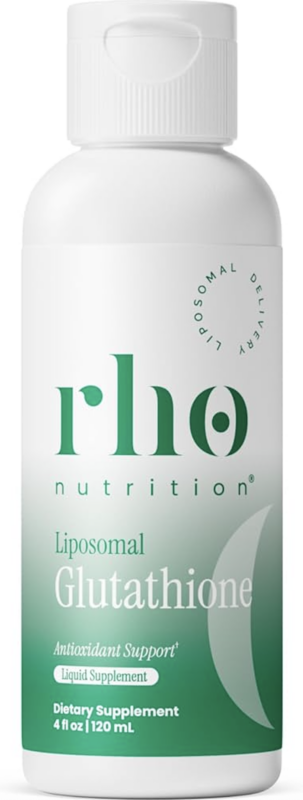
Glutathione products vary in formulation and dose.
And supplements can interact with medications or be inappropriate in certain medical situations.
The goal shouldn’t be to maximize every pathway associated with “detox.”
It should be to support normal physiology safely.
The Bottom Line
Detoxification is real.
The wellness industry’s version of detoxification often isn’t.
Your body continuously processes and eliminates compounds through systems involving the liver, kidneys, gastrointestinal tract, lungs, lymphatic system, and other tissues.
Sauna causes sweating, and research has demonstrated that certain toxic elements can be detected in sweat. But evidence does not support treating sauna as a universal replacement for normal liver and kidney detoxification.
Manual lymphatic drainage has legitimate medical applications, particularly around lymphedema, but evidence supporting generalized “toxin flushing” in healthy people is much weaker.
Sulforaphane may be one of the most compelling compounds in this conversation because it influences Nrf2 and cellular-defense pathways. Human trials have even demonstrated increased excretion of metabolites associated with specific airborne pollutants.
Glutathione is a genuine component of the body’s antioxidant and detoxification machinery, and some human trials show that supplementation can increase glutathione stores.
But none of these facts justify the idea that humans need constant cleanses.
The more scientifically accurate version of “detox” is much less dramatic — and arguably much more interesting.
Your body already knows how to detoxify.
The real opportunity is understanding which interventions can safely and meaningfully support the systems doing the work.
Frequently Asked Questions
Does sauna actually detox your body?
Sweat can contain certain compounds, including some toxic elements, and researchers have studied sweating as a potential route of excretion. However, evidence does not establish sauna as a universal “detox,” and the liver and kidneys remain central to the body’s elimination processes.
Does lymphatic drainage remove toxins?
Manual lymphatic drainage can help manage lymphatic fluid in certain people with lymphedema. There is considerably less evidence showing that routine lymphatic drainage massage removes undefined toxins from otherwise healthy individuals.
What is sulforaphane?
Sulforaphane is a plant-derived compound produced from glucoraphanin found in cruciferous vegetables, particularly broccoli sprouts. It can activate cellular-defense pathways involving Nrf2 and influence enzymes involved in processing certain compounds.
Does sulforaphane help detoxification?
Human research suggests sulforaphane can influence specific detoxification pathways. In one randomized trial, a broccoli-sprout beverage increased urinary excretion of glutathione-derived metabolites of benzene and acrolein. That does not mean it removes every type of toxin.
What is glutathione?
Glutathione is an antioxidant naturally produced by the body. It participates in redox regulation, cellular defense, and biochemical reactions that help process certain compounds for elimination.
Do glutathione supplements work?
Some controlled human research has found that longer-term oral glutathione supplementation can increase glutathione levels in several body compartments. Results can depend on formulation, dose, and duration, and increasing glutathione levels should not automatically be interpreted as proof of broad health benefits.
Is sulforaphane better from broccoli sprouts or supplements?
Broccoli sprouts are naturally rich in glucoraphanin, which can be converted into sulforaphane. Supplement formulations can vary substantially in glucoraphanin content, active sulforaphane, myrosinase activity, and bioavailability, so products should not automatically be assumed equivalent to preparations used in clinical trials.