
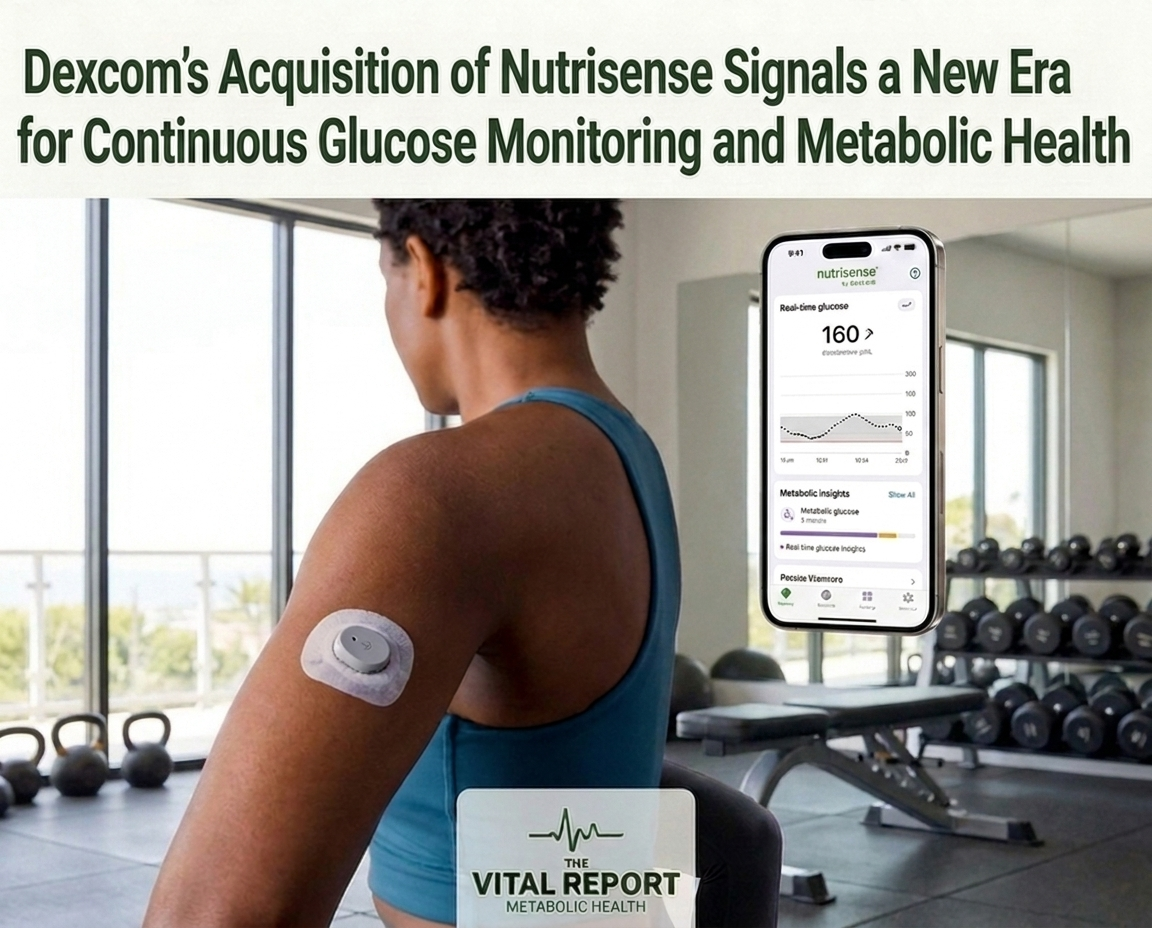
The continuous glucose monitoring (CGM) industry has evolved far beyond its original role in diabetes management. Once considered a niche medical device used primarily by individuals with Type 1 diabetes, CGMs have rapidly become one of the most talked-about tools in wellness, longevity, weight management, and metabolic health. Now, one of the industry’s most significant developments is poised to accelerate that transformation even further: Dexcom’s acquisition of Nutrisense.
Announced in June 2026, the deal brings together one of the world’s leading glucose biosensing companies and one of the fastest-growing metabolic health platforms focused on personalized nutrition coaching and behavior change. The acquisition highlights a broader trend occurring throughout healthcare and wellness—the convergence of medical-grade health data with personalized lifestyle guidance.
For consumers, healthcare providers, and the broader wellness industry, the combination of Dexcom and Nutrisense could reshape how people understand food, metabolism, and long-term health.
Why Dexcom and Nutrisense Are a Natural Fit
For more than two decades, Dexcom has been a leader in continuous glucose monitoring technology. The company built its reputation by helping people with diabetes track glucose levels in real time, reducing reliance on traditional finger-stick testing and improving overall glucose management. More recently, Dexcom expanded beyond diabetes care with the launch of Stelo, its over-the-counter CGM designed for consumers interested in metabolic health and wellness.
Nutrisense approached the market from a different angle.
Rather than focusing primarily on the hardware, Nutrisense built a platform centered around helping users interpret glucose data. The company combines CGM readings with personalized nutrition recommendations, behavioral coaching, registered dietitian support, and wellness insights. Nutrisense became particularly popular among health-conscious consumers seeking to understand how specific foods, exercise habits, sleep patterns, and stress levels impacted their glucose responses.
In many ways, the two companies were already working together. Nutrisense’s subscription packages frequently incorporated Dexcom sensors alongside its coaching platform and nutrition guidance. The acquisition formalizes a relationship that already existed and allows the companies to create a more integrated user experience.
Moving Beyond Data Toward Actionable Insights
One of the biggest challenges facing the CGM industry has never been collecting glucose data. Modern sensors already generate enormous amounts of information.
The challenge is helping consumers understand what that information means.
A glucose spike after eating a bagel is interesting. Understanding how that spike relates to energy levels, hunger, exercise performance, sleep quality, and long-term metabolic health is far more valuable.
This is where Nutrisense has differentiated itself.
According to Dexcom, the acquisition will allow the company to incorporate registered dietitian access, personalized nutrition guidance, and behavior-change support directly into its ecosystem. Dexcom specifically stated that the deal strengthens its ability to provide personalized nutrition education and connect food choices to glucose responses.
This shift reflects a broader movement occurring across digital health. Consumers increasingly want actionable recommendations rather than raw data. Wearables have already moved in this direction, with companies like Oura Health translating sleep and recovery metrics into daily readiness scores and personalized recommendations.
CGMs appear to be following the same path.
The Rise of CGMs Among Non-Diabetics
Perhaps the most fascinating aspect of this acquisition is what it says about the future of CGMs beyond diabetes.
Over the last several years, athletes, biohackers, wellness enthusiasts, and individuals interested in weight management have embraced continuous glucose monitoring as a tool for understanding metabolic health.
Consumers use CGMs to:
- Identify foods that trigger significant glucose spikes
- Improve energy stability throughout the day
- Optimize athletic performance
- Better understand cravings and hunger patterns
- Support weight-loss goals
- Monitor the impact of sleep and stress on glucose regulation
The launch of over-the-counter products like Dexcom’s Stelo demonstrated that manufacturers see a substantial opportunity beyond traditional diabetes care. Dexcom has repeatedly emphasized its vision of expanding glucose biosensing technology into preventative care and early intervention strategies.
The Nutrisense acquisition accelerates that strategy.
Instead of simply selling sensors to wellness consumers, Dexcom can now offer a more comprehensive metabolic health platform that combines hardware, software, coaching, and nutrition expertise.
What This Means for Existing Dexcom Users
While much attention has focused on the wellness market, existing Dexcom users with diabetes may ultimately benefit the most from the acquisition.
Managing diabetes extends beyond monitoring glucose levels. Nutrition decisions remain one of the most important factors influencing long-term glucose control.
Nutrisense’s coaching model gives Dexcom access to tools that can help users better understand:
- Food quality and meal composition
- Carbohydrate timing
- Glycemic responses to specific foods
- Long-term nutrition habits
- Sustainable behavior change
Dexcom’s leadership specifically noted that Nutrisense would strengthen its ability to provide personalized nutrition education and support diabetes management.
For patients already using Dexcom CGMs, integrating these capabilities directly into the broader Dexcom ecosystem could create a more holistic experience that goes beyond glucose monitoring alone.
The Competitive Landscape Is Getting More Intense
The CGM market has become increasingly competitive.
Dexcom remains one of the dominant players, but competitors continue to push innovation in both diabetes care and consumer wellness.
Key competitors include:
- Abbott Laboratories and its FreeStyle Libre platform
- Senseonics, which offers the implantable Eversense system
- Emerging digital health and metabolic health startups integrating CGMs with coaching and AI-driven recommendations
Abbott has made significant investments in expanding glucose monitoring beyond traditional diabetes populations, while Senseonics differentiates itself with long-duration implantable sensors that can remain in place for extended periods.
What makes the Dexcom-Nutrisense combination particularly noteworthy is that it addresses a gap many competitors still face: translating data into meaningful behavior change.
As CGM hardware becomes increasingly commoditized, software, coaching, artificial intelligence, and personalized recommendations may become the primary competitive battleground.
The Future of Metabolic Health
The acquisition also reflects a larger shift occurring throughout healthcare.
Historically, healthcare has focused on diagnosing and treating disease after it develops. Increasingly, both consumers and healthcare companies are emphasizing prevention, early intervention, and lifestyle optimization.
Dexcom executives have repeatedly discussed expanding CGM access as a tool for preventative care and earlier-stage intervention. The company’s plans for enhanced Stelo features, AI-powered insights, food logging capabilities, and now personalized nutrition coaching all align with that vision.
The result could be a future where glucose monitoring becomes as commonplace as tracking steps, sleep, or heart rate.
Rather than serving only people with diabetes, CGMs may become a central component of personalized wellness programs, helping individuals understand how their daily choices affect their metabolic health in real time.
Final Thoughts
Dexcom’s acquisition of Nutrisense represents more than a simple business transaction. It signals the continued convergence of healthcare technology, personalized nutrition, and consumer wellness.
Dexcom brings world-class biosensing technology, clinical credibility, and scale. Nutrisense contributes coaching, nutrition expertise, and the ability to transform glucose data into practical lifestyle recommendations.
Together, the companies are positioning themselves at the center of one of the fastest-growing areas in health and wellness: metabolic health optimization.
For people living with diabetes, the acquisition promises more personalized support and education. For wellness consumers, it creates the potential for a richer and more actionable CGM experience. And for the industry as a whole, it raises the bar for what consumers should expect from continuous glucose monitoring—not just data, but meaningful guidance that can help improve long-term health.
As CGMs continue to move into the mainstream, the companies that successfully combine accurate biosensing with personalized coaching and behavioral insights are likely to define the next chapter of the metabolic health revolution.