

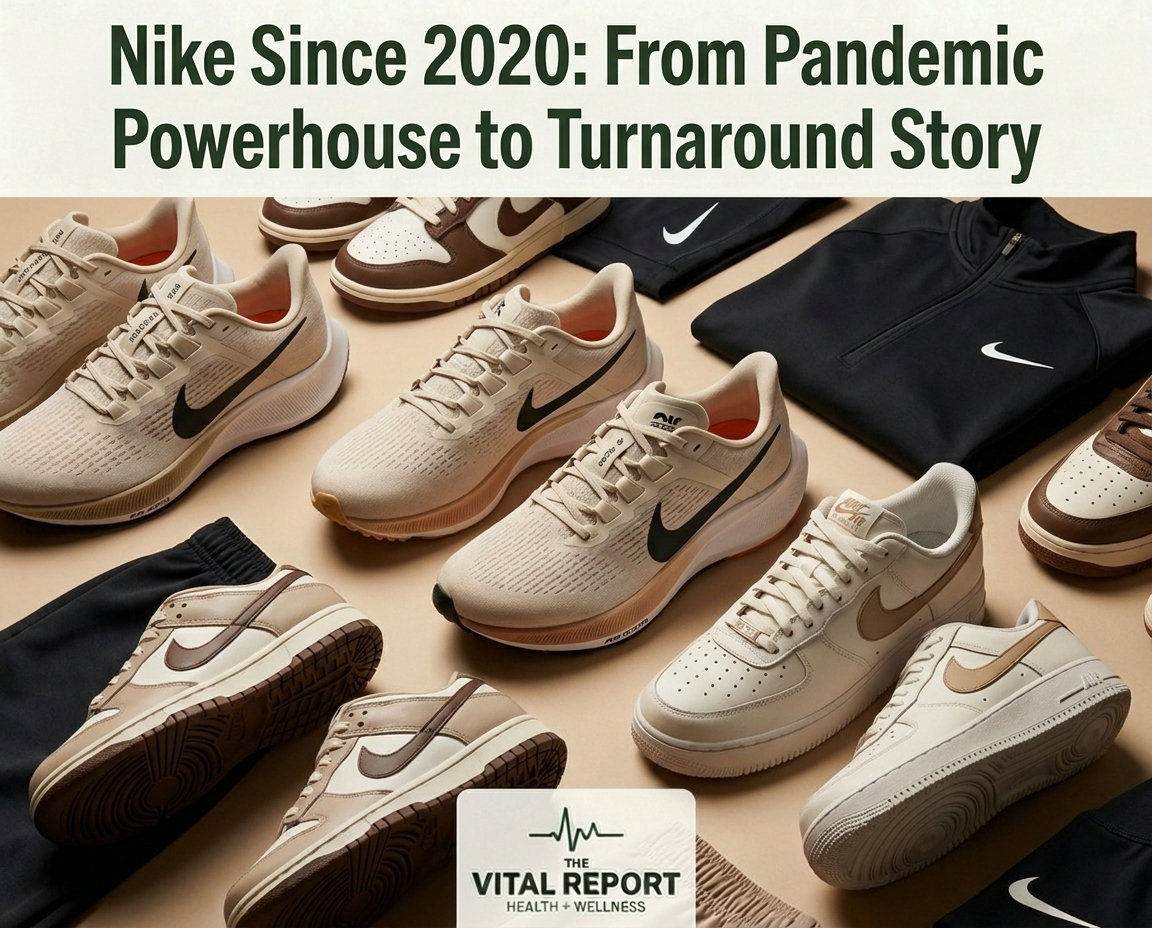
For decades, Nike has been the gold standard in athletic apparel. The Swoosh became one of the most recognizable logos in the world, fueled by groundbreaking marketing, athlete partnerships, and innovative footwear. But over the past five years, Nike has experienced one of the most dramatic shifts in its history.
Since 2020, the company has gone from thriving during the pandemic’s digital shopping boom to facing slowing sales, increased competition, inventory problems, and questions about whether it had lost touch with consumers. Yet despite these challenges, Nike remains the world’s largest athletic brand and is actively rebuilding its business under returning CEO Elliott Hill.
Here’s a look at how Nike has evolved since 2020, what’s working today, where the company stumbled, and what the future could hold.
2020: The Pandemic Changed Everything
Like nearly every retailer, Nike entered 2020 facing enormous uncertainty.
Physical stores around the world shut down as COVID-19 spread, sporting events were cancelled, and supply chains froze. At first glance, the outlook appeared bleak.
Instead, Nike adapted faster than almost anyone else.
Rather than relying on wholesale retailers, Nike doubled down on digital sales through Nike.com, the Nike App, and the SNKRS platform. Consumers stuck at home began exercising outdoors, buying running shoes, workout apparel, and comfortable athleisure clothing.
Digital sales exploded while membership programs saw millions of new users join Nike’s ecosystem.
The company wasn’t simply selling shoes—it was building a digital relationship with customers through workout apps, exclusive product drops, and personalized shopping experiences.
This accelerated a strategy Nike had already been pursuing: becoming a direct-to-consumer (DTC) company instead of relying heavily on traditional retailers.
The strategy looked brilliant.
2021–2022: Nike Reaches New Heights
As the world reopened, Nike appeared unstoppable.
Revenue climbed to record levels while profits surged. The stock price reached all-time highs, and investors viewed Nike as one of the strongest consumer brands in the world.
Several factors fueled the momentum.
The Rise of Sneaker Culture
Limited-edition sneakers became cultural events.
Jordan releases routinely sold out within minutes.
Collaborations with designers, musicians, and athletes kept Nike at the center of sneaker culture while resale prices reached thousands of dollars.
Digital Success
Nike’s direct-to-consumer strategy continued paying dividends.
Instead of sharing profits with retailers, Nike captured more revenue through its own websites and stores.
Higher margins made Wall Street happy.
Strong Athlete Partnerships
Nike maintained one of the deepest athlete rosters in sports.
Stars including LeBron James, Cristiano Ronaldo, Serena Williams, Naomi Osaka, and rising basketball prospects continued strengthening the company’s image across multiple sports.
Performance Innovation
Products like the Vaporfly and Alphafly transformed distance running.
Elite marathon runners wearing Nike shoes consistently broke records, reinforcing the brand’s reputation for innovation.
Everything appeared to be working.
But underneath the surface, cracks were beginning to form.
Where Things Started Going Wrong
Nike’s biggest strategic decision after the pandemic would eventually become one of its biggest challenges.
The company aggressively reduced partnerships with major retailers like Foot Locker and prioritized selling directly to consumers.
The logic made sense.
Direct sales generate higher profit margins and allow Nike to control branding, pricing, and customer relationships.
However, this strategy created several unintended consequences.
Consumers suddenly saw fewer Nike products in stores.
Retailers responded by giving more shelf space to competitors.
Brands like On, Hoka, New Balance, ASICS, and Brooks suddenly had opportunities they had never enjoyed before.
Consumers walking into sporting goods stores increasingly discovered alternatives.
Nike had unintentionally opened the door.
Competition Has Never Been Stronger
Perhaps the biggest story of the past five years isn’t simply Nike’s slowdown.
It’s the rise of everyone else.
Hoka
Originally known for oversized running shoes, Hoka exploded into mainstream popularity.
Its maximal cushioning appealed to runners, walkers, healthcare workers, and everyday consumers seeking comfort.
Today, Hoka has become one of the fastest-growing footwear brands in America.
On
Swiss company On evolved from a niche running brand into a global lifestyle company.
Celebrity partnerships—including Roger Federer—and premium product design helped On become one of the hottest athletic brands worldwide.
New Balance
Once viewed as an “old-school” running company, New Balance reinvented itself.
Fashion collaborations, lifestyle sneakers, and performance products helped attract younger consumers without alienating longtime fans.
ASICS
ASICS experienced a massive resurgence among serious runners thanks to highly rated performance footwear.
Many reviewers began ranking ASICS alongside—or even above—Nike in several running categories.
For the first time in decades, Nike wasn’t automatically the default choice.
Innovation Slowed
Historically, Nike won because it consistently introduced products consumers had never seen before.
Recently, critics argue that innovation slowed.
Instead of creating new franchises, Nike relied heavily on older products like:
- Air Force 1
- Dunk
- Air Jordan 1
- Panda Dunks
These classics remained incredibly popular.
However, relying too heavily on retro silhouettes meant fewer breakthrough innovations reached consumers.
Competitors filled that innovation gap.
Meanwhile, many sneaker enthusiasts began experiencing “Dunk fatigue” as seemingly endless colorways flooded the market.
Limited releases became less exciting when nearly every week featured another variation of the same shoe.
Inventory Problems
Another issue emerged after the pandemic.
Demand patterns changed rapidly.
Nike found itself with excess inventory.
To clear products, the company relied on promotions and discounts.
While discounting helps move inventory, it also hurts profitability and weakens a premium brand image.
Consumers who become accustomed to waiting for sales often stop paying full price.
For a company built on premium positioning, this became a significant challenge.
Leadership Changes
In 2024, Nike made one of its biggest leadership decisions in years.
Former CEO John Donahoe stepped down, and longtime Nike executive Elliott Hill returned to lead the company.
Hill spent more than three decades inside Nike before retiring and returning to oversee its turnaround.
His strategy has focused on rebuilding what originally made Nike successful:
- Greater emphasis on sports performance
- Stronger wholesale partnerships
- Better relationships with retailers
- More product innovation
- Cleaner inventory
- Faster decision-making
Rather than chasing digital growth at all costs, Hill has acknowledged that wholesale partners remain essential for Nike’s future. Analysts increasingly view this shift as a correction to the company’s earlier DTC-first strategy. (Reuters)
China Has Become a Major Challenge
China was once one of Nike’s fastest-growing markets.
Today, it represents one of the company’s biggest headwinds.
Economic uncertainty, changing consumer behavior, and increased competition from domestic Chinese brands have all pressured sales.
Companies like Anta and Li-Ning have become legitimate competitors.
Recent financial results continue showing double-digit declines in Greater China, making the region one of the biggest obstacles to Nike’s recovery. (Reuters)
What’s Going Well Today?
Despite headlines suggesting Nike is struggling, several aspects of the business remain extremely strong.
Brand Recognition
Nike remains arguably the most recognizable athletic brand on Earth.
The Swoosh still carries enormous cultural influence.
Few companies possess this level of brand equity.
Elite Athlete Partnerships
Nike continues signing many of the world’s best athletes across basketball, soccer, track, tennis, football, and Olympic sports.
Those partnerships reinforce credibility that many competitors still can’t match.
Financial Strength
Although revenue has declined from recent highs, Nike remains a massive company generating tens of billions of dollars annually.
The company continues producing healthy cash flow while investing heavily in research, marketing, and product development.
Global Scale
Nike operates virtually everywhere.
Its worldwide distribution network remains unmatched.
Few competitors possess Nike’s international infrastructure.
Product Pipeline
Management says dozens of new footwear franchises are entering the market as the company shifts away from overreliance on retro products.
The goal is to restore innovation rather than simply recycling classics. (Reuters)
What’s Still Not Going Well?
Several issues continue limiting Nike’s recovery.
Slower Revenue Growth
Recent financial reports show sales remain below previous peaks.
Although results have slightly exceeded Wall Street expectations, growth has not fully returned. Fiscal 2026 revenue slipped about 2%, with Nike Direct sales continuing to decline even as wholesale improved. (Vogue)
Direct-to-Consumer Weakness
Nike spent years building its DTC business.
Ironically, direct sales have recently become one of its weaker segments.
Consumers are once again shopping through multiple retailers rather than buying exclusively from Nike.
Stock Performance
Nike’s stock has dramatically underperformed compared to its pandemic peak.
Investors continue waiting for evidence that the turnaround strategy can deliver sustained growth.
Intense Competition
Perhaps most importantly, Nike no longer competes in an industry where it dominates innovation alone.
Consumers have more legitimate alternatives than ever before.
Social Media Is Changing Athletic Brands
Another major trend affecting Nike is the rise of social media.
Platforms like TikTok, Instagram, and YouTube Shorts have fundamentally changed how consumers discover products.
Instead of relying primarily on celebrity endorsements, younger consumers increasingly trust:
- Running influencers
- Fitness creators
- Physical therapists
- Everyday athletes
- Product reviewers
This environment benefits smaller companies.
A single viral review can introduce millions of consumers to a newer brand overnight.
Nike still performs well on social media, but it no longer controls the conversation the way it once did.
Sustainability Matters More Than Ever
Consumers increasingly expect brands to demonstrate environmental responsibility.
Nike has invested in initiatives such as recycled materials, circular manufacturing, and programs like Nike Refurbished.
While sustainability alone rarely drives purchases, it has become an important competitive factor among younger consumers.
Companies unable to demonstrate environmental progress may struggle to build long-term loyalty.
Where Is Nike Headed?
Nike is no longer the hyper-growth company investors celebrated in 2021.
Instead, it has become one of the most closely watched turnaround stories in retail.
The encouraging news is that many of Nike’s problems appear fixable.
The company isn’t suffering from a weak brand.
Consumers haven’t stopped caring about Nike.
Rather, Nike overextended one strategy, underestimated emerging competitors, and relied too heavily on legacy products.
Those are difficult—but solvable—problems.
Leadership has already begun rebuilding retailer relationships, emphasizing innovation, cleaning inventory, and returning the company toward its sports-performance roots.
Recovery won’t happen overnight.
Even management has acknowledged the turnaround will take time. (Reuters)
Final Thoughts
Nike’s story since 2020 has been anything but ordinary.
The company navigated a global pandemic better than almost any retailer, capitalized on digital commerce, and reached record highs before confronting some of the toughest competitive challenges in its history.
Today’s Nike looks very different from the one investors celebrated just a few years ago.
Competition is stronger, consumers have more choices, and innovation is once again essential.
Still, writing off Nike would be premature.
Few companies possess Nike’s combination of global reach, athlete partnerships, marketing expertise, and brand recognition. If Elliott Hill’s turnaround succeeds, the next chapter may not simply be about recovering lost ground—it could redefine what the world’s largest sportswear company looks like in a much more competitive athletic marketplace.