
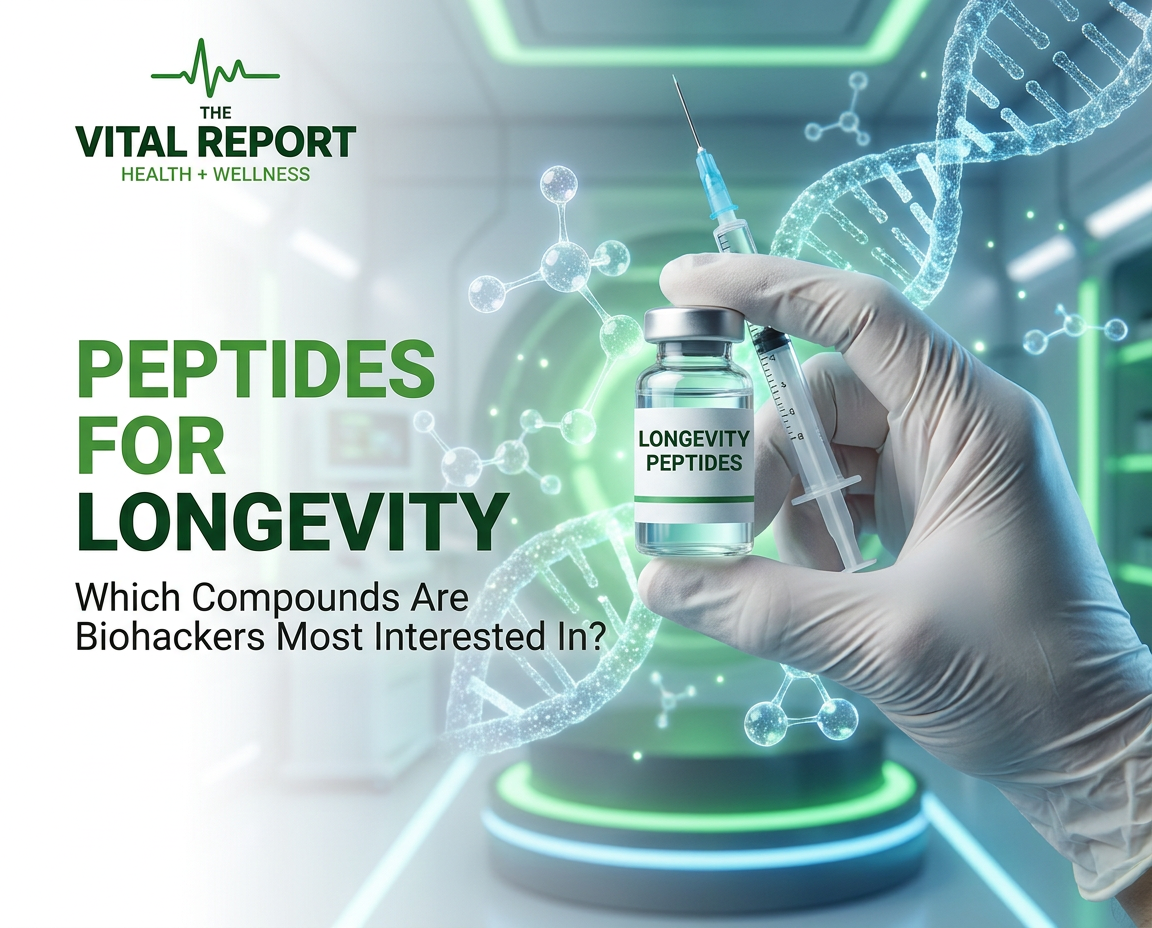
The pursuit of longer, healthier lives has moved from science fiction into mainstream health culture. Today, entrepreneurs, physicians, researchers, and wellness enthusiasts are increasingly exploring longevity peptides as potential tools for healthy aging.
While no peptide has been proven to stop aging or dramatically extend human lifespan, several compounds have generated significant interest because of their effects on cellular repair, mitochondrial function, hormone regulation, and recovery pathways. These compounds are frequently discussed in longevity clinics, biohacking communities, and scientific literature focused on extending healthspan—the number of years spent in good health.
Among the most discussed anti-aging peptides are MOTS-c, Epitalon, Sermorelin, and GHK-Cu. Each targets a different aspect of aging biology, from mitochondrial signaling and oxidative stress to telomere maintenance and tissue regeneration.
Researchers believe these compounds may influence several recognized hallmarks of aging, including mitochondrial dysfunction, genomic instability, cellular senescence, stem cell exhaustion, and chronic inflammation.
NAD+ and Mitochondrial Health: The Foundation of Longevity
Before discussing specific peptides, it is important to understand one of the central themes in modern longevity science: mitochondrial health.
Mitochondria are often called the powerhouses of the cell because they generate ATP, but researchers now recognize them as critical regulators of aging and longevity pathways.
As humans age:
- Mitochondrial efficiency declines
- Reactive oxygen species increase
- Cellular energy production decreases
- DNA repair becomes less effective
One major molecule involved in this process is NAD+ (nicotinamide adenine dinucleotide).
NAD+ participates in cellular energy production, DNA repair, sirtuin activation, mitochondrial biogenesis, and stress-response signaling.
Research consistently demonstrates that NAD+ levels decline with age, contributing to metabolic dysfunction and impaired cellular resilience.
Many emerging peptides for longevity appear to influence mitochondrial pathways directly or indirectly through NAD+-related signaling.
MOTS-c: The Mitochondrial Longevity Messenger
Among all currently discussed longevity peptides, MOTS-c may be the most intriguing from a mechanistic perspective.
MOTS-c is a mitochondrial-derived peptide encoded within mitochondrial DNA rather than nuclear DNA.
Researchers classify it as a mitochondrial signaling molecule capable of coordinating communication between the mitochondria and nucleus during periods of stress.
When the body experiences challenges such as exercise, calorie restriction, or oxidative stress, MOTS-c translocates to the nucleus and activates genes associated with cellular resilience.
How MOTS-c May Support Healthy Aging
Research suggests MOTS-c may:
- Activate AMPK signaling pathways
- Improve insulin sensitivity
- Enhance glucose utilization
- Promote mitochondrial adaptation
- Increase stress resistance
- Support metabolic flexibility
Scientists believe these actions may mimic some of the benefits associated with exercise and caloric restriction, two interventions consistently linked with improved longevity outcomes.
The Longevity Connection
Aging is often characterized by declining mitochondrial communication.
MOTS-c appears to function as a mitochondrial signaling molecule that helps restore communication between mitochondria and the nucleus. Research also suggests that circulating MOTS-c levels decrease with age, potentially contributing to reduced metabolic flexibility and resilience.
Epitalon: The Telomere Peptide
Few compounds have generated as much fascination among longevity enthusiasts as Epitalon.
Epitalon is often discussed because of its relationship to telomere biology, one of the most studied mechanisms of cellular aging.
Telomeres are protective caps located at the ends of chromosomes that shorten during cellular division. As telomeres become critically short, cells may enter a state known as cellular senescence, contributing to inflammation and age-related dysfunction.
Proposed Mechanisms of Epitalon
Laboratory studies suggest Epitalon may:
- Increase telomerase activity
- Improve DNA stability
- Support circadian rhythm regulation
- Enhance melatonin production
- Reduce oxidative stress
Although these findings are intriguing, human data remain limited and further research is needed to determine whether these cellular effects translate into meaningful longevity benefits.
Sermorelin: Supporting Growth Hormone Signaling
Another popular entry in the world of anti-aging peptides is Sermorelin.
Unlike synthetic growth hormone itself, Sermorelin stimulates the body’s natural production of growth hormone by mimicking growth hormone-releasing hormone (GHRH).
Why Growth Hormone Matters
Growth hormone signaling influences muscle maintenance, bone density, metabolism, recovery, and body composition.
Natural growth hormone production declines with age, prompting researchers to investigate whether restoring youthful growth hormone patterns may improve healthspan.
Supporters suggest Sermorelin may help:
- Preserve lean muscle mass
- Improve recovery
- Enhance sleep quality
- Support exercise adaptation
- Increase IGF-1 within physiological ranges
Maintaining skeletal muscle mass and function is increasingly recognized as one of the strongest predictors of healthy aging.
GHK-Cu: The Regeneration Peptide
Among all biohacking peptides, GHK-Cu may have some of the strongest evidence supporting tissue repair and regeneration.
GHK-Cu is a naturally occurring copper-binding peptide found throughout the body, although its levels decline significantly with age.
How GHK-Cu Works
Research suggests GHK-Cu influences:
- Collagen production
- Tissue remodeling
- Wound healing
- Antioxidant defense systems
- Inflammatory regulation
One remarkable aspect of GHK-Cu is its ability to modulate thousands of genes involved in regeneration and repair.
Aging and Tissue Recovery
A hallmark of aging is diminished recovery capacity.
Older tissues repair themselves more slowly due to:
- Reduced stem cell activity
- Chronic inflammation
- Impaired extracellular matrix remodeling
GHK-Cu appears to target several of these pathways simultaneously, making it one of the most scientifically compelling peptides for longevity currently under investigation.
Cellular Senescence, Oxidative Stress, and Recovery Pathways
The science of longevity extends beyond any single peptide.
Researchers increasingly focus on interconnected biological processes including mitochondrial dysfunction, oxidative stress, telomere shortening, and cellular senescence.
Reactive oxygen species (ROS) can damage proteins, DNA, and cell membranes, contributing to biological aging.
Similarly, the accumulation of senescent cells has been linked to chronic inflammation and age-related disease.
Many longevity peptides are being investigated because they may support recovery pathways that improve cellular resilience, enhance mitochondrial signaling, and promote tissue repair.
Final Thoughts
The growing interest in longevity peptides reflects a larger shift in medicine—from treating disease after it develops to optimizing biological function before decline occurs.
Among today’s most discussed anti-aging peptides, MOTS-c, Epitalon, Sermorelin, and GHK-Cu each target different hallmarks of aging:
- MOTS-c focuses on mitochondrial signaling and metabolic resilience.
- Epitalon targets telomere biology.
- Sermorelin supports growth hormone pathways and recovery.
- GHK-Cu promotes tissue regeneration and repair.
While current evidence remains preliminary, these compounds offer a fascinating glimpse into the future of longevity medicine. As research continues, peptides for longevity may help scientists better understand how to preserve healthspan, support recovery pathways, reduce oxidative stress, and improve quality of life throughout the aging process.