
Women’s health technology is experiencing one of its biggest breakthroughs yet. For years, wearable devices have helped millions of people monitor their sleep, activity, heart rate, and recovery. At the same time, hormone tracking companies have given women new ways to better understand fertility, menstrual cycles, and reproductive health.
Now, those two worlds are coming together.
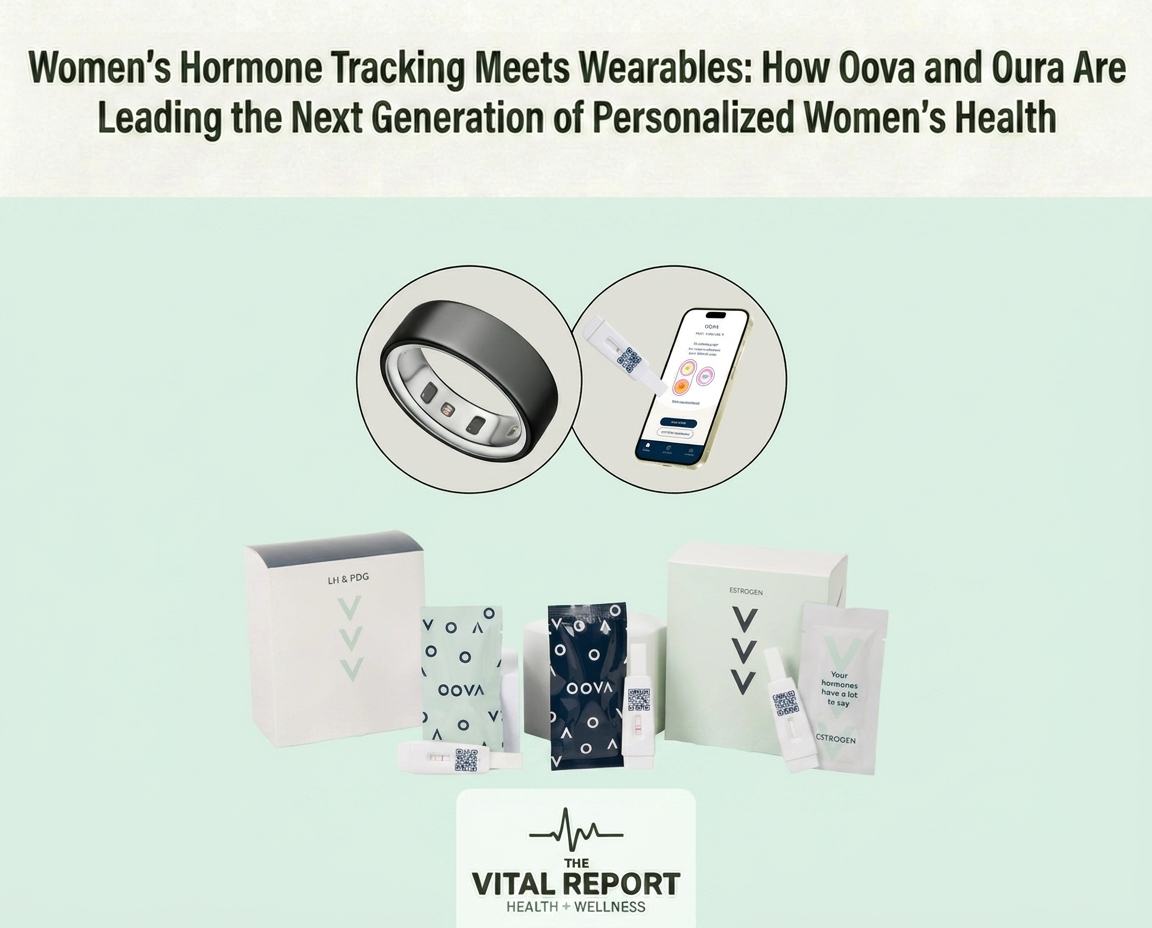
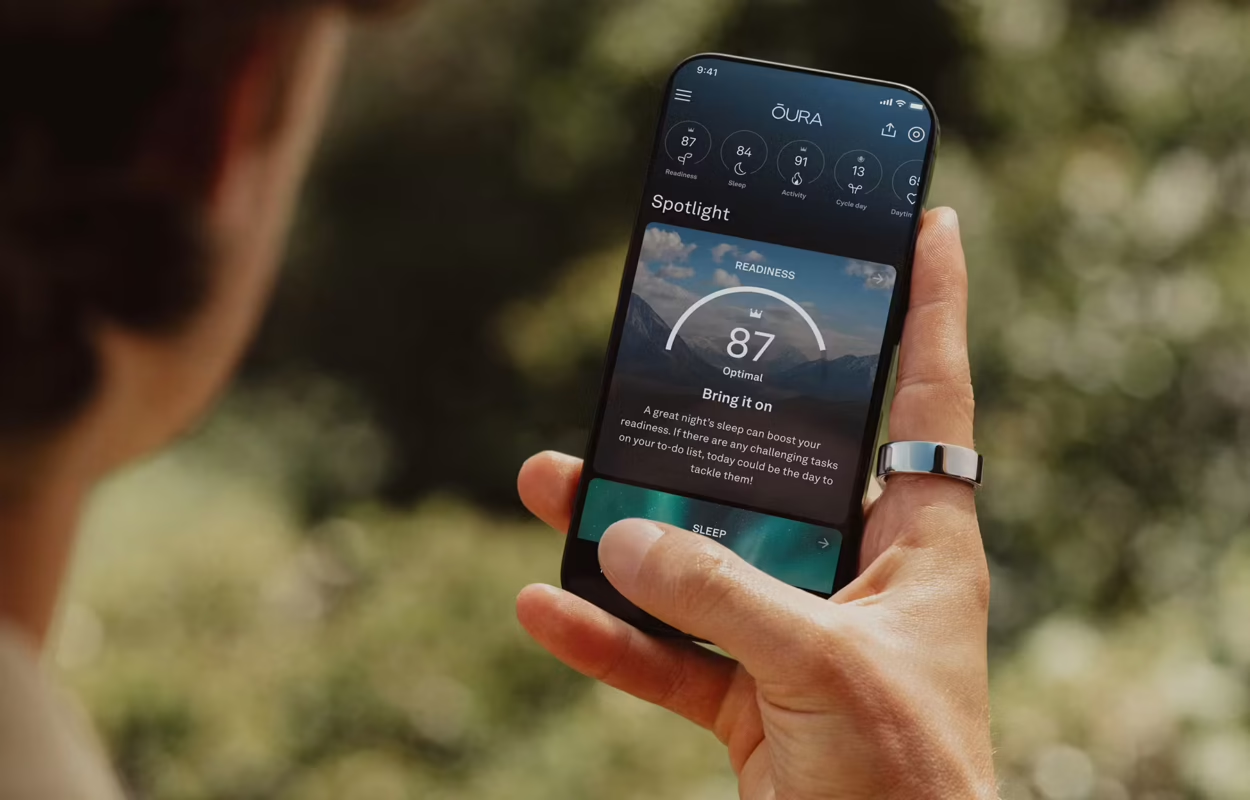
The latest example is Oova’s integration with Oura, allowing users to combine hormone measurements with continuous biometric data like sleep, readiness, body temperature, recovery, and symptom tracking in a single timeline. Instead of viewing hormones as isolated snapshots, women can now better understand how hormonal changes influence nearly every aspect of their health.
For the broader FemTech industry, this represents something much larger than a single partnership. It signals the beginning of wearable devices evolving into truly personalized health platforms built specifically for women’s biology.
Why Hormone Tracking Is Becoming One of the Biggest Trends in Healthcare
Historically, most consumer wearables were designed around metrics that apply broadly to everyone: steps, calories, sleep duration, heart rate, and exercise.
The challenge is that women’s physiology changes significantly throughout the menstrual cycle. Hormonal fluctuations influence:
- Sleep quality
- Resting heart rate
- Heart rate variability (HRV)
- Body temperature
- Recovery
- Energy levels
- Mood
- Athletic performance
Without understanding hormone levels, many wearable insights can lack important context.
For example, an elevated resting heart rate may not indicate illness or poor recovery—it could simply reflect the luteal phase of the menstrual cycle.
That missing context is exactly what companies like Oova are trying to solve.
Unlike traditional period tracking apps that rely primarily on calendar predictions, Oova uses at-home hormone testing to measure three key reproductive hormones:
- Luteinizing Hormone (LH)
- Estrogen
- Progesterone
Its AI-powered platform then helps users interpret these results for fertility, cycle health, and perimenopause.
Oova + Oura: A More Complete Picture of Women’s Health
The new Oova-Oura integration combines two complementary data sources:
Oova provides:
- Clinical-grade hormone measurements
- Ovulation confirmation
- Fertility insights
- Cycle phase tracking
Oura provides:
- Sleep stages
- Resting heart rate
- HRV
- Skin temperature trends
- Activity
- Recovery scores
- Readiness metrics
When these datasets are combined, users can visualize how hormonal changes affect their body’s recovery, sleep, energy, and overall well-being over time instead of analyzing each metric separately. The integration is available for Oova users with an active Oura membership.
This shift toward longitudinal health tracking is becoming one of the defining trends in digital health.
Rather than reacting to isolated measurements, women gain a continuous timeline that can reveal patterns that would otherwise remain hidden.
Why This Matters Beyond Fertility
Although fertility remains one of the primary use cases, hormone tracking is expanding well beyond pregnancy planning.
Many women are now using these technologies to better understand:
- Perimenopause
- Menopause
- PCOS
- Endometriosis
- Athletic recovery
- Stress management
- Sleep optimization
- General wellness
Hormones influence nearly every system in the body.
Understanding those fluctuations can make wearable recovery scores, sleep recommendations, and readiness metrics significantly more personalized.
This represents a major evolution from traditional health tracking.
Instead of asking:
“How did I sleep?”
Users can begin asking:
“How did my hormone levels affect my sleep?”
The Rise of Personalized Women’s Health
The Oova partnership is also part of Oura’s larger investment in women’s health.
Over the past several years, Oura has expanded its ecosystem through partnerships with companies including:
- Natural Cycles
- Clue
- Flo
- Mira
- Maven Clinic
- Carrot Fertility
These integrations are gradually transforming Oura from a sleep tracker into a broader health platform that supports fertility, pregnancy, menopause, and reproductive wellness.
The company has also introduced women’s health-focused AI capabilities designed to interpret biometric data within the context of hormonal changes rather than treating them as anomalies.
Competition Across the FemTech Industry Is Accelerating
Oova isn’t alone.
Nearly every major wearable and women’s health company is investing heavily in hormone-aware technology.
Oura
Industry leader in wearable recovery, sleep, and readiness tracking with expanding women’s health capabilities.
Oova
Clinical-grade at-home hormone testing focused on fertility, cycle health, and perimenopause.
Mira
Known for its digital fertility analyzer that measures multiple reproductive hormones at home.
Apple
Apple Health continues adding menstrual cycle, fertility, pregnancy, perimenopause, and menopause features into its ecosystem.
WHOOP
WHOOP has expanded research into female physiology and now incorporates female-specific biomarker testing and menstrual cycle insights.
This increasing competition is benefiting consumers through faster innovation, improved algorithms, and more comprehensive health insights.
AI Is Becoming the Missing Piece
Collecting health data is only half the challenge.
Interpreting it is where artificial intelligence becomes valuable.
A typical user now generates thousands of biometric data points every week:
- Sleep stages
- HRV
- Temperature
- Recovery
- Activity
- Hormone levels
- Symptoms
- Mood
- Cycle information
No human can realistically connect every variable.
AI can identify trends, detect correlations, and deliver personalized recommendations based on months—or even years—of historical data.
Rather than simply reporting numbers, these systems increasingly answer questions such as:
“Why did my recovery score drop?”
“Why am I sleeping differently this week?”
“How does ovulation affect my readiness?”
That contextual understanding is becoming one of the biggest differentiators in digital health.
The Future May Be Continuous Hormone Monitoring
Today’s hormone testing still relies primarily on at-home testing kits.
But the future could look very different.
Several emerging companies including Clair and Incora are developing wearable technologies designed to continuously monitor hormone-related biomarkers through devices such as bracelets and earrings. While many of these products are still in development, they reflect a broader industry push toward passive, continuous hormone monitoring.
If successful, women may eventually receive real-time hormonal insights similar to the way smartwatches continuously monitor heart rate.
That could dramatically improve:
- Fertility prediction
- Perimenopause management
- Hormone therapy
- Athletic training
- Preventive healthcare
Privacy Remains an Important Consideration
As hormone tracking becomes more sophisticated, privacy becomes increasingly important.
Reproductive health data is among the most sensitive categories of personal information.
Consumers should understand:
- How companies store data
- Whether data is encrypted
- If information is shared with third parties
- What permissions users maintain over their health records
The best digital health platforms continue investing heavily in transparency and user control while expanding AI-powered insights.
Why This Matters for the Wellness Industry
The integration between Oova and Oura represents more than another app partnership.
It highlights where consumer healthcare is headed.
Future wellness platforms won’t rely on one source of information.
Instead, they’ll combine:
- Wearables
- Lab testing
- Hormone tracking
- AI analysis
- Lifestyle data
- Sleep metrics
- Recovery data
Together, these tools create a far more complete picture of health than any single device can provide.
Women’s health has historically been underserved in technology and clinical research. Today’s innovations are helping close that gap by building products that account for the realities of hormonal physiology rather than treating it as an exception.
As wearable technology becomes smarter, hormone tracking becomes more accessible, and AI grows more capable of interpreting complex health data, personalized women’s healthcare is moving from concept to reality.
Related Reading
Interested in wearable technology? Check out Vital Report’s guide to the Best Smart Rings of 2026, where we compare Oura, Ultrahuman, RingConn, Samsung Galaxy Ring, and other leading health wearables to help readers find the best device for sleep, recovery, and overall wellness.
Frequently Asked Questions
Does Oura measure hormone levels?
No. Oura measures biometric signals such as sleep, heart rate, HRV, and skin temperature. Hormone measurements come from platforms like Oova, which integrate with Oura.
What hormones does Oova measure?
Oova measures luteinizing hormone (LH), estrogen, and progesterone using clinical-grade at-home testing.
Who benefits most from hormone tracking?
Women trying to conceive, managing irregular cycles, navigating perimenopause or menopause, optimizing athletic performance, or simply looking to better understand their overall health may benefit from hormone tracking.
Is hormone tracking replacing wearable devices?
No. Hormone testing and wearables complement each other. Together they provide a more complete picture of health than either can alone.
What is the future of women’s health wearables?
The next generation of women’s health technology is expected to combine continuous biometric monitoring, hormone analysis, AI-powered insights, and personalized recommendations into integrated health ecosystems that support women through every stage of life.