
The clean-living movement is expanding beyond food, skincare, supplements, and personal care.
Now, consumers are taking a much closer look at what they use to wash their clothes and dishes.
Laundry detergent and dishwasher detergent are products most households use several times every week. Yet many conventional options come in large plastic containers, contain synthetic fragrances or dyes, or use dissolvable films around individual detergent pods.
That has helped create a new category of household products centered around simpler ingredient lists, concentrated formulas, refillable packaging, and plastic-free alternatives.
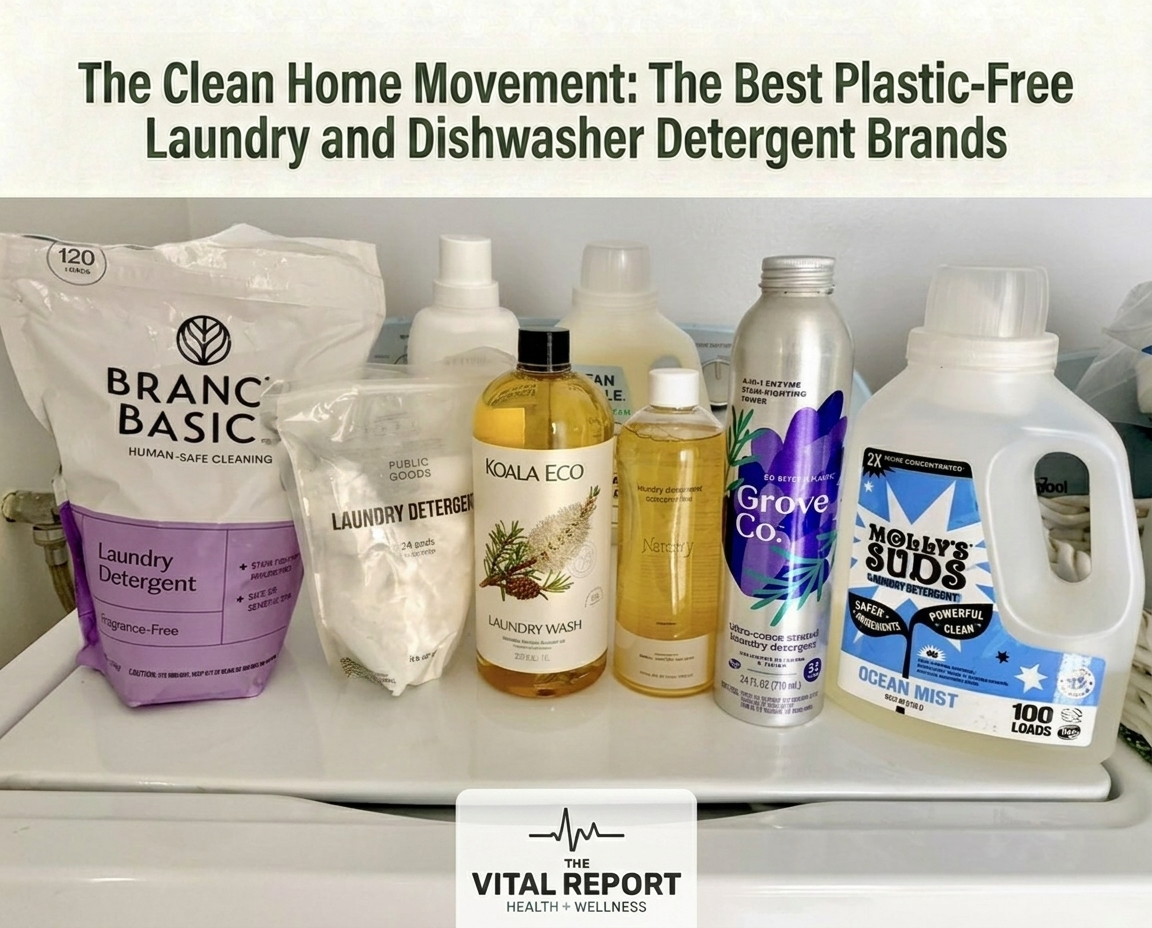
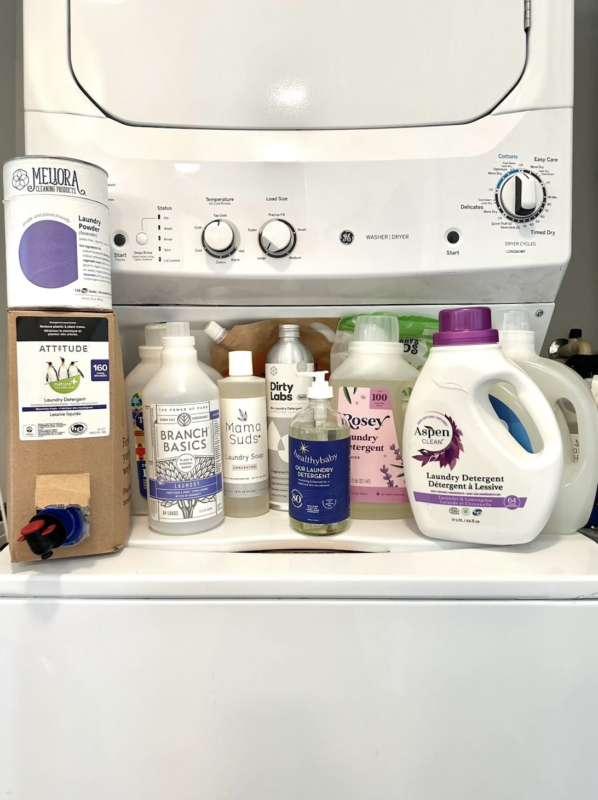
Brands like Blueland, Dirty Labs, Molly’s Suds, Branch Basics, and Meliora are increasingly appealing to consumers who want to reduce plastic waste while also paying more attention to the ingredients being used throughout their homes.
But there’s an important distinction consumers should understand.
"Clean," "non-toxic," "eco-friendly," "plastic-free," and "microplastic-free" don’t all mean the same thing.
And the science surrounding some popular claims — particularly around the water-soluble film used in detergent pods — is more complicated than social media often suggests.
Here’s what to know about the clean-home detergent movement and some of the brands leading it in 2026.
Why Consumers Are Rethinking Laundry and Dishwasher Detergent
For decades, purchasing detergent was relatively simple.
Consumers chose between powder and liquid.
Then detergent pods changed the category.
Pods offered convenience because every load came pre-measured inside a small water-soluble packet.
The same format became enormously popular for dishwashers.
But changing consumer attitudes toward plastics and chemical ingredients are now pushing some shoppers in the opposite direction.
Instead of asking which detergent smells strongest or comes in the most convenient pod, consumers are increasingly asking:
What ingredients are actually inside?
Does it contain dyes?
Does it contain synthetic fragrance?
Is the packaging recyclable?
Does it use plastic?
Does the individual dose contain a plastic-based film?
Can I buy concentrated refills instead of another large bottle?
That shift has created an opportunity for a new generation of cleaning companies.
What Is the Plastic Around Detergent Pods?
Most conventional laundry and dishwasher pods use a material called polyvinyl alcohol, commonly abbreviated PVA or PVOH.
PVA is a synthetic, water-soluble polymer.
When the pod enters the washer or dishwasher, the film dissolves and releases the detergent inside.
This has led to a significant debate over whether consumers should consider PVA a source of microplastic pollution.
The answer isn’t as straightforward as some marketing makes it sound.
Traditional microplastics are generally solid plastic particles measuring less than five millimeters.
PVA behaves differently because it dissolves in water.
A recent review of the issue noted that the European Union does not classify water-soluble polymers such as PVA as microplastics. Researchers also note that detergent-grade PVA can biodegrade under appropriate conditions.
At the same time, questions remain about exactly how completely different PVA formulations biodegrade under real-world wastewater conditions.
In other words:
Calling every detergent pod a major source of microplastics is an oversimplification.
But consumers who want to eliminate unnecessary plastic polymers from their cleaning routine can still choose products that avoid PVA entirely.
That is one of the reasons plastic-free detergent tablets and traditional powders are becoming more attractive.
Why Powder Detergent Is Making a Comeback
For years, powder detergent felt old-fashioned.
Now it might be one of the most logical products in the clean-home movement.
Powder doesn’t require a large bottle filled primarily with water.
It can be highly concentrated.
It can be shipped in lightweight cardboard or paper packaging.
And it doesn’t require an individual dissolvable film around every dose.
Those advantages reduce packaging materials while allowing consumers to control exactly how much detergent they use.
Powders can also make it easier for manufacturers to create concentrated formulations without transporting enormous quantities of water around the country.
This is partly why many environmentally focused cleaning brands are going back to formats that existed long before detergent pods.
1. Blueland: One of the Biggest Names in Plastic-Free Cleaning
Perhaps the most recognizable brand in the category is Blueland.
Blueland’s entire business has been built around eliminating single-use plastic from everyday household products.
Its laundry system uses compressed detergent tablets rather than liquid detergent bottles or PVA-wrapped pods.
The company’s Laundry Detergent Tablets are sold without a dissolvable plastic wrapper.
Instead, consumers can purchase a reusable metal tin and refill it with tablets shipped in paper-based refill packaging.
Blueland says its tablets are:
100% plastic-free
PVA-free
Dye-free
Free from optical brighteners
Made primarily with plant and mineral-based ingredients
The company’s laundry products have also earned the EPA’s Safer Choice certification.
The EPA Safer Choice program evaluates every intentionally added chemical ingredient in certified products against health and environmental criteria.
That certification provides something increasingly important in the clean-product industry: independent criteria beyond a company’s own marketing language.
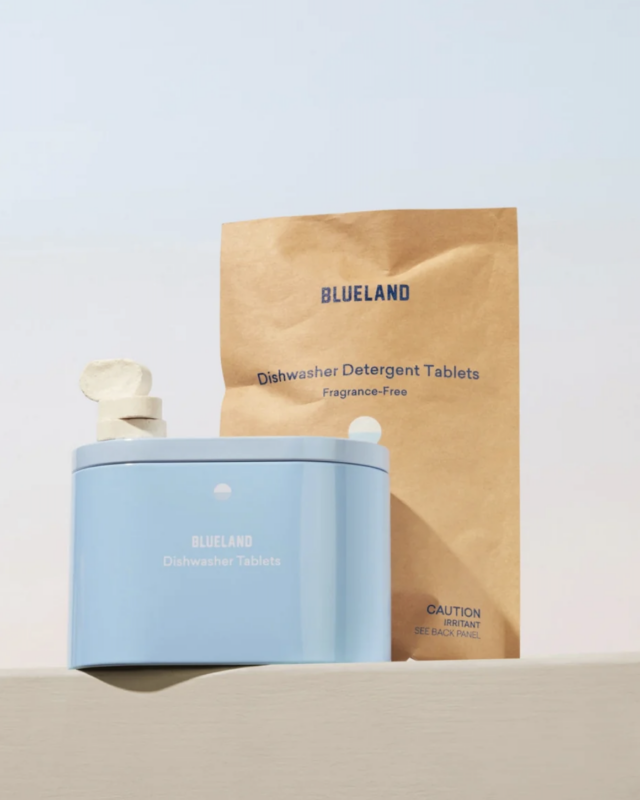
Blueland Dishwasher Tablets
Blueland uses essentially the same strategy in the dishwasher.
Its Dishwasher Detergent Tablets contain no PVA wrapper.
They are compressed tablets that consumers place directly into the dishwasher.
Blueland describes the current formula as plastic-free and microplastic-free and uses plant- and mineral-based ingredients.
Consumers can choose between fragrance-free and lemon-scented options.
For someone specifically trying to eliminate both conventional plastic packaging and PVA films, Blueland may be one of the simplest swaps.
2. Dirty Labs: The Premium Detergent Approach
Dirty Labs takes a slightly different approach.
Rather than focusing entirely on tablets, the company has built its reputation around highly concentrated enzyme-based laundry detergents.
Dirty Labs uses what it calls Phytolase enzyme cleaning technology, combining enzymes and cleaning ingredients designed to break down stains while reducing reliance on certain conventional detergent ingredients.
Its products are also highly concentrated.
That means consumers use a relatively small amount per load compared with many traditional liquid detergents.
Dirty Labs publishes detailed ingredient information and maintains a substantial "no list" of ingredients it intentionally avoids.
According to the company’s ingredient transparency page, its laundry formulas avoid ingredients including:
Optical brighteners
Phosphates
Phthalates
Bisphenol A
Chlorine bleach
Quaternary ammonium compounds
Synthetic dyes
Certain synthetic preservatives
Dirty Labs has also been recognized through the EPA Safer Choice program.
That combination of concentrated formulas, ingredient transparency, and strong performance positioning has helped Dirty Labs appeal to consumers who want something that feels more premium than traditional "green" detergent.
Clean Doesn’t Have to Mean Weak
This is an important point.
One of the biggest challenges facing environmentally focused cleaning brands has historically been performance.
Consumers may care about ingredients and sustainability, but they still expect detergent to remove food, grease, sweat, makeup, dirt, and stains.
If a cleaner requires washing every load twice, it may actually undermine some of the environmental advantages it was designed to provide.
That’s why enzymes have become increasingly important.
Enzymes can target specific types of stains.
Proteases help break down protein-based stains.
Lipases can target fats and oils.
Amylases can help break down starches.
Using carefully formulated enzyme systems can allow modern concentrated detergents to clean effectively without simply increasing the amount of detergent in every load.
3. Molly’s Suds: Simple Ingredients and Powder Detergent
Molly’s Suds has become particularly popular among consumers searching for simpler household products.
The company began with laundry powder and has expanded into stain removers, oxygen whiteners, dishwasher products, and other household cleaners.
Its laundry powders generally use relatively short ingredient lists compared with many conventional detergents.
The brand has become popular among people looking to avoid dyes, strong fragrances, and complicated formulations.
Molly’s Suds also offers fragrance-free products, which can be particularly attractive for households attempting to reduce exposure to unnecessary fragrance chemicals.
Powder is central to the company’s appeal.
Instead of another large plastic jug filled with liquid detergent, consumers can use concentrated powder and control the dose themselves.
That model is increasingly aligned with the broader movement toward lower-waste household products.
4. Branch Basics: One Concentrate for Almost Everything
Branch Basics approaches clean-home products from an entirely different angle.
Instead of selling a completely separate cleaner for every surface, the company built much of its system around a concentrated multipurpose formula.
Consumers dilute the concentrate with water differently depending on the task.
The same cleaning concentrate can be used across multiple areas of the home.
That includes:
Laundry
Kitchen cleaning
Bathroom surfaces
General household cleaning
Hand washing
Stain treatment
The philosophy is simple.
Rather than purchasing ten different bottles of cleaning chemicals, consumers purchase one concentrate and reusable bottles.
This can significantly reduce packaging over time.
Branch Basics has become especially popular within the broader "low-toxin home" movement because of its ingredient philosophy and minimalistic approach.
For consumers overwhelmed by dozens of cleaning products underneath the sink, the system provides an entirely different solution:
Use fewer products altogether.
5. Meliora: Going Back to Laundry Powder
Meliora Cleaning Products is another company built around simple household cleaning formulas and reduced plastic packaging.
The company is particularly well known for laundry powder.
Rather than creating another pod or highly complicated delivery system, Meliora leans into the simplicity of traditional powdered detergent.
The brand’s packaging and refill model are designed around reducing plastic while giving consumers a concentrated cleaning product.
That approach reflects an increasingly common realization in sustainable consumer goods:
Not every problem requires new technology.
Sometimes the lower-waste alternative is simply improving a product format that has existed for decades.
Laundry Sheets Might Not Be as Plastic-Free as They Look
Laundry detergent sheets have become another popular alternative.
They are lightweight.
They arrive in small cardboard packages.
They appear dramatically more sustainable than a large plastic detergent bottle.
But consumers trying to avoid synthetic polymers should read the ingredient list carefully.
Many laundry sheets use polyvinyl alcohol as part of the sheet’s structure.
That doesn’t automatically make the product unsafe.
But it does mean some products marketed as "plastic-free" or environmentally friendly may still contain PVA.
This illustrates why packaging alone doesn’t tell the entire story.
A cardboard box can still contain a polymer-based detergent sheet.
Likewise, a plastic bottle might contain an extremely concentrated formula that lasts significantly longer than a conventional product.
Sustainability comparisons are rarely as simple as they appear.
What Does "Non-Toxic" Detergent Actually Mean?
"Non-toxic" has become one of the most popular marketing phrases in household cleaning.
But consumers should understand that it is not necessarily a standardized scientific category.
Everything can be toxic at a sufficient dose — even substances considered natural.
A better approach is looking for specific characteristics.
Does the company disclose its ingredients?
Does it avoid unnecessary dyes?
Is a fragrance-free option available?
Does the formula contain biodegradable surfactants?
Has it earned an independent certification?
Does the company explain what each ingredient does?
One useful tool is the EPA’s Safer Choice database.
As of July 2026, the database contains thousands of product listings meeting the agency’s Safer Choice criteria.
The certification doesn’t mean a product is completely risk-free.
But it gives consumers an independent framework for evaluating ingredients instead of relying purely on branding.
Fragrance-Free May Be the Simplest Clean-Home Swap
One of the easiest changes consumers can make is choosing fragrance-free detergent.
Fragrance isn’t necessary for cleaning.
It exists primarily to make clothes or dishes smell a certain way.
Some people enjoy that experience.
Others may prefer to minimize unnecessary fragrance ingredients, particularly those with sensitive skin.
Many clean-home brands now offer both scented and fragrance-free versions.
For someone trying to simplify their household products without completely changing their routine, choosing fragrance-free can be one of the easiest places to start.
Don’t Forget About Fabric Softener
Laundry detergent gets most of the attention.
But fabric softener may deserve just as much scrutiny.
Traditional fabric softeners work by depositing chemicals onto fabric fibers.
That coating creates the softer feel consumers associate with freshly washed laundry.
Dryer sheets operate through a similar idea, transferring compounds onto fabrics during drying.
Consumers trying to simplify their laundry routines may choose to eliminate fabric softener entirely.
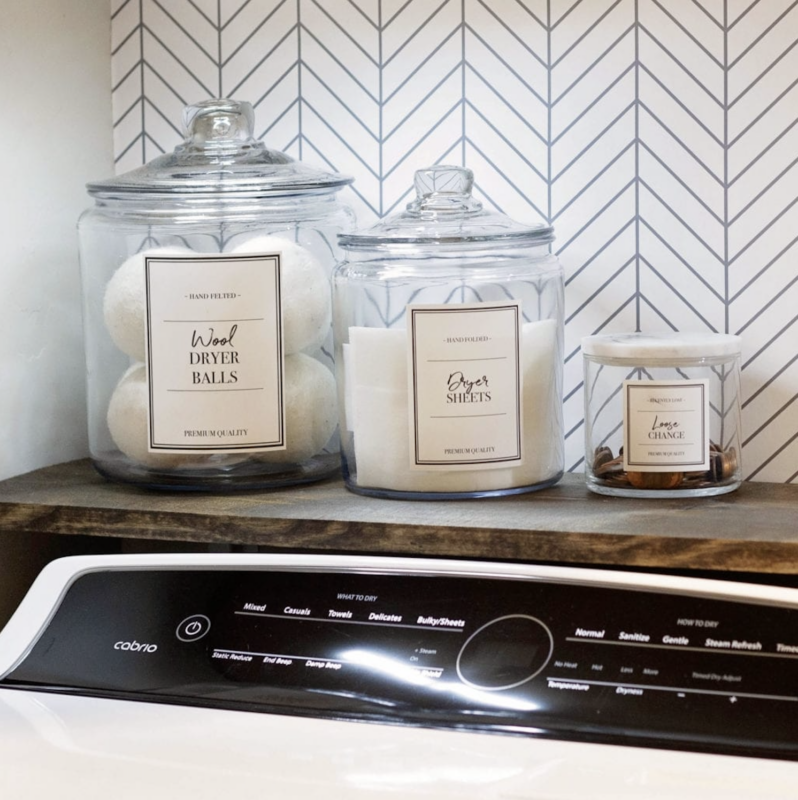
Wool dryer balls have become a popular alternative for reducing static and helping separate clothing during drying.
Again, the larger theme is simplification.
The clean-home movement isn’t necessarily about finding a "clean" replacement for every product.
Sometimes it’s about realizing you don’t need the product at all.
What About Microplastics Coming From Clothes?
There’s another major source of plastic in the laundry room that has nothing to do with detergent.
Synthetic clothing.
Polyester, nylon, acrylic, and other synthetic textiles are essentially plastic-based fibers.
During washing and normal wear, those fabrics can shed microscopic fibers.
That means changing detergent alone won’t eliminate the laundry room’s contribution to microplastic pollution.
Consumers particularly concerned about microfiber shedding can prioritize natural fibers such as cotton, linen, hemp, and wool when practical.
Washing clothing less frequently, using gentler cycles, and keeping garments longer may also reduce overall textile waste.
Specialized microfiber filters and laundry bags have also been developed to capture fibers released during washing.
This demonstrates why the microplastic issue is much broader than detergent pods.
Dishwasher Detergent Deserves Extra Attention
Dishwasher detergent has another consideration:
It cleans the plates, glasses, silverware, and cookware we use for food.
That can make consumers particularly interested in simplified formulas.
But this doesn’t mean dishes washed with conventional detergent are inherently unsafe.
Dishwashers also include rinse cycles specifically designed to remove detergent residue.
The more meaningful questions are whether consumers want unnecessary fragrance, dyes, packaging, or polymer films in the products they use every day.
For those who do, plastic-free dishwasher tablets and traditional dishwasher powders provide increasingly accessible alternatives.
The Best Clean Laundry Detergent Brands to Know
Consumers trying to create a cleaner, lower-plastic laundry routine have several different approaches.
Blueland is one of the best options for someone specifically looking for a PVA-free tablet and plastic-free refill system.
Dirty Labs is appealing for consumers prioritizing cleaning performance, enzyme technology, concentration, and ingredient transparency.
Molly’s Suds offers traditional powder-based simplicity and fragrance-free options.
Branch Basics works well for someone looking to dramatically reduce the overall number of cleaning products in their home.
Meliora is ideal for consumers who prefer simple powdered laundry detergent and reduced packaging.
There isn’t one universally "best" detergent.
The right choice depends on whether a consumer prioritizes plastic reduction, fragrance avoidance, cleaning performance, ingredient simplicity, cost, or convenience.
The Best Clean Dishwasher Detergent Brands
For dishwasher detergent, the same principles apply.
Consumers specifically trying to avoid PVA-wrapped pods can look for loose powders or unwrapped compressed tablets.
Blueland is one of the clearest examples because its dishwasher tablets contain no dissolvable PVA wrapper.
Other environmentally focused brands increasingly offer dishwasher powders and tablets as demand grows.
The simplest rule is:
If you’re trying to avoid PVA, don’t assume a "pod," "sheet," or "eco" label means the product is polymer-free.
Check the actual ingredients and product format.
Sustainability Is More Complicated Than "Plastic-Free"
There is one important warning.
Plastic-free doesn’t automatically equal environmentally perfect.
A heavy glass container may require more energy to transport.
A poorly performing detergent may require consumers to run another wash cycle.
A biodegradable ingredient may still create environmental impacts during manufacturing.
A concentrated product inside a small amount of recyclable plastic could potentially generate less total environmental impact than a less efficient product in paper packaging.
Evaluating sustainability therefore requires looking at the entire lifecycle.
Packaging matters.
But so do:
Ingredient sourcing
Manufacturing
Transportation
Water consumption
Cleaning performance
Dosage
Biodegradability
Product lifespan
End-of-life disposal
The best companies will increasingly be expected to provide transparency across all of those areas.
The Bottom Line
The clean-home movement is moving into the laundry room and kitchen.
Consumers who once focused primarily on clean food, skincare, and supplements are now questioning everyday household products such as laundry detergent and dishwasher detergent.
Brands including Blueland, Dirty Labs, Molly’s Suds, Branch Basics, and Meliora are responding with concentrated formulas, powders, refill systems, simpler ingredients, and reduced plastic packaging.
For consumers specifically concerned about detergent pods, the key term to understand is PVA.
PVA is the water-soluble polymer commonly used around conventional laundry and dishwasher pods.
It should not automatically be described as traditional microplastic, and researchers continue to debate how different formulations behave in real-world wastewater environments.
Still, consumers who want to reduce their use of plastic polymers have straightforward alternatives.
Powdered detergents.
Unwrapped tablets.
Concentrated liquids.
Refill systems.
And fewer household cleaning products overall.
The future of clean living may therefore be less about discovering another miracle cleaning ingredient and more about returning to something much simpler:
Use fewer ingredients, less packaging, fewer products, and only as much detergent as you actually need.
Frequently Asked Questions
What are the best plastic-free laundry detergent brands?
Blueland, Molly’s Suds, Meliora, Dirty Labs, and Branch Basics are among the brands worth considering. Their approaches vary from PVA-free tablets and powdered detergents to concentrated liquid formulas and refillable cleaning systems.
Does laundry detergent contain microplastics?
Some cleaning products can contain synthetic polymers, but the issue is complicated. Conventional detergent pods often use PVA, a water-soluble synthetic polymer. PVA is not universally classified as a microplastic because it dissolves rather than remaining as solid particles.
Are detergent pods made of plastic?
Most conventional laundry and dishwasher pods use polyvinyl alcohol, or PVA, as the dissolvable outer film. PVA is a synthetic polymer designed to dissolve in water.
Does PVA turn into microplastics?
PVA should not automatically be described as conventional microplastic. It dissolves in water, and detergent-grade formulations can biodegrade under certain conditions. Researchers continue to study how completely it degrades under real-world wastewater conditions.
Is Blueland PVA-free?
Yes. Blueland states that its laundry and dishwasher tablets do not use PVA films and are designed to be 100% plastic-free.
Are laundry detergent sheets plastic-free?
Not necessarily. Some laundry sheets contain PVA as part of the sheet structure. Consumers trying to avoid synthetic polymers should read the ingredient list rather than relying only on plastic-free-looking cardboard packaging.
Is powder detergent better than pods?
Powder has several potential sustainability advantages. It can be highly concentrated, doesn’t require a PVA wrapper, and can often be packaged in cardboard. Cleaning performance still depends on the individual formula.
What does EPA Safer Choice mean?
EPA Safer Choice is a certification program that evaluates all intentionally added ingredients in participating products against human-health and environmental criteria. Consumers can search certified cleaning products through the EPA’s Safer Choice database.
Should I use fragrance-free laundry detergent?
Fragrance-free detergent can be a good option for people who want fewer unnecessary ingredients or who are sensitive to fragrance. Fragrance itself isn’t necessary for cleaning clothing.
What is the biggest source of microplastics from laundry?
Synthetic textiles themselves are an important source. Polyester, nylon, acrylic, and other synthetic fabrics can shed microscopic fibers during washing and wear, meaning changing detergent alone does not eliminate microfiber pollution.