


Gwyneth Paltrow has spent nearly two decades turning Goop from a celebrity newsletter into one of the most recognizable wellness brands in the world.
Now, that philosophy has a dining room.
Goop Kitchen has officially opened its first full dine-in restaurant in Del Mar, California, marking a major evolution for a food concept that began as a delivery-first experiment.
The new restaurant takes many of the ideas that have defined Goop for years — ingredient-conscious eating, wellness, premium experiences and Paltrow’s personal approach to food — and turns them into a physical restaurant.
There are salads and bowls, but there are also pizzas, pasta, wraps, rotisserie chicken and desserts.
And one ingredient category is noticeably absent: seed oils.
Goop Kitchen has increasingly made its no-seed-oil approach part of its identity, placing the company directly inside one of the biggest food and wellness conversations of the moment.
But the bigger story may be what is happening to Goop Kitchen itself.
What began as another extension of the Goop brand is starting to look increasingly like a restaurant business with ambitions of its own.
From a Newsletter to a Wellness Empire
The Goop story began long before there was a restaurant.
Gwyneth Paltrow launched Goop in 2008 as a weekly newsletter featuring personal recommendations across food, travel, wellness and lifestyle.
At the time, celebrity lifestyle companies were nowhere near as common as they are today.
Goop helped change that.
The newsletter eventually evolved into a broader media and commerce company spanning beauty, fashion, wellness, travel, supplements, home products and events.
Through it all, food remained a major part of Paltrow’s public identity.
She released cookbooks, shared recipes and regularly discussed the way she eats, cooks and thinks about ingredients. Goop simultaneously became known for promoting a version of wellness that emphasized knowing what goes into products and questioning ingredients that had previously been treated as ordinary.
That philosophy eventually made its way into the restaurant industry.
Goop Kitchen Arrived in 2021
Goop Kitchen launched in Los Angeles in 2021, but it did not begin as a conventional restaurant.
Instead, the company built the concept around delivery.
That strategy allowed Goop Kitchen to focus on the food itself without immediately investing in traditional dining rooms.
The menu also reflected an important change in wellness food.
Rather than asking customers to live on juices, raw vegetables and stereotypical “health food,” Goop Kitchen took recognizable meals and rebuilt them around its own ingredient standards.
According to Goop Kitchen, its entire menu is made without gluten, seed oils, processed additives, refined sugars and corn.
Salads and bowls sit alongside pizza, pasta, wraps, chicken and desserts.
The brand’s pitch is not necessarily to stop eating the foods people enjoy.
It is to change how those foods are made.
The No-Seed-Oil Positioning
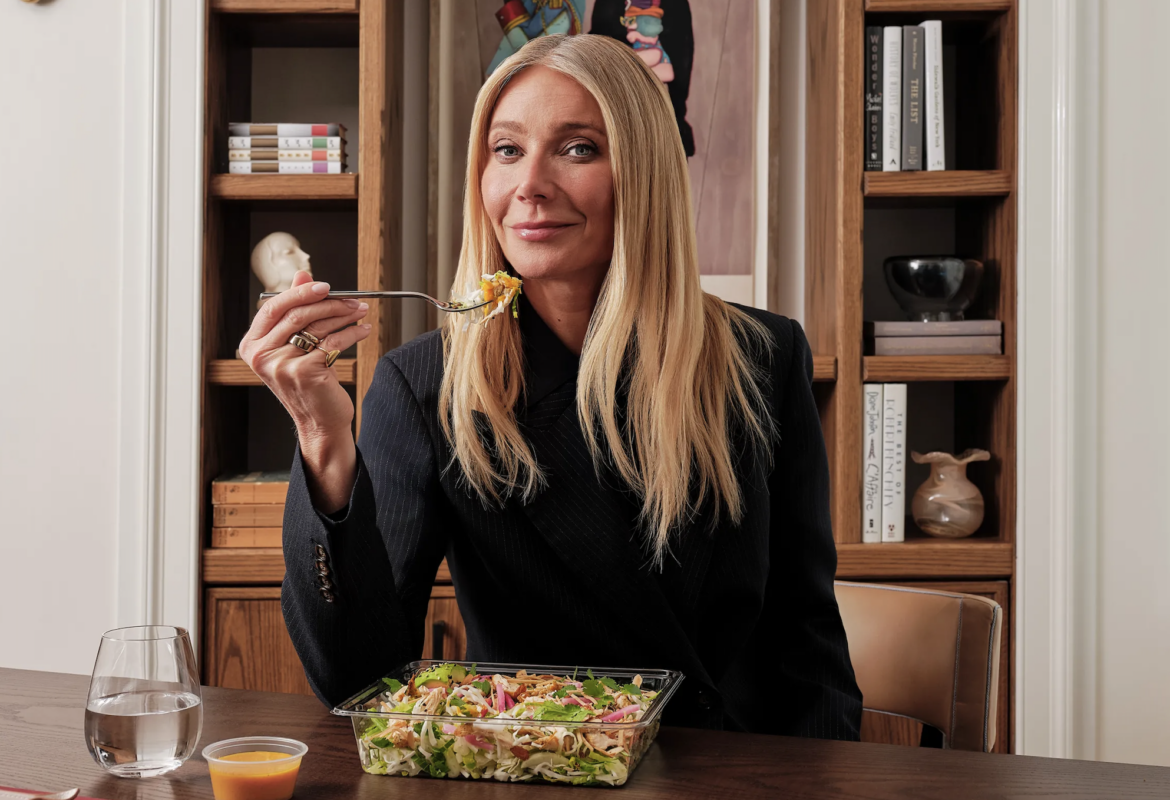
One of the clearest examples of that philosophy is Goop Kitchen’s stance on seed oils.
The company says its kitchens use algae oil, extra-virgin olive oil, coconut oil, sesame oil and avocado oil instead.
That positioning has become increasingly relevant as seed oils have moved from a niche nutrition conversation into the mainstream wellness world.
Whatever side someone takes in the broader debate, the business impact is becoming difficult to ignore.
“Seed-oil-free” is turning into a recognizable consumer label.
And Goop Kitchen isn’t the only restaurant betting on it.
True Food Kitchen has made eliminating seed oils a major part of its ingredient strategy, cooking with avocado and olive oils and saying that roughly 98% of the ingredients used across its kitchens are seed-oil-free.
Sweetgreen has also moved toward olive oil for cooking many of its core ingredients.
Suddenly, the type of oil being used behind the kitchen doors is becoming something restaurants can actually market.
Gwyneth Paltrow’s Food Philosophy Is Becoming More Mainstream
Paltrow’s relationship with food has often generated as much attention as her acting career.
Her cookbooks and Goop content have promoted everything from clean eating and elimination-style diets to vegetable-heavy meals and ingredient-conscious versions of comfort foods.
Some of those ideas have generated controversy.
Others look considerably less unusual today than they did a decade ago.
Walk through a modern grocery store and many of the ideas associated with wellness culture are now printed directly onto packaging.
No added sugar.
Gluten-free.
Organic.
Plant-based.
High protein.
No artificial ingredients.
Minimal ingredients.
And increasingly: seed-oil-free.
That evolution is important for understanding why Goop Kitchen may have more potential today than it would have had when Goop originally launched.
The market has moved toward it.
Goop Kitchen Is Starting to Put Up Serious Numbers
The restaurant’s growth suggests the concept is resonating beyond Goop’s core audience.
The company has expanded beyond its original Southern California footprint and into one of the most competitive food markets in the country: New York City.
The New York launch also gave Goop Kitchen something arguably more valuable than celebrity attention — outside validation that people actually liked the food.
Bon Appétit tried Goop Kitchen after its New York expansion, highlighting dishes including the Brentwood Chinese Chicken Salad, Teriyaki Salmon Hand Rolls, G-Potle Bowl and Pepperoni Potts pizza.
That distinction matters.
Gwyneth Paltrow’s name can convince people to try Goop Kitchen once.
Building a scalable restaurant business requires convincing them to come back.

Goop Kitchen Is Entering the Sweetgreen-Erewhon World
Goop Kitchen also exists within a restaurant category that has become significantly larger over the past decade.
Health-conscious food is no longer necessarily marketed like diet food.
Restaurants can be aspirational, aesthetically driven and culturally relevant while still building their identities around nutrition and ingredients.
Sweetgreen helped turn the salad into a lifestyle product.
Erewhon turned the health-food grocery store into something closer to a cultural destination.
Goop Kitchen is trying to occupy a similar space.
In fact, Vanity Fair’s coverage of Goop Kitchen’s New York expansion specifically positioned the concept within the broader world occupied by brands like Sweetgreen and Erewhon.
That may ultimately be a more useful way to understand Goop Kitchen than simply calling it Gwyneth Paltrow’s restaurant.
It is selling food, but it is also selling participation in a particular version of wellness culture.
And Goop already has nearly two decades of experience building exactly that type of brand.
Now Goop Kitchen Has a Real Dining Room
The next phase officially arrived in Del Mar.
Goop Kitchen’s new location at One Paseo represents its first true full-service dine-in restaurant.
Instead of receiving a Goop Kitchen order at home or picking it up, customers can now sit down inside a space designed around the brand.
The restaurant features indoor and outdoor seating and brings Goop’s familiar visual language into hospitality.
It is polished, bright, warm and highly intentional.
That matters because Goop has always sold more than products.
It sells an aesthetic.
The Del Mar restaurant gives consumers an opportunity to physically enter that aesthetic.
Why the Dine-In Opening Matters
Delivery was an effective way to introduce Goop Kitchen.
A dining room creates something different.
It turns the company into a destination.
That opens the door to customers meeting friends for lunch, stopping in after shopping, having casual dinners and building Goop Kitchen into their routines in ways that delivery alone cannot.
It also allows Goop to do what it has historically done best: build an experience around a product.
Goop is not simply selling skincare.
It sells a beauty philosophy.
It does not simply sell supplements.
It sells a wellness routine.
And now it is not simply selling salads and pizza.
It can sell the entire Goop Kitchen experience.
Consumers Are Looking More Closely at Everyday Products
Goop Kitchen also fits into a much larger shift in wellness.
Consumers increasingly want to know exactly what is inside the products they use every day.
That scrutiny isn’t limited to restaurant food.
As Vital Report recently explored in our look at the rise of microplastic testing in everyday products, consumers are beginning to look beyond broad claims like “clean” and “healthy” and ask more specific questions about what they’re actually being exposed to.
Food is experiencing a similar transition.
People want to know what ingredients are being used.
What type of oil something is cooked in.
How much processing is involved.
What has been added.
And increasingly, what has intentionally been removed.
Goop Kitchen is building an entire restaurant identity around answering those questions.
Goop Kitchen Is Riding a Much Bigger Food Trend
Health-conscious eating is moving beyond calorie counts and traditional diet culture.
Consumers increasingly care about ingredients.
They are checking protein.
They are looking for added sugar.
They are questioning artificial ingredients.
They are paying attention to processing.
And some are avoiding seed oils.
This has created a new category of food businesses that are not necessarily inventing entirely new meals.
Instead, they are rebuilding familiar ones.
Protein cereal.
Better-for-you candy.
High-protein pasta.
Low-sugar soda.
Cleaner-label snacks.
And now restaurant food made around similar principles.
Goop Kitchen fits directly into that movement.
The Seed-Oil-Free Restaurant Could Become a Bigger Category
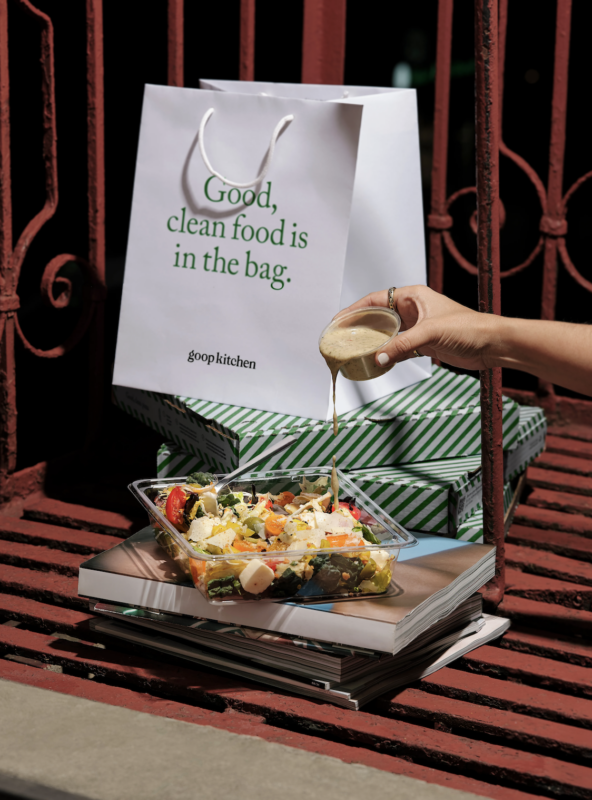
The seed-oil component may ultimately prove particularly important.
Restaurants traditionally advertise cuisines, ingredients or preparation styles.
Italian.
Organic.
Farm-to-table.
Plant-based.
Gluten-free.
Goop Kitchen is helping demonstrate how a restaurant can instead differentiate itself through what it refuses to use.
That model could spread.
If consumers begin actively seeking restaurants based on cooking oils in the same way they currently search for gluten-free or vegan options, restaurants may have to become more transparent about an ingredient that historically received very little attention.
Goop Kitchen has an advantage because it can build that transparency into the brand from the beginning.
That makes “no seed oils” more than a menu note.
It becomes part of the restaurant’s identity.
Could Goop Kitchen Become a National Chain?
That is now the bigger question.
Goop Kitchen began as a delivery-focused Los Angeles experiment in 2021.
Five years later, it has expanded beyond its original market, entered New York and opened its first true dine-in restaurant.
The concept sits at the intersection of several major consumer trends: wellness, ingredient transparency, premium fast-casual food, celebrity entrepreneurship and the growing demand for better-for-you versions of familiar products.
It also has something most new restaurant concepts spend years trying to build.
Brand awareness.
Millions of consumers already know Goop.
They already know Gwyneth Paltrow.
And many already understand what the Goop name represents before seeing a menu.
The challenge is turning that awareness into repeat restaurant customers.
Early expansion suggests Goop Kitchen may be doing exactly that.
The Bottom Line
Gwyneth Paltrow started Goop in 2008 with an email newsletter.
Now consumers can walk into a Goop restaurant and order a pizza made without seed oils.
That is a remarkable evolution.
But Goop Kitchen’s growth also reflects how dramatically wellness culture itself has changed.
Consumers who once simply asked whether something was “healthy” increasingly want specifics.
What ingredients are being used?
How processed is the food?
What type of oil is it cooked in?
What has been added?
And what has been intentionally left out?
Goop Kitchen has built its restaurant identity around answering those questions.
The Del Mar opening takes that philosophy one step further by transforming Goop Kitchen from something consumers order into somewhere consumers can actually go.
If the concept continues performing as it expands, Goop Kitchen may eventually become much more than Gwyneth Paltrow’s wellness restaurant.
It could become one of the clearest examples yet of how the modern wellness movement is reshaping the way restaurants are built.