
The Growing Popularity of Peptide Therapy—and the Safety Questions Consumers Should Ask
Interest in peptides has exploded over the past several years. From weight loss and muscle recovery to anti-aging and longevity, peptide therapies have become one of the fastest-growing categories in wellness medicine. Social media influencers, biohackers, and health clinics frequently promote peptides as cutting-edge tools for optimizing health and performance.
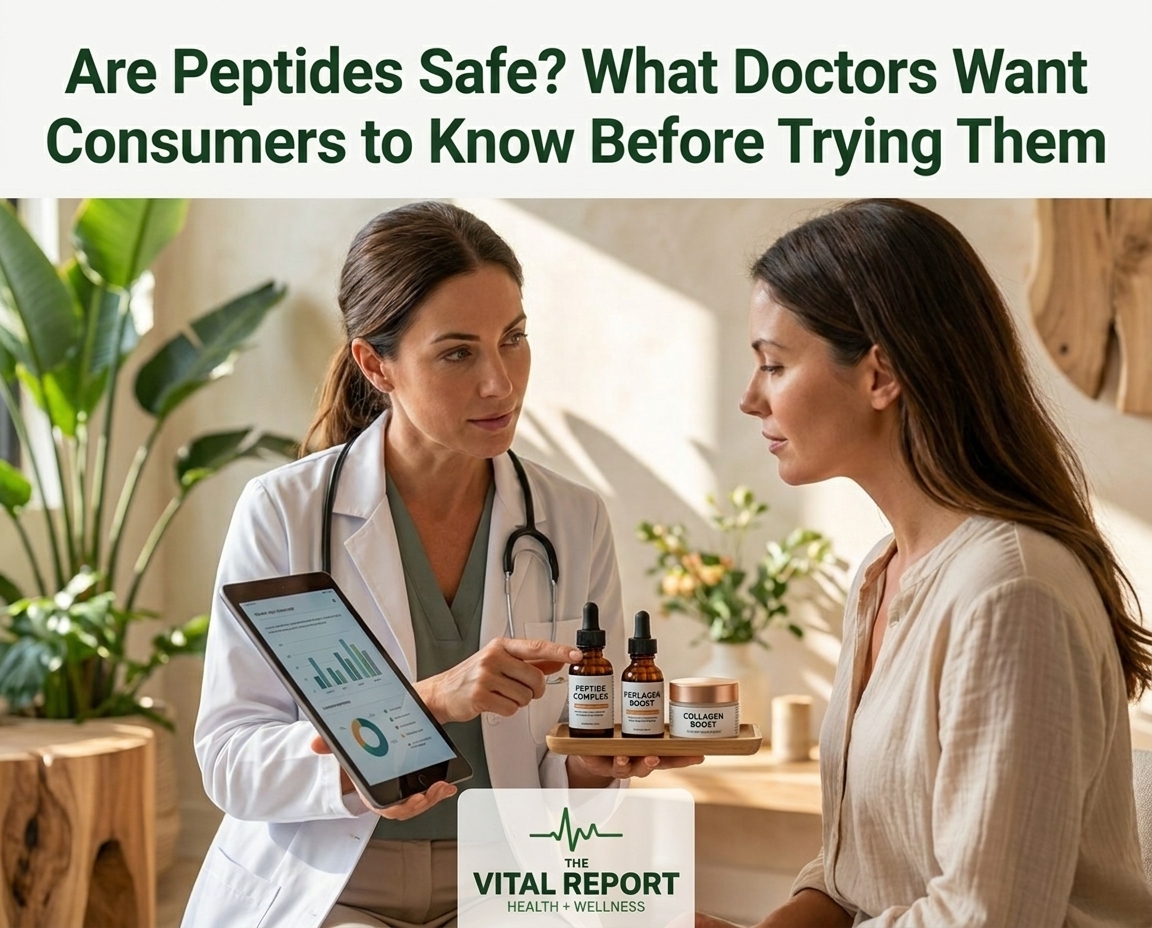
But a question physicians hear more often than ever is: Are peptides safe?
The answer is more nuanced than many marketing claims suggest.
Some peptide medications have undergone extensive clinical testing, received approval from the U.S. Food and Drug Administration (FDA), and are prescribed every day by healthcare professionals. Others are sold online as “research chemicals” or obtained through unregulated sources without adequate safety testing, manufacturing oversight, or quality control.
Understanding the difference between these categories is critical for anyone considering peptide therapy.
In this article, we’ll examine what doctors want consumers to know about peptide safety, including peptide side effects, peptide risks, contamination concerns, endocrine disruption, dosage variability, and why medical supervision matters.
What Are Peptides?
Peptides are short chains of amino acids that act as signaling molecules throughout the body. They help regulate numerous biological functions, including:
- Hormone production
- Appetite regulation
- Immune function
- Tissue repair
- Metabolism
- Muscle growth
- Skin health
Many naturally occurring hormones are peptides. Examples include insulin, glucagon-like peptide-1 (GLP-1), and growth hormone-releasing hormones.
Because peptides influence important physiological systems, they can produce meaningful therapeutic effects. However, they can also create significant risks when used improperly.
FDA-Approved Peptides vs. Underground Peptides
One of the most important distinctions consumers should understand is the difference between FDA-approved peptide medications and underground or research-grade peptides.
FDA-Approved Peptides
FDA-approved peptide drugs have undergone rigorous clinical testing to evaluate:
- Safety
- Effectiveness
- Appropriate dosing
- Side effects
- Drug interactions
- Manufacturing quality
Examples include:
- Semaglutide
- Tirzepatide
- Insulin
- Tesamorelin
- Liraglutide
These medications are manufactured under strict pharmaceutical standards and monitored through ongoing safety surveillance programs. FDA-approved drugs must demonstrate benefits that outweigh their risks before reaching patients.
Underground and Research-Grade Peptides
In contrast, many popular peptides promoted online have never completed large-scale human clinical trials.
Examples frequently discussed in biohacking communities include:
- BPC-157
- CJC-1295
- Ipamorelin
- AOD-9604
- TB-500
- Various growth hormone secretagogues
The FDA has identified significant safety concerns surrounding several of these compounds, citing limited human safety data and uncertainties regarding peptide-related impurities.
Many products sold online are labeled “for research purposes only” or “not for human consumption” despite being marketed toward consumers seeking health benefits. The FDA has issued warnings regarding companies selling such products because they have not undergone FDA review for safety, efficacy, or quality.
Why Purity Matters More Than Most People Realize
One of the biggest peptide risks is product purity.
When a physician prescribes an FDA-approved medication, both the active ingredient and manufacturing process must meet strict quality standards.
With underground peptides, purity is often impossible for consumers to verify.
Even when a product advertises 99% purity, independent verification is frequently lacking.
Potential concerns include:
- Manufacturing contaminants
- Incorrect amino acid sequences
- Residual solvents
- Heavy metals
- Bacterial contamination
- Endotoxins
- Degradation products
Research-grade products may be manufactured in facilities that are not subject to the same oversight as pharmaceutical manufacturers. This creates uncertainty about what is actually inside the vial.
From a physician’s perspective, this uncertainty alone represents a substantial safety concern.
Risks of Unregulated Sourcing
Many consumers purchase peptides through websites that operate outside traditional pharmaceutical channels.
This creates several problems.
Unknown Manufacturing Standards
A product may appear professional online while being produced in facilities that have never undergone FDA inspection.
Some products originate from overseas suppliers with little transparency regarding:
- Sterility testing
- Ingredient sourcing
- Batch consistency
- Manufacturing protocols
Mislabeling
Independent analyses have occasionally found peptide products that contain:
- Different concentrations than advertised
- Additional compounds
- Incomplete peptide sequences
- Unexpected impurities
When the contents of a vial differ from the label, both effectiveness and safety become unpredictable.
Counterfeit Products
The growing demand for peptide therapies has also increased the prevalence of counterfeit and illegally marketed products.
The FDA has warned consumers against purchasing unapproved peptide products marketed online because product quality and safety cannot be guaranteed.
Contamination Concerns: A Serious Safety Issue
Among all peptide therapy dangers, contamination may be one of the most significant.
Many peptides are administered by injection. Any contamination introduced during manufacturing, shipping, storage, or preparation can pose serious health risks.
Potential consequences include:
- Local infections
- Abscesses
- Bloodstream infections
- Severe inflammatory reactions
- Hospitalization
The FDA has repeatedly documented cases involving compounded sterile products prepared under insanitary conditions, including contamination events that resulted in serious illnesses and hospitalizations.
For injectable therapies, sterility is not optional—it is essential.
Consumers often focus on whether a peptide “works” while overlooking whether it was manufactured and handled safely.
Hormonal Side Effects and Endocrine Disruption
Peptides are not supplements.
They are biologically active signaling molecules that influence complex physiological pathways.
This means they can produce hormonal effects throughout the body.
Growth Hormone Axis Disruption
Peptides that stimulate growth hormone release may alter levels of:
- Growth hormone
- IGF-1
- Insulin signaling
- Metabolic regulation
Potential side effects may include:
- Fluid retention
- Joint discomfort
- Numbness or tingling
- Elevated blood sugar
- Headaches
Appetite Regulation Changes
GLP-1-related peptides affect:
- Appetite
- Gastric emptying
- Blood sugar control
- Energy intake
While these effects may be beneficial for some patients, they can also cause:
- Nausea
- Vomiting
- Gastrointestinal discomfort
- Reduced appetite beyond intended levels
Reproductive Hormone Effects
Certain peptides may indirectly influence reproductive hormone pathways.
Changes in:
- Testosterone
- Estrogen
- Cortisol
- Thyroid hormones
can sometimes occur depending on the compound and dosing strategy.
Because endocrine systems operate through interconnected feedback loops, altering one pathway may affect others in ways that are not always predictable.
Dosage Variability: The Hidden Problem
Even if a peptide is pure, dosage variability remains a major concern.
Many research-grade peptides require:
- Reconstitution
- Measurement
- Storage
- Injection preparation
Errors can occur at multiple stages.
Potential issues include:
- Incorrect dilution
- Inaccurate measurements
- Product degradation
- Variations between batches
Unlike FDA-approved medications that undergo strict potency testing, unregulated peptides may exhibit substantial variability in actual concentration. This means a patient may unknowingly receive a lower—or higher—dose than intended.
For compounds affecting hormone systems, even small dosage differences can significantly alter biological effects.
The Lack of Long-Term Clinical Trials
Another important consideration when evaluating whether peptides are safe is the absence of long-term data for many compounds.
Many popular peptides have:
- Small pilot studies
- Animal data
- Anecdotal reports
- Limited human research
What they often lack are:
- Large randomized controlled trials
- Multi-year safety studies
- Long-term follow-up data
- Post-marketing surveillance
Without these data, physicians cannot confidently answer questions such as:
- What are the risks after five years?
- What are the risks after ten years?
- Are there cancer-related concerns?
- Are there cardiovascular consequences?
- Are there cumulative hormonal effects?
Several experts continue to emphasize that more robust clinical research is needed before broad conclusions can be made regarding many peptide therapies.
Why Medical Supervision Matters
One of the most effective ways to reduce peptide risks is proper medical supervision.
Qualified healthcare professionals can help determine:
- Whether a peptide is appropriate
- Whether safer alternatives exist
- Appropriate dosing
- Necessary laboratory monitoring
- Potential contraindications
Medical supervision may include monitoring:
- Blood glucose
- Liver function
- Kidney function
- Hormone levels
- IGF-1
- Thyroid markers
This helps identify problems early before they become serious.
Doctors can also evaluate interactions with other medications and assess whether benefits outweigh potential risks for an individual patient.
Red Flags Consumers Should Watch For
If you’re considering peptide therapy, physicians recommend caution when encountering:
- “Miracle” claims
- Promises of rapid anti-aging
- Guaranteed weight loss
- No prescription required
- No physician oversight
- “Research use only” products marketed for personal use
- Lack of third-party testing
- Vague sourcing information
These warning signs often indicate increased safety concerns.
So, Are Peptides Safe?
The safest answer is this:
Some peptides are safe when prescribed appropriately, manufactured according to pharmaceutical standards, and monitored by qualified healthcare professionals.
However, not all peptides carry the same level of evidence or safety.
FDA-approved peptide medications have undergone extensive testing and quality review. Unregulated research-grade peptides often lack adequate long-term safety data, may vary in purity and potency, and can expose consumers to contamination risks, endocrine disruption, and unpredictable side effects.
For consumers interested in peptide therapy, the most important factors are:
- Product quality
- Medical supervision
- Evidence-based use
- Realistic expectations
- Ongoing monitoring
The goal should never be simply finding the newest peptide. It should be finding the safest and most scientifically supported option for your health goals.
References
- U.S. Food and Drug Administration. FDA’s Concerns with Unapproved GLP-1 Drugs Used for Weight Loss.
- U.S. Food and Drug Administration. Certain Bulk Drug Substances for Use in Compounding that May Present Significant Safety Risks.
- U.S. Food and Drug Administration. FDA Highlights Concerns with Compounding Drug Products Under Insanitary Conditions.
- Reuters. FDA warnings regarding unapproved peptide and weight-loss products marketed online.
- Reuters. State medical board warnings regarding non-FDA-approved peptide therapies.
- Current peer-reviewed literature on peptide pharmacology, endocrinology, and therapeutic development.