

Introduction
For decades, metabolism was viewed primarily through the lens of calories, hormones, and exercise. Today, emerging research is revealing a much more complex picture—one in which trillions of microorganisms living inside the digestive tract play a critical role in regulating appetite, blood sugar, body weight, and even the effectiveness of hormones like GLP-1.
The growing body of evidence surrounding the gut brain connection suggests that the microbiome may be one of the most influential regulators of metabolic health. Researchers now understand that gut bacteria communicate directly with the brain, immune system, and endocrine system through a sophisticated network of chemical signals.
This communication influences hunger, satiety, insulin sensitivity, inflammation, and energy expenditure. It also helps explain why two people eating the same diet may experience dramatically different metabolic outcomes.
As interest in GLP-1 medications continues to grow, scientists are increasingly investigating how gut health and GLP-1 signaling interact—and whether supporting the microbiome may naturally enhance the body’s own metabolic pathways.
Understanding the Gut-Brain Connection
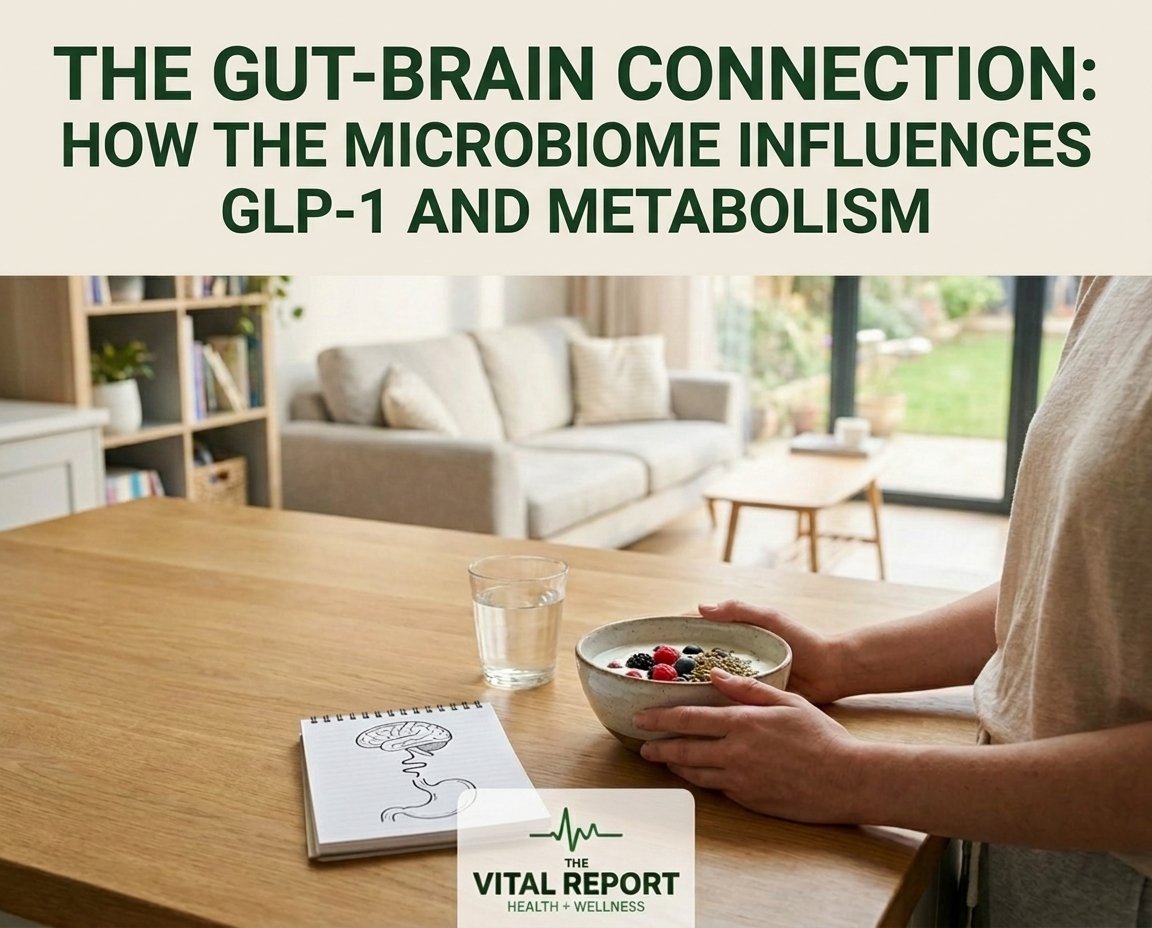
The gut and brain are connected through what scientists call the gut-brain axis, a bidirectional communication network linking the central nervous system with the gastrointestinal tract.
This communication occurs through several pathways:
- The vagus nerve
- Immune signaling molecules
- Hormones
- Neurotransmitters
- Microbial metabolites
According to the National Center for Complementary and Integrative Health (NCCIH), gut microbes influence numerous physiological functions beyond digestion, including immune regulation and nervous system activity.
The microbiome produces hundreds of bioactive compounds that can cross biological barriers and affect brain function. Some bacteria even manufacture neurotransmitters such as serotonin, dopamine, and GABA.
In fact, approximately 90% of the body’s serotonin is produced within the gastrointestinal tract, highlighting the intimate relationship between gut function and neurological signaling.
When the microbiome is balanced and diverse, these communication pathways tend to support metabolic health. When microbial diversity declines, however, disruptions in signaling may contribute to obesity, insulin resistance, and chronic inflammation.
How Gut Bacteria Influence Appetite Hormones
One of the most fascinating discoveries in metabolic science is the role gut microbes play in regulating appetite hormones.
Several hormones influence hunger and fullness:
- GLP-1 (Glucagon-Like Peptide-1)
- Peptide YY (PYY)
- Ghrelin
- Leptin
- Insulin
Research published in the journal Nature Reviews Microbiology demonstrates that gut bacteria can directly influence the secretion of these hormones through microbial metabolites.
Among the most important of these metabolites are short-chain fatty acids (SCFAs).
Short-Chain Fatty Acids: The Metabolic Messengers
Short-chain fatty acids are produced when beneficial gut bacteria ferment dietary fiber.
The three primary SCFAs include:
- Butyrate
- Acetate
- Propionate
According to research published in Cell Metabolism, SCFAs act as signaling molecules that influence energy balance and appetite regulation.
These compounds help:
- Stimulate GLP-1 release
- Increase peptide YY production
- Improve insulin sensitivity
- Reduce systemic inflammation
- Support intestinal barrier integrity
When SCFAs bind to receptors in the gut lining, they trigger endocrine responses that communicate satiety signals to the brain.
This means that fiber isn’t simply “roughage”—it’s fuel for microbial processes that directly influence metabolism.
Gut Health and GLP-1: A Powerful Relationship
GLP-1 has become one of the most studied metabolic hormones in medicine.
Produced by intestinal L-cells, GLP-1 helps:
- Slow gastric emptying
- Reduce appetite
- Increase insulin secretion
- Improve blood sugar control
GLP-1 receptor agonist medications have demonstrated remarkable effectiveness for weight management, but scientists are also investigating how the microbiome naturally supports GLP-1 production.
Research published in Science and Cell suggests that certain bacterial species may enhance endogenous GLP-1 secretion through fermentation processes and microbial signaling pathways.
Individuals with greater microbial diversity often exhibit healthier metabolic profiles, including improved insulin sensitivity and appetite regulation.
This emerging evidence highlights a crucial connection between gut health and GLP-1 function.
Akkermansia muciniphila: The Superstar of Metabolic Health
Among the thousands of microbial species inhabiting the human gut, few have generated as much scientific interest as Akkermansia muciniphila.
Discovered in 2004, Akkermansia represents approximately 1% to 5% of the gut microbiome in healthy individuals.
Researchers have consistently found lower levels of Akkermansia in individuals with:
- Obesity
- Type 2 diabetes
- Metabolic syndrome
- Insulin resistance
Studies published in Nature Medicine have shown that increasing Akkermansia abundance may improve several markers of metabolic health.
Akkermansia Benefits for Weight Management
The growing interest in Akkermansia benefits stems from its unique ability to strengthen the gut barrier while supporting metabolic signaling.
Research suggests Akkermansia may:
Improve Insulin Sensitivity
Akkermansia helps maintain the intestinal mucus layer, reducing the leakage of inflammatory compounds into circulation.
Lower inflammation often translates into improved insulin function.
Support Healthy GLP-1 Production
Emerging evidence suggests that Akkermansia interacts with intestinal cells involved in hormone production, potentially enhancing GLP-1 signaling pathways.
Reduce Chronic Inflammation
Research published in Gut indicates that Akkermansia may reduce inflammatory markers associated with obesity and metabolic dysfunction.
Promote Microbial Diversity
Higher Akkermansia abundance is frequently associated with greater overall microbial richness, a key indicator of gut health.
Inflammation and Insulin Resistance
Chronic low-grade inflammation is one of the primary drivers of metabolic disease.
When the intestinal barrier becomes compromised—a phenomenon often referred to as “leaky gut”—bacterial components such as lipopolysaccharides (LPS) can enter the bloodstream.
Research from Nature demonstrated that elevated LPS levels contribute to metabolic endotoxemia, promoting insulin resistance and weight gain.
This inflammatory cascade affects several key metabolic processes:
- Blood sugar regulation
- Fat storage
- Appetite signaling
- Energy expenditure
A healthy microbiome helps maintain intestinal integrity, limiting the translocation of inflammatory compounds.
This is one reason why microbial diversity is increasingly recognized as a cornerstone of metabolic health.
Why Microbial Diversity Matters
The human gut contains hundreds of bacterial species, each performing specialized functions.
Greater diversity generally means:
- More SCFA production
- Better nutrient metabolism
- Enhanced immune regulation
- Stronger intestinal barrier function
- Improved endocrine signaling
Research from the National Institutes of Health has linked reduced microbial diversity with obesity, diabetes, and cardiometabolic disease.
A diverse microbiome creates redundancy within the ecosystem, making it more resilient against dietary stressors, illness, and environmental disruptions.
Think of microbial diversity as a diversified investment portfolio: the more beneficial species working together, the more stable the system becomes.
Fiber: The Foundation of Natural GLP-1 Support
When discussing natural GLP-1 support, fiber is perhaps the most important dietary component.
Fiber serves as the primary fuel source for beneficial bacteria.
Foods rich in fermentable fiber include:
- Oats
- Beans
- Lentils
- Chickpeas
- Artichokes
- Onions
- Garlic
- Asparagus
According to the Harvard T.H. Chan School of Public Health, higher fiber intake is associated with improved metabolic health and reduced risk of obesity.
As gut bacteria ferment these fibers, they generate SCFAs that stimulate GLP-1 and peptide YY production.
This process creates a natural mechanism for appetite control and blood sugar regulation.
Polyphenols: Feeding Beneficial Bacteria
Polyphenols are plant compounds found in fruits, vegetables, herbs, spices, tea, and cocoa.
While many polyphenols are poorly absorbed in the small intestine, gut microbes transform them into bioactive metabolites.
Research published in Nutrients suggests polyphenols can selectively promote beneficial bacterial species, including Akkermansia.
Polyphenol-rich foods include:
- Blueberries
- Pomegranates
- Green tea
- Dark chocolate
- Cranberries
- Red grapes
- Olive oil
Combining fiber and polyphenols creates a synergistic effect that supports microbial diversity and metabolic signaling.
Endocrine Signaling: How the Microbiome Talks to Metabolism
The microbiome functions almost like an endocrine organ.
Gut microbes influence hormones through several mechanisms:
Hormone Production
Microbial metabolites stimulate secretion of:
- GLP-1
- PYY
- Insulin
- Ghrelin
Receptor Activation
SCFAs activate G-protein coupled receptors that regulate energy balance.
Immune-Endocrine Interactions
Reduced inflammation improves hormonal responsiveness throughout the body.
Neural Communication
Signals transmitted through the vagus nerve influence appetite centers within the brain.
These pathways illustrate why the relationship between the microbiome and metabolism extends far beyond digestion.
Natural Strategies to Support GLP-1 Through Gut Health
While lifestyle interventions are not replacements for medical treatment when indicated, several evidence-based strategies may support healthy GLP-1 signaling naturally.
Increase Fiber Intake
Aim for at least 25–38 grams daily from whole-food sources.
Prioritize Polyphenol-Rich Foods
Consume a wide variety of colorful fruits and vegetables.
Support Akkermansia Growth
Research suggests Akkermansia may thrive with:
- Pomegranate compounds
- Cranberry extracts
- Prebiotic fibers
- Calorie-conscious eating patterns
Eat Diverse Plant Foods
Research from the American Gut Project suggests consuming 30 or more plant foods weekly is associated with greater microbial diversity.
Limit Ultra-Processed Foods
Highly processed diets are associated with reduced microbial diversity and increased inflammation.
The Future of Metabolic Medicine
Scientists are increasingly viewing obesity and metabolic dysfunction through a microbiome-centered lens.
Future therapies may include:
- Precision probiotics
- Postbiotic compounds
- Microbiome-guided nutrition
- Akkermansia supplementation
- Personalized metabolic interventions
As our understanding of the gut brain connection continues to evolve, the microbiome is emerging as one of the most powerful regulators of appetite, insulin sensitivity, and overall metabolic health.
Conclusion
The relationship between the gut microbiome and metabolism is far more influential than previously understood. Through endocrine signaling, short-chain fatty acid production, inflammation regulation, and direct effects on appetite hormones, gut bacteria play a pivotal role in energy balance and body weight.
Emerging evidence linking gut health and GLP-1 highlights exciting opportunities for supporting metabolic health through nutrition and lifestyle interventions. Among the most promising discoveries is Akkermansia muciniphila, a bacterial species associated with improved insulin sensitivity, reduced inflammation, and healthier metabolic function.
By increasing fiber intake, consuming polyphenol-rich foods, and supporting microbial diversity, individuals may help optimize natural GLP-1 pathways while promoting long-term metabolic resilience.
As research continues to uncover the intricate relationship between the microbiome and metabolism, one thing is becoming increasingly clear: a healthier gut may be one of the most powerful tools for improving metabolic health from the inside out.