
Why Everyone Suddenly Seems to Be Wearing a Glucose Monitor
A few years ago, continuous glucose monitors—or CGMs—were primarily medical devices used by people with diabetes to manage blood sugar levels.
Today, they’re showing up on the arms of entrepreneurs, athletes, biohackers, longevity enthusiasts, and health-conscious consumers who have never been diagnosed with diabetes.
The appeal is obvious.
For the first time, people can see how their bodies respond to food in real time.
That bowl of oatmeal you assumed was healthy? Your glucose monitor might show a significant spike.
The smoothie you drink every morning? It may produce a completely different response than expected.
Advocates argue that CGMs offer unprecedented insight into metabolic health and can help individuals make smarter decisions about nutrition, exercise, sleep, and lifestyle.
Critics, however, question whether these devices provide meaningful benefits for healthy individuals—or simply create unnecessary anxiety around food.
So who’s right?
The answer lies somewhere in the middle.
What Is a Continuous Glucose Monitor?
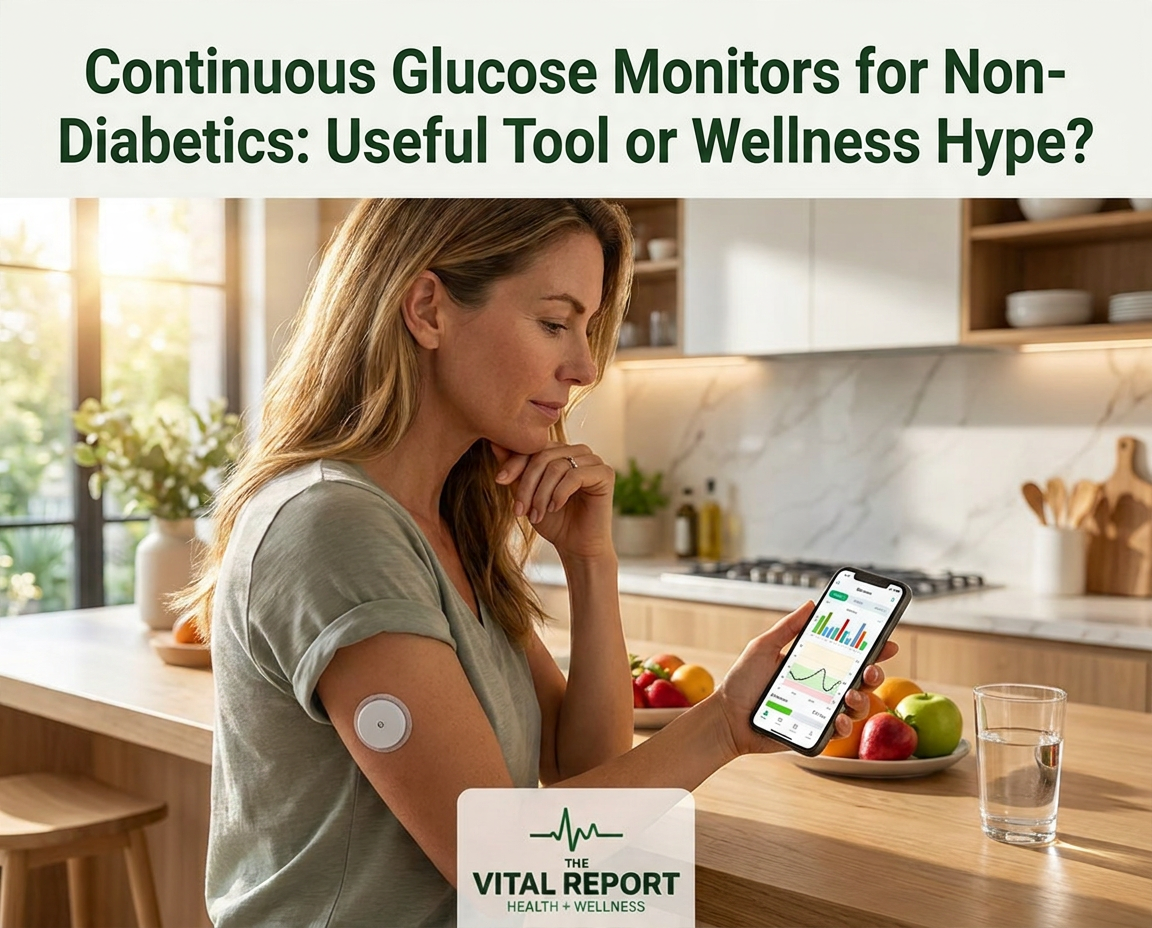
A continuous glucose monitor is a wearable device that tracks glucose levels throughout the day and night.
Unlike traditional blood sugar testing, which requires finger-prick measurements, CGMs use a small sensor inserted just beneath the skin.
The sensor measures glucose levels in interstitial fluid and transmits data to a smartphone app or receiver.
Most modern CGMs provide readings every few minutes, allowing users to observe blood sugar fluctuations in near real time.
This creates a continuous picture of how glucose changes in response to:
- Meals
- Exercise
- Sleep
- Stress
- Illness
- Daily activities
For people with diabetes, this information can be lifesaving.
For healthy individuals, it has become a tool for understanding metabolic health.
Why Blood Sugar Matters—Even If You Don’t Have Diabetes
When most people think about blood sugar, they think about diabetes.
But glucose regulation affects everyone.
Every time you eat carbohydrates, your body breaks them down into glucose, which enters the bloodstream.
In response, the pancreas releases insulin, a hormone that helps transport glucose into cells where it can be used for energy.
In healthy individuals, this process occurs efficiently.
However, over time, poor metabolic health can contribute to:
- Insulin resistance
- Elevated blood sugar
- Weight gain
- Increased inflammation
- Cardiovascular disease
- Type 2 diabetes
Researchers increasingly recognize metabolic health as one of the most important predictors of long-term wellness and longevity.
The concern isn’t simply high blood sugar.
It’s how effectively the body regulates glucose over time.
The Growing Focus on Metabolic Health
For years, wellness conversations centered around calories, body weight, and exercise.
Today, many experts believe metabolic health deserves equal—or greater—attention.
Metabolic health encompasses several factors, including:
- Blood sugar regulation
- Insulin sensitivity
- Blood pressure
- Cholesterol levels
- Body composition
Poor metabolic health often develops gradually and may go unnoticed for years.
In fact, many individuals with insulin resistance or early metabolic dysfunction have normal fasting glucose levels during routine medical visits.
This has fueled interest in tools that provide more detailed metabolic insights.
CGMs offer one possible solution.
What Is a Glucose Spike?
One of the most discussed concepts in CGM culture is the glucose spike.
After eating, blood glucose naturally rises.
This is completely normal.
The concern arises when spikes become excessively large or frequent.
Some researchers believe repeated glucose excursions may contribute to:
- Increased oxidative stress
- Inflammation
- Energy fluctuations
- Hunger and cravings
- Long-term metabolic dysfunction
However, it’s important to understand that not all glucose spikes are harmful.
Exercise, stress, excitement, and even poor sleep can temporarily influence glucose levels.
Context matters.
A brief rise after eating fruit is very different from chronically elevated glucose caused by insulin resistance.
The Surprising Individual Differences in Glucose Responses
One of the most fascinating discoveries in metabolic research is how differently people respond to the same foods.
Studies have shown that identical meals can produce dramatically different glucose responses among individuals.
A food that causes only a modest increase in one person may trigger a significant spike in another.
Why?
Researchers believe multiple factors contribute:
- Genetics
- Gut microbiome composition
- Insulin sensitivity
- Physical activity levels
- Sleep quality
- Stress levels
- Meal timing
This concept has helped drive the popularity of personalized nutrition.
Instead of relying solely on generalized dietary advice, individuals can observe their own metabolic responses.
What Can a CGM Teach You?
For many users, the value of a CGM lies in awareness.
The device can reveal patterns that would otherwise remain invisible.
Some common discoveries include:
Sleep Affects Blood Sugar
Poor sleep is consistently linked to impaired glucose regulation.
Many users notice elevated glucose levels following nights of inadequate sleep.
Researchers have found that sleep deprivation can reduce insulin sensitivity, making blood sugar management more difficult.
Stress Has Metabolic Consequences
Psychological stress triggers cortisol release.
This stress hormone can increase blood sugar levels even in the absence of food.
Many first-time CGM users are surprised to see how strongly work deadlines, emotional stress, or anxiety affect glucose readings.
Exercise Changes Everything
Physical activity is one of the most powerful tools for improving glucose regulation.
Even short walks after meals can significantly reduce post-meal glucose responses.
Strength training and aerobic exercise both improve insulin sensitivity over time.
Meal Composition Matters
A meal’s impact isn’t determined solely by carbohydrates.
Protein, fiber, and healthy fats can influence digestion and glucose absorption.
Many users discover that combining carbohydrates with protein and fiber produces a more stable glucose response.
Can CGMs Help With Weight Loss?
This remains one of the most debated topics in the wellness industry.
Some companies market CGMs as tools for weight management.
The theory is straightforward.
Stable blood sugar may help reduce:
- Cravings
- Energy crashes
- Excess hunger
- Overeating
By identifying foods that trigger significant glucose fluctuations, users may make dietary changes that support weight management.
However, researchers caution that CGMs are not weight-loss devices.
Weight loss ultimately depends on a combination of factors including energy balance, nutrition quality, physical activity, sleep, and behavior.
A CGM may provide useful information, but it is not a shortcut.
The Potential Benefits of CGMs for Healthy Individuals
Advocates point to several possible advantages.
Increased Nutritional Awareness
Many people underestimate how certain foods affect them.
CGMs can create immediate feedback loops that encourage healthier choices.
Personalized Health Data
Instead of generic recommendations, users gain insights based on their own physiology.
Improved Lifestyle Habits
Some individuals report improved sleep habits, exercise routines, and meal planning after using CGMs.
Early Detection of Metabolic Issues
In certain cases, CGMs may reveal patterns suggesting impaired glucose regulation before abnormalities appear on standard laboratory tests.
The Criticisms and Concerns
Despite their popularity, CGMs are not universally embraced by healthcare professionals.
Several concerns frequently arise.
Not Every Spike Is Dangerous
One of the biggest misconceptions is that every glucose increase represents a problem.
Healthy glucose fluctuations are normal.
The body is designed to handle them.
Interpreting every rise as harmful can lead to unnecessary food fears.
Data Without Context
CGMs generate enormous amounts of information.
Without proper interpretation, users may draw incorrect conclusions.
For example, a temporary glucose increase following intense exercise is often a normal physiological response.
Risk of Orthorexia
Some experts worry that continuous monitoring may contribute to unhealthy obsessions with food and eating patterns.
For individuals prone to anxiety or perfectionism, constant data tracking may become counterproductive.
Lack of Long-Term Evidence
Although CGMs provide fascinating information, researchers are still studying whether routine use among healthy individuals leads to meaningful long-term health improvements.
The answer remains unclear.
What the Research Says So Far
Current evidence suggests that CGMs can increase awareness of metabolic responses and may encourage positive behavior changes.
Researchers generally agree that understanding blood sugar regulation is valuable.
However, evidence supporting widespread CGM use for healthy individuals remains limited.
Many experts believe the greatest benefit comes from education rather than the device itself.
The monitor provides a window into physiology, but lasting health improvements still depend on behavior change.
The technology can guide decisions, but it cannot make them.
Who Might Benefit Most?
CGMs may be particularly useful for individuals who:
- Have a family history of diabetes
- Are concerned about metabolic health
- Have prediabetes
- Struggle with insulin resistance
- Want personalized nutrition insights
- Are actively improving health markers
For these groups, the additional information may help support lifestyle interventions.
For others, traditional approaches such as regular exercise, quality nutrition, sleep optimization, and routine health screenings may provide similar benefits without continuous monitoring.
The Future of Personalized Metabolic Health
The popularity of CGMs reflects a larger shift in healthcare.
Consumers increasingly want real-time data rather than occasional snapshots.
Wearables now track:
- Heart rate
- Sleep
- Activity
- Recovery
- Stress markers
Glucose monitoring is becoming part of this broader movement toward personalized health optimization.
Future technologies may combine glucose data with information from wearables, microbiome testing, genetics, and artificial intelligence to provide highly individualized recommendations.
Whether CGMs become a permanent part of consumer wellness remains uncertain.
What is clear is that metabolic health has moved to the center of the longevity conversation.
The Bottom Line
Continuous glucose monitors have transformed how many people think about nutrition and metabolic health.
By providing real-time feedback, these devices offer a unique look at how food, sleep, exercise, and stress influence blood sugar regulation.
For some individuals, that information can be highly motivating and lead to healthier habits.
For others, the benefits may be less substantial.
The science suggests that metabolic health matters deeply, but not every glucose fluctuation deserves concern.
Ultimately, a CGM is best viewed as a tool—not a diagnosis, not a treatment, and not a magic solution.
Its greatest value may be helping people better understand a fundamental truth that longevity researchers have emphasized for years: small daily habits often have the biggest impact on long-term health.