
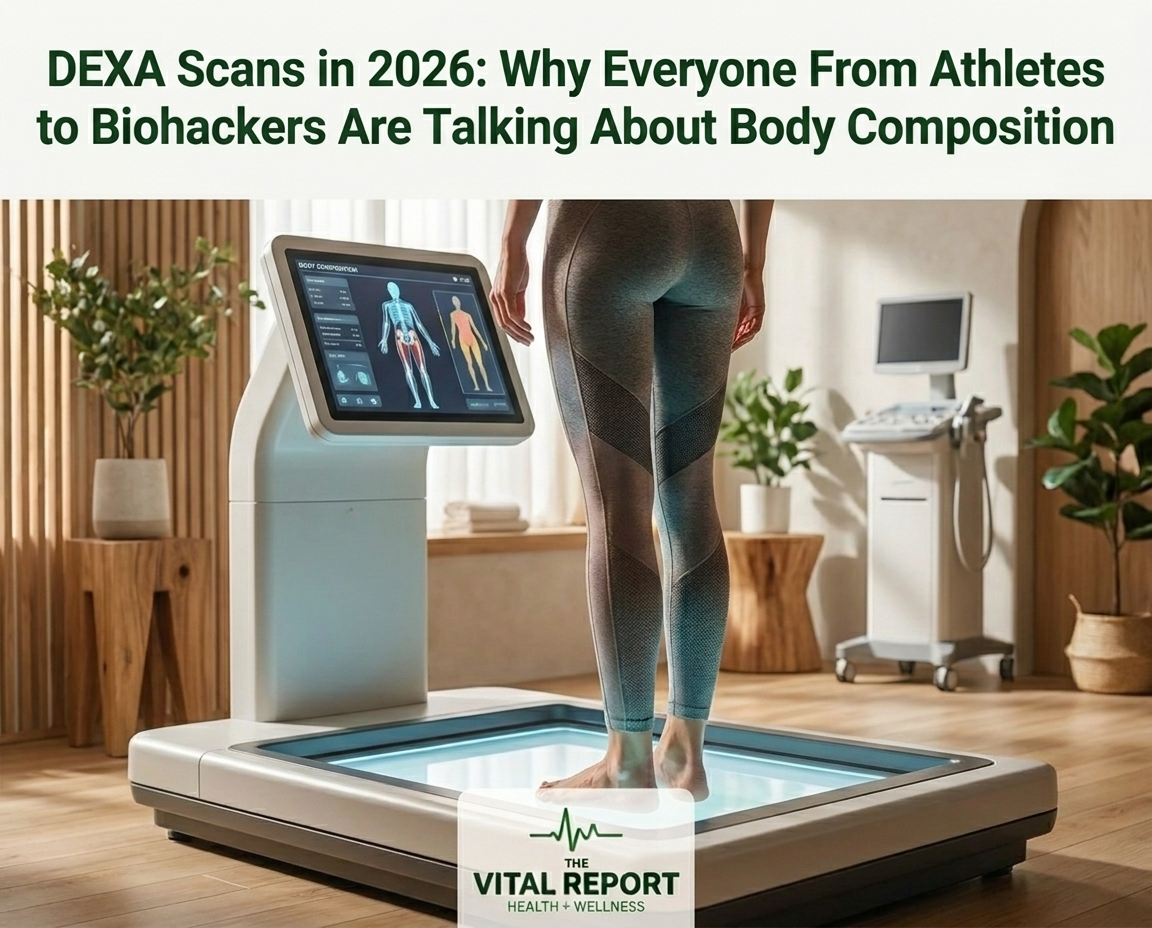
For decades, DEXA scans were primarily associated with osteoporosis screening and bone health. Today, however, they have become one of the hottest tools in wellness, longevity, fitness, and preventative healthcare. From elite athletes and bodybuilders to people taking GLP-1 medications and health-conscious consumers looking for deeper insights into their bodies, DEXA scans have evolved from a clinical diagnostic tool into a mainstream wellness trend.
The reason is simple: a DEXA scan can reveal far more about your health than a number on a bathroom scale.
In 2026, as consumers increasingly prioritize personalized health data, DEXA scans are being used to measure body fat percentage, lean muscle mass, visceral fat, bone density, and body composition changes with remarkable precision. While the technology has existed for decades, growing interest in longevity, metabolic health, and body recomposition has turned DEXA into one of the most sought-after assessments in modern wellness.
What Is a DEXA Scan?
DEXA stands for Dual-Energy X-ray Absorptiometry (sometimes abbreviated DXA). The scan uses two low-dose X-ray beams to differentiate between bone, fat tissue, and lean tissue throughout the body. Originally developed to evaluate bone mineral density and osteoporosis risk, the technology is now widely used to assess total body composition.
The scan itself is quick, painless, and non-invasive. Most appointments take between 10 and 20 minutes, during which the individual lies still on a scanning table while the machine captures detailed measurements. Radiation exposure is extremely low—typically less than many standard medical imaging procedures.
What Does a DEXA Scan Tell You About Your Body?
One of the biggest reasons DEXA scans have become so popular is the amount of information they provide.
Unlike body weight or BMI, which offer limited context, DEXA reveals how your body is actually composed.
Body Fat Percentage
Perhaps the most sought-after metric is body fat percentage. DEXA can estimate how much of your total body weight comes from fat tissue versus lean tissue and bone.
This often surprises people. Two individuals can weigh exactly the same amount yet have dramatically different body compositions. One may carry more muscle while the other carries more fat. The scale alone cannot reveal this difference, but DEXA can.
Lean Muscle Mass
DEXA also measures lean mass throughout the body.
This allows individuals to monitor whether they are gaining muscle during a strength-training program or losing muscle during a weight-loss journey. This has become especially important in the era of GLP-1 medications such as semaglutide and tirzepatide, where healthcare professionals increasingly emphasize preserving muscle mass while losing weight.
Visceral Fat
One of the most valuable insights from modern body composition scans is visceral fat measurement.
Visceral fat is the fat stored around internal organs within the abdominal cavity. Excess visceral fat has been associated with increased risk of cardiovascular disease, insulin resistance, metabolic syndrome, and type 2 diabetes.
Someone may appear relatively lean externally while still carrying elevated visceral fat levels. DEXA can help identify this hidden metabolic risk.
Fat Distribution
The scan can also show exactly where fat is distributed throughout the body.
For example, DEXA reports often compare abdominal fat, trunk fat, arm fat, and leg fat. Researchers increasingly recognize that fat distribution patterns may provide more meaningful health insights than total body weight alone.
Bone Density
Despite all the attention on body composition, bone health remains one of DEXA’s most important functions.
The scan measures bone mineral density and can identify osteopenia or osteoporosis before fractures occur. Healthcare providers use DEXA results to assess fracture risk and monitor treatment effectiveness.
Why DEXA Scans Are So Popular in 2026
The popularity of DEXA scans is tied directly to several major health trends.
The Rise of Longevity Medicine
Longevity clinics and preventative health programs increasingly focus on preserving muscle mass, metabolic health, and functional independence as people age.
Rather than waiting for disease to develop, consumers want measurable biomarkers that help them optimize health earlier. DEXA provides exactly that.
The GLP-1 Boom
The explosive growth of medications such as Ozempic, Wegovy, Zepbound, and Mounjaro has changed the way people think about weight loss.
Consumers are realizing that losing pounds is only part of the story. Maintaining muscle while reducing fat has become equally important. DEXA scans provide an objective way to monitor whether weight loss is coming primarily from fat stores or lean tissue.
The Shift Beyond BMI
For years, BMI served as the primary population-level measurement of health and obesity.
Today, experts increasingly acknowledge BMI’s limitations because it cannot distinguish between fat and muscle. A muscular athlete and a sedentary individual may have identical BMI scores despite vastly different health profiles.
New research continues to explore more sophisticated body composition assessments beyond BMI, reinforcing the value of tools such as DEXA.
Data-Driven Wellness
Wearables, continuous glucose monitors, heart rate variability trackers, and genetic testing have fueled a broader movement toward personalized health data.
DEXA scans fit perfectly into this ecosystem by offering objective measurements that can be tracked over time. Consumers increasingly use scans every three to six months to monitor progress.
Who Should Consider Getting a DEXA Scan?
Not everyone needs a DEXA scan, but several groups may benefit significantly.
Adults Concerned About Bone Health
Women over age 65 and men over age 70 are commonly recommended for bone density screening. Earlier testing may be appropriate for those with osteoporosis risk factors, previous fractures, smoking history, steroid medication use, or family history of bone disease.
Individuals Taking GLP-1 Medications
People using weight-loss medications may benefit from monitoring muscle preservation during treatment.
A declining number on the scale is encouraging, but DEXA can determine whether that weight loss is primarily fat or lean tissue.
Athletes and Fitness Enthusiasts
Athletes often use DEXA scans to track body recomposition goals.
Instead of focusing solely on body weight, they can monitor gains in lean muscle mass, reductions in body fat percentage, and changes in regional body composition.
Perimenopausal and Menopausal Women
Hormonal changes during menopause can contribute to both bone loss and changes in body composition.
Experts increasingly recommend earlier monitoring for women entering this life stage because DEXA provides information on both bone density and muscle preservation.
Anyone Focused on Long-Term Health
Individuals interested in preventative health, metabolic wellness, and longevity may benefit from establishing baseline measurements that can be compared over time.
Where Can You Get a DEXA Scan?
In 2026, DEXA scans are more accessible than ever.
Hospitals and Imaging Centers
Traditional medical facilities continue to offer DEXA scans primarily for osteoporosis screening and bone density testing. These scans may be covered by insurance when medically indicated.
Wellness and Longevity Clinics
Many longevity centers and executive health programs now include DEXA scans as part of comprehensive health assessments. These programs often combine body composition analysis with blood testing, metabolic testing, and lifestyle coaching.
Dedicated Body Composition Companies
Companies such as BodySpec and DexaFit have expanded significantly in recent years, making body composition scans available in many major metropolitan areas. These services typically operate on a self-pay basis and focus on fitness, wellness, and performance tracking rather than disease diagnosis.
Cost
Pricing varies widely depending on location and provider.
Body composition scans generally range from approximately $50 to $150 at specialized wellness providers, while medical DEXA scans performed for bone density screening may be covered by insurance when medically necessary. Premium longevity programs may include scans as part of larger assessment packages.
What the Research Says in 2026
Research continues to support the value of body composition measurements over simplistic metrics like body weight alone.
Emerging studies in 2026 are focused on developing more accessible methods of estimating body composition using smartphone imaging and artificial intelligence. Notably, researchers continue to use DEXA as the reference standard against which these new technologies are validated. This reinforces DEXA’s status as one of the most trusted body composition measurement tools available today.
At the same time, experts emphasize that DEXA should be viewed as one tool among many. While highly useful, body composition results can vary slightly depending on hydration status, machine calibration, and testing conditions. Some imaging professionals also caution against treating DEXA body fat measurements as absolute truth, instead recommending that individuals focus on long-term trends rather than single scans.
The Bottom Line
DEXA scans have become one of the defining health and wellness tools of 2026 because they answer a question the scale cannot: what is your body actually made of?
By measuring body fat percentage, lean muscle mass, visceral fat, fat distribution, and bone density in a single test, DEXA offers a detailed snapshot of overall health. For athletes, longevity enthusiasts, GLP-1 users, and anyone interested in optimizing their health, the scan provides actionable information that can guide nutrition, exercise, and lifestyle decisions.
While it is not necessary for everyone, DEXA represents a broader shift in healthcare toward personalized, preventative, and data-driven wellness. In a world increasingly focused on healthspan rather than simply lifespan, understanding your body composition may be one of the most valuable measurements you can track.