
The Future of Hormone Tracking May Finally Be Here
For years, women have relied on a combination of cycle-tracking apps, blood tests, urine strips, and educated guesswork to understand their hormones. While wearable technology has transformed how people monitor sleep, heart rate, recovery, and activity levels, one major piece of the health puzzle has remained largely inaccessible: hormones.
That may be about to change.
Clair Health, a women’s health startup founded by Stanford graduates Jenny Duan and Abhinav Agarwal, recently announced an $11.6 million seed funding round to develop what it calls the world’s first continuous, non-invasive hormone monitoring wearable. The funding round was led by Khosla Ventures and included participation from investors such as Anne Wojcicki, a16z Speedrun, and several prominent health-tech funds.
The company’s ambitious goal is to make hormone intelligence as accessible as heart-rate data, potentially transforming how millions of women understand fertility, menstrual health, athletic performance, perimenopause, and overall wellness.
Who Is Behind Clair Health?
At the center of the company is Jenny Duan, the 22-year-old co-founder and CEO who recently graduated from Stanford University with a degree in Symbolic Systems focused on artificial intelligence. Duan co-founded Clair Health alongside fellow Stanford graduate Abhinav Agarwal, whose background includes wearable hardware and health technology development.
The idea for Clair Health emerged from a simple but powerful observation: modern wearables collect massive amounts of physiological data, but none of them truly interpret those signals through the lens of female hormones.
According to the company’s founders, women often make critical health decisions related to fertility, exercise, recovery, mood, energy levels, and menopause without having access to real-time hormonal information. Existing tracking methods provide only snapshots of hormone activity rather than continuous insights.
By focusing specifically on women’s biology rather than adapting existing fitness trackers, Clair Health hopes to close a long-standing gap in health technology.
What Is Clair Health’s Hormone Tracking Device?
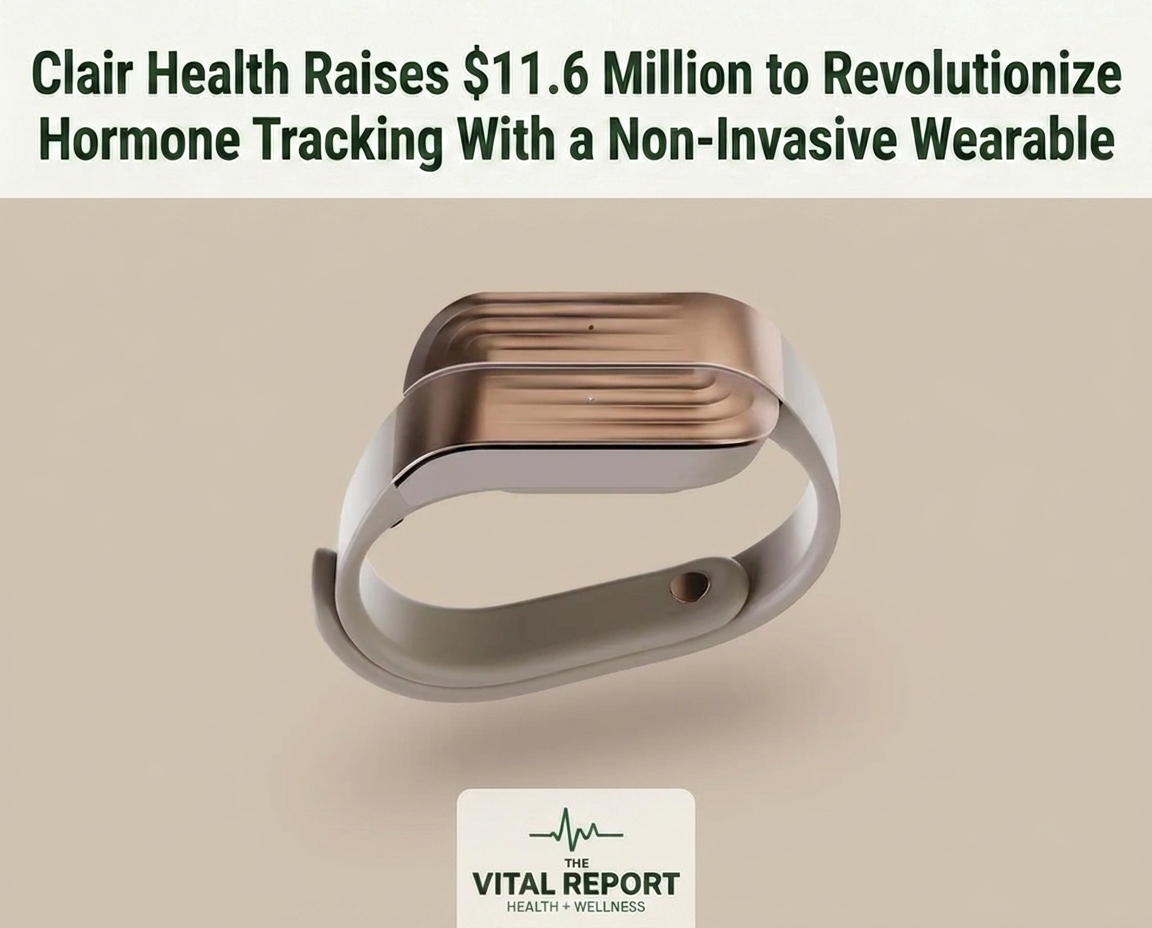
Unlike traditional hormone testing, which often requires blood draws, saliva tests, or urine strips, Clair Health is developing a wrist-worn wearable that continuously monitors physiological signals associated with hormonal changes.
The device uses a combination of 10 biosensors and more than 130 proprietary biomarkers to infer fluctuations in hormones such as:
- Estrogen
- Progesterone
- Luteinizing Hormone (LH)
- Follicle-Stimulating Hormone (FSH)
Rather than directly sampling blood, the wearable analyzes physiological changes throughout the body and uses artificial intelligence models to interpret hormonal patterns. The company refers to this approach as “continuous hormone intelligence.”
The result could be a dramatically easier and more accessible way to monitor hormonal health without needles, laboratory visits, or recurring test kits.
Why Clair Health Matters for the Future of Hormone Tracking
The rise of continuous glucose monitors (CGMs) transformed how people understand blood sugar. Many industry observers believe hormone tracking could be the next major frontier in personal health technology.
Today, women can track symptoms and estimate cycle phases through apps such as Clue, but these platforms largely rely on user-reported information and predictive algorithms.
Clair Health aims to move beyond prediction and provide continuous physiological insight.
If successful, the technology could unlock several important benefits:
Better Fertility Insights
Women trying to conceive often depend on ovulation predictor kits and cycle calendars. Continuous hormone monitoring could offer a more complete understanding of fertility windows and hormonal fluctuations throughout the month.
Improved Perimenopause and Menopause Tracking
Hormonal changes during perimenopause can be difficult to identify and manage. Continuous monitoring could help women understand why symptoms such as hot flashes, sleep disturbances, mood swings, and fatigue occur.
Enhanced Athletic Performance
Female athletes experience hormonal fluctuations that can affect training adaptations, recovery, strength, and endurance. Personalized hormone insights may allow women to better align workouts with their biological rhythms.
Greater Health Awareness
Many women spend years trying to understand symptoms related to hormonal imbalances, irregular cycles, or reproductive health conditions. More accessible hormone data could facilitate earlier conversations with healthcare providers and improve self-advocacy.
Who Can Benefit From Clair Health?
While fertility tracking may be the most obvious application, Clair Health’s potential audience extends much further.
Potential users include:
Women Trying to Conceive
Real-time hormonal insights could help improve understanding of ovulation timing and reproductive health patterns.
Women With Irregular Cycles
Those experiencing unpredictable cycles may gain greater visibility into underlying hormonal trends.
Perimenopausal and Menopausal Women
Tracking hormonal changes throughout menopause could help users better understand symptom patterns and lifestyle interventions.
Female Athletes
Hormonal fluctuations influence recovery, energy, and performance. Personalized data may help optimize training plans.
Health-Conscious Consumers
Just as wearable users track sleep and heart-rate variability today, many wellness enthusiasts may eventually monitor hormonal health as part of a broader picture of wellbeing.
Can You Buy Clair Health Yet?
Not quite—but soon.
According to the company, the Clair Health wearable and companion app are scheduled to launch in November 2026. The company has already attracted significant consumer interest, with reports indicating that more than 25,000 people have joined the waitlist.
Consumers interested in purchasing the device can join the waitlist through the company’s official website:
While pricing has not yet been publicly announced, the company plans to launch initially as a wellness product, with future regulatory pathways potentially expanding its healthcare applications.
The Bottom Line
Clair Health’s $11.6 million funding round signals growing investor confidence in the future of hormone tracking technology. By combining wearable sensors, artificial intelligence, and female-focused health insights, the company is attempting to bring one of the body’s most important biological systems into the era of continuous monitoring.
Whether Clair ultimately becomes the “Oura Ring for hormones” remains to be seen, but the company is clearly tapping into a massive unmet need. For decades, women have had limited access to real-time hormonal information. If Clair succeeds, hormone tracking could become as commonplace as monitoring sleep, heart rate, or daily activity.
As the wearable health market continues to evolve, Clair Health may represent one of the most significant advancements yet in personalized women’s health technology.