

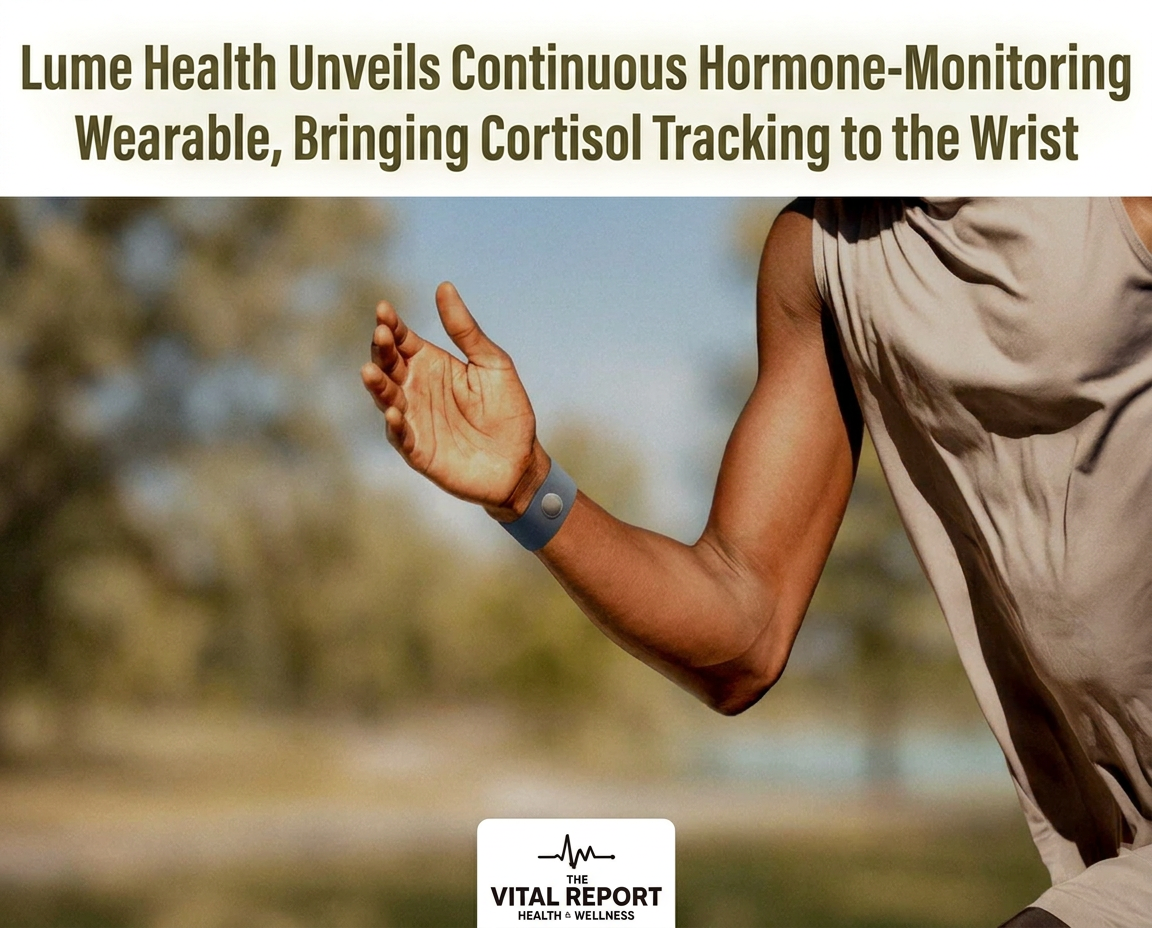
For years, wearable technology has tracked nearly everything about the human body:
Heart rate. Sleep. Body temperature. Blood oxygen. And daily activity.
But one of the body’s most important biological systems has remained difficult to monitor continuously.
Hormones.
Now Lume Health is developing a wearable platform designed to bring hormone monitoring into everyday life, starting with cortisol.
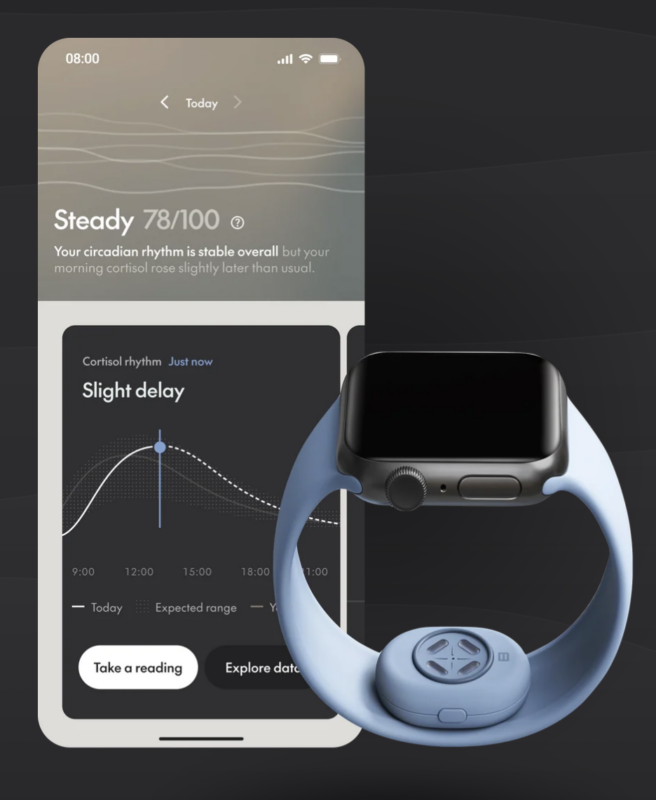
The company has unveiled a wrist-worn monitoring concept that pairs with a mobile app to help users understand how their cortisol levels change throughout the day.
Unlike conventional wellness wearables that estimate stress through heart-rate variability or other indirect measurements, Lume’s ambition is to measure hormone-related biological signals more directly.
The system is designed to make hormone patterns visible over time, potentially helping users better understand their circadian rhythms, recovery, and responses to daily stressors.
The company is still working toward commercialization, and the device’s accuracy and clinical performance have not yet been independently established.
But the broader opportunity is significant.
Wearables have spent years measuring how the body responds to stress. Lume wants to move closer to measuring the hormones involved.
A Former Apple Engineer Wants to Build a Lab for Your Wrist
Lume Health was co-founded by Vicki Powell, a former Apple sensor engineer who now serves as the company’s CEO, and physician Dr. Jonathan Moustakis.
The San Francisco-based startup is developing technology intended to address a limitation of modern health tracking.
While smartwatches can collect extensive information about physical activity, heart rate, sleep, and temperature, they generally cannot directly measure hormones.
For people interested in understanding cortisol, the traditional options involve blood, urine, or saliva testing.
Those tests can be clinically useful, but they typically capture hormone levels at specific times rather than continuously.
Lume wants to introduce another dimension: time.
According to the company’s October 15 announcement, the wearable is designed to sit against the inside of the wrist and work alongside existing smartwatches.
The company’s long-term objective is to use sweat-sensing technology to observe hormone changes throughout the day.
But Lume is taking a phased approach.
Its initial monitoring system combines existing wearable measurements with personalized calibration to estimate cortisol rhythms. The company is also developing sensors intended to measure cortisol directly from sweat.
That distinction is important because the first commercial version and the company’s longer-term sensing technology are not necessarily the same.
Lume is currently in beta development, with a commercial launch targeted for 2027.
How Does Lume Health’s Cortisol Monitor Work?
Lume’s approach involves combining biological sensing with data already collected by wearable devices.
According to the company’s technology explanation, the first system uses information including heart rate, movement, temperature, and sleep.
The Lume band adds sweat-related measurements, while saliva samples help calibrate the estimated cortisol rhythm to the individual.
An algorithm then combines these inputs to generate a picture of how cortisol may be changing throughout the day.
That information is presented through the Lume app.
The company’s longer-term technology uses an aptamer-based sensor intended to detect cortisol directly in sweat.
Aptamers are molecules engineered to bind selectively to particular targets.
In a biosensor, that binding can potentially be translated into an electrical signal associated with the concentration of the target substance.
The challenge is making those measurements reliable outside controlled laboratory conditions.
Sweat composition can vary with hydration, temperature, exercise, and other factors.
Cortisol concentrations in sweat are also relatively low, creating additional challenges for sensor sensitivity and accuracy.
Lume says it has developed an integrated prototype capable of reading cortisol from sweat, but additional testing and validation remain necessary.
The company has not published sufficient independent clinical performance data to establish that the finished consumer device can accurately replace laboratory cortisol testing.
For now, Lume’s most immediate application is estimating and visualizing daily cortisol patterns.
Why Cortisol Is More Than a Stress Hormone
Cortisol has become one of the most frequently discussed hormones in wellness culture.
Social media often associates it with stress, fatigue, weight gain, poor sleep, and burnout.
But cortisol isn’t inherently harmful.
It’s an essential hormone produced by the adrenal glands.
It helps regulate metabolism, immune responses, blood pressure, and the body’s response to physical and psychological stress.
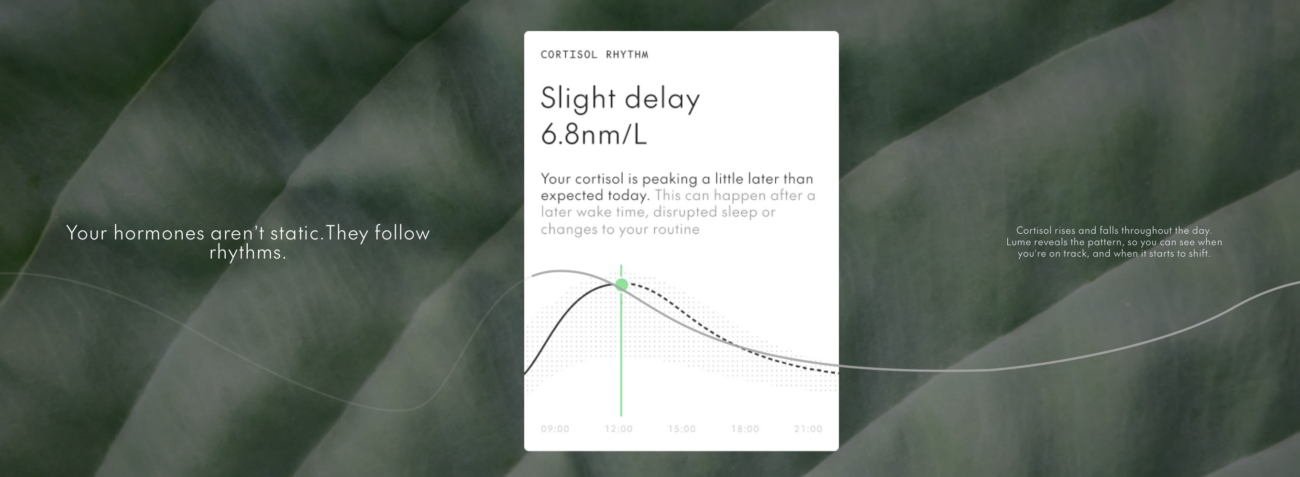
Cortisol also follows a daily rhythm.
Levels typically rise around waking, peak during the early morning, and decline throughout the day.
They generally reach their lowest levels during the night.
This pattern is influenced by the body’s circadian system.
According to the National Institute of General Medical Sciences, circadian rhythms are approximately 24-hour biological cycles that influence hormone release, sleep, body temperature, and other physiological functions.
Cortisol is one of the hormones involved in these rhythms.
That’s why Lume isn’t simply trying to tell users whether their cortisol is high or low.
The company wants to show how their levels change over time.
A morning cortisol increase can be normal and beneficial.
An evening elevation may also occur for numerous reasons.
The challenge is interpreting those changes correctly.
One unusual reading doesn’t necessarily indicate a health problem.
And a wearable estimate cannot independently diagnose a hormone disorder.
Why Lume Is Focusing on Cortisol Rhythms
Traditional cortisol testing often focuses on specific clinical questions.
Doctors may order tests when investigating conditions such as Cushing syndrome or adrenal insufficiency.
Those evaluations require validated testing methods and careful clinical interpretation.
Lume is targeting a different use case.
The company wants consumers to understand their daily cortisol rhythm and how it may relate to their routines.
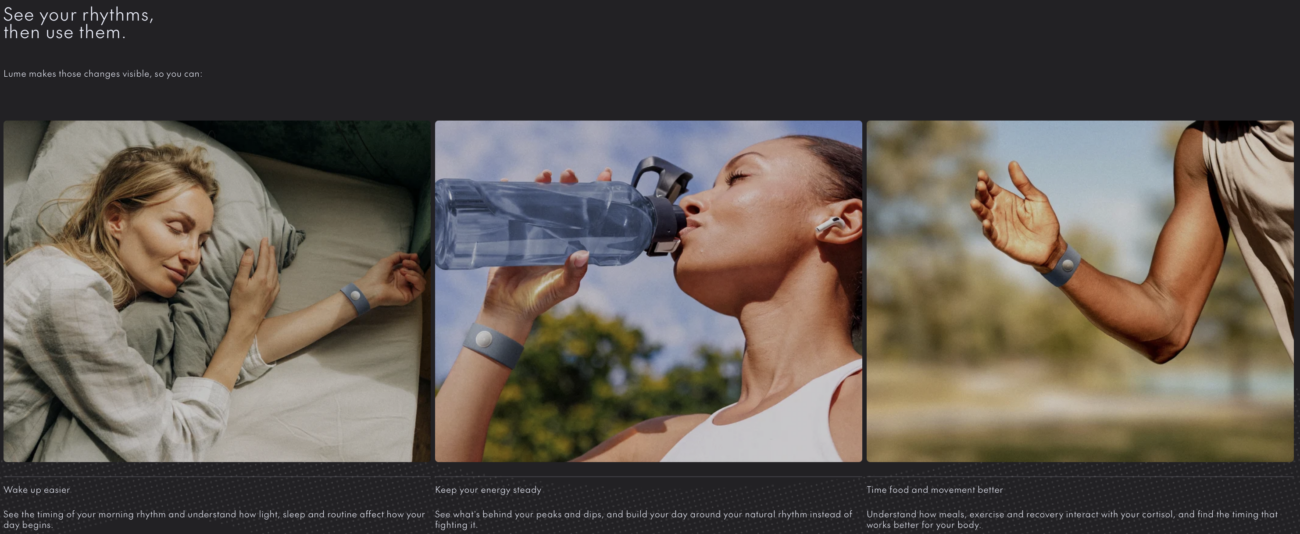
For example, the app is designed to identify patterns associated with waking, exercise, sleep, and recovery.
Someone might notice that their estimated morning cortisol rise occurs later than expected.
Another person might observe changes in their evening pattern following adjustments to sleep or activity.
Lume’s app could then suggest behavioral changes, such as getting morning daylight exposure or maintaining a more consistent bedtime.
However, these recommendations should not be confused with evidence that Lume can diagnose the cause of fatigue, insomnia, or other symptoms.
The company describes its product as a wellness platform rather than a diagnostic medical device.
Its potential value lies in helping consumers observe patterns and consider lifestyle adjustments, not replacing medical evaluation.
The Technology Was Unveiled at TechCrunch Disrupt 2026
Lume formally presented its hormone-monitoring technology at TechCrunch Disrupt 2026.
The company was selected to participate in Startup Battlefield, giving it an opportunity to introduce the platform to investors, entrepreneurs, and technology industry observers.
The October 15 announcement followed several prototype demonstrations.
Lume had previously shown its technology during events in New York, Boston, and San Francisco.
The company’s founders used those appearances to discuss cortisol, circadian rhythms, and the potential applications of continuous hormone monitoring.
According to Femtech Insider’s October 16 coverage, the company has attracted more than 25,000 people to its waitlist.
That represents substantial early interest for a product that has not yet reached full commercial availability.
But waitlist registrations aren’t the same as paying customers.
Lume will still need to demonstrate that consumers are willing to purchase the device, use it consistently, and find its insights valuable over time.
The 2027 launch will be an important test of that demand.
Why the Device Attaches to an Existing Smartwatch
One of Lume’s more practical design decisions is its approach to wearable integration.
Instead of asking consumers to replace their existing smartwatch, the company is designing the band to work alongside devices they already own.
Its first units are being developed for Apple Watch compatibility.
The company plans to expand support for other wearables and eventually offer a standalone device.
That strategy addresses a growing problem in wearable technology.
Consumers already have numerous devices competing for space on their wrists.
Smartwatches.
Fitness trackers.
Recovery bands.
And other health-monitoring products.
Adding another device can create inconvenience.
Lume’s approach is to supplement existing wearables with a hormone-focused measurement system.
That allows the company to use data already collected by the smartwatch while adding information from its own sensor.
For consumers, the appeal is straightforward.
They may be able to gain another layer of health information without abandoning their current device.
For Lume, integration also creates an opportunity to combine hormone estimates with sleep and activity trends.
How Lume Differs From Oura, WHOOP, and Apple Watch
Wearables such as Apple Watch, WHOOP, and Oura have helped make health monitoring part of everyday life.
They track signals including heart rate, sleep, temperature, and activity.
Some use those measurements to generate stress, recovery, or readiness scores.
But those scores generally aren’t direct measurements of cortisol.
Instead, they rely on physiological signals that may change in response to numerous factors.
Lume is attempting to add a more hormone-specific layer.
Its first system estimates cortisol rhythms using wearable data and calibration.
Future sensors are intended to measure cortisol directly from sweat.
That could potentially provide a different type of information from conventional readiness scores.
However, direct hormone measurement doesn’t automatically mean more accurate wellness guidance.
The relationship between cortisol, perceived stress, and health outcomes is complicated.
Cortisol can increase during exercise, illness, excitement, and ordinary daily activities.
Not every increase is harmful.
The usefulness of Lume’s platform will depend on whether it can interpret those changes appropriately.
The company also needs to establish how accurately its estimated rhythms reflect actual hormone concentrations.
Could Lume Help People Understand Sleep and Recovery?
One of Lume’s primary areas of interest is circadian health.
The body’s internal clock helps coordinate sleep, alertness, hormone release, and metabolism.
When sleep schedules become irregular or people receive insufficient daylight exposure, circadian rhythms can shift.
Lume wants to make those changes more visible.
Its app is designed to offer recommendations related to morning light, exercise timing, sleep routines, and other daily behaviors.
At a recent prototype demonstration, the company reported that some early users experienced improvements in sleep-related measures after adjusting their routines.
According to NewBeauty’s October 2 coverage, Lume reported a 27% reduction in time spent awake in bed among participants following certain daylight recommendations.
That figure is company-reported and should be interpreted cautiously.
The publicly available information doesn’t establish whether the finding came from a controlled clinical trial or whether the improvement can be attributed specifically to Lume’s technology.
Morning daylight exposure and consistent sleep schedules already have scientific support as strategies for maintaining circadian alignment.
Lume’s potential contribution would be helping users personalize those strategies using their own physiological patterns.
Whether that approach produces better outcomes than established sleep recommendations remains to be demonstrated.
Continuous Hormone Monitoring Is Becoming a New Frontier in Femtech
Lume’s announcement comes as several companies explore ways to make hormone measurements more accessible.
For years, much of the femtech industry focused on menstrual tracking, fertility prediction, and symptom logging.
Those tools can be useful.
But many rely on self-reported information or indirect physiological signals.
A new generation of companies is attempting to measure hormones more directly.
Some are developing saliva-based testing systems.
Others are exploring sweat sensors, microfluidic devices, or other wearable technologies.
The broader goal is to make biological measurements available more frequently and conveniently.
Vital Report recently covered Unravel Health’s £2.5 million funding round for at-home saliva hormone testing.
Unravel is developing a palm-sized system intended to measure multiple hormones through saliva samples.
Lume is pursuing a different approach.
Instead of relying on individual testing sessions, it wants to estimate or eventually measure hormone patterns continuously through a wearable.
Both companies reflect growing interest in making hormone data more accessible outside conventional laboratories.
But they face similar challenges.
Accuracy.
Clinical validation.
Consumer understanding.
And demonstrating that more frequent measurements lead to useful outcomes.
Why Sweat Sensing Is Scientifically Challenging
Sweat offers an attractive opportunity for wearable biosensors because it can be collected noninvasively.
Researchers have investigated sweat as a source of information about electrolytes, metabolites, and certain hormones.
But detecting a substance in sweat doesn’t automatically establish that its concentration reliably reflects the corresponding level in blood.
Several factors complicate interpretation.
Sweat rates vary.
Sample collection methods can influence results.
The concentration of a substance may change depending on where and how sweat is collected.
And the relationship between sweat and circulating hormone concentrations may not be consistent across all conditions.
Lume is attempting to address those challenges through sensor development and personalized calibration.
Its direct-sensing technology remains under development, and the company acknowledges that additional data collection and testing are needed.
This is particularly important because cortisol is already a complex biomarker to interpret.
A reliable sensor must do more than detect a chemical signal.
It must produce measurements that are sufficiently consistent and meaningful for the intended application.
Independent validation will be essential before the technology can support stronger claims about continuous hormone monitoring.
How Much Will the Lume Health Wearable Cost?
Lume has begun accepting reservations and building its early-access community.
The company’s website lists a $1 reservation option for the Lume Band and describes an anticipated package price of approximately $400.
However, the reservation amount should not be confused with the device’s full purchase price.
Final commercial pricing, availability, and included services may change before launch.
The company also offers a separate cortisol coaching program.
Its main wearable remains in development, with the full launch targeted for 2027.
Consumers interested in early access can join the waitlist through Lume Health’s official website.
As with other emerging health wearables, potential buyers should evaluate the final product specifications, validation evidence, ongoing costs, and privacy policies before purchasing.
Hormone-related data can be sensitive, making transparency around data collection and storage particularly important.
The Bigger Opportunity: Understanding Patterns Instead of Snapshots
One of the most interesting ideas behind Lume is that biological measurements can become more useful when viewed over time.
Continuous glucose monitoring demonstrated the potential value of repeated measurements for people managing diabetes.
Instead of relying exclusively on occasional readings, users can observe changes throughout the day.
Lume is exploring whether a similar approach could be useful for cortisol.
But the comparison has limitations.
Glucose monitoring has established clinical applications and treatment decisions.
Consumer cortisol monitoring doesn’t yet have an equivalent evidence base for everyday wellness.
More frequent cortisol estimates may reveal interesting patterns.
But it isn’t clear that consumers need continuous cortisol information to improve sleep, manage ordinary stress, or make better lifestyle decisions.
The company will need to demonstrate that its insights provide meaningful value beyond existing wearable measurements and established health guidance.
That is the challenge facing the next generation of hormone-monitoring technology.
Collecting more data is only the beginning.
The real opportunity lies in turning that information into accurate, useful, and appropriately interpreted insights.
What’s Next for Lume Health?
Lume’s immediate focus is preparing its technology for commercialization.
The company is continuing beta development and collecting additional data to improve its hormone-monitoring system.
Its full launch is targeted for 2027.
The first product focuses on cortisol and circadian health.
Over time, Lume wants to expand into additional hormones and biomarkers.
Its development roadmap identifies estrogen and progesterone as future targets.
That expansion could potentially make the platform relevant to a broader range of hormone-related questions.
However, those capabilities remain future objectives.
The company has not established that its wearable can currently provide clinically validated continuous measurements of multiple reproductive hormones.
For now, cortisol remains the starting point.
And the success of that first application will likely determine how quickly Lume can expand its platform.
The Bottom Line
Lume Health is developing a wrist-worn hormone-monitoring platform intended to help consumers understand their cortisol rhythms throughout the day.
Founded by former Apple sensor engineer Vicki Powell and physician Dr. Jonathan Moustakis, the company unveiled its technology at TechCrunch Disrupt 2026.
The first system combines wearable measurements with personalized calibration to estimate cortisol patterns.
Lume is also developing technology intended to measure cortisol directly from sweat through an integrated biosensor.
The company reports more than 25,000 waitlist registrations and is targeting a full commercial launch in 2027.
But the most important part of the story isn’t simply the wearable itself.
It’s the possibility of bringing hormone information into the same everyday environment as sleep, heart rate, and activity tracking.
That could eventually create new opportunities for understanding circadian patterns and individual responses to lifestyle changes.
However, Lume’s technology remains in development, and independent validation is necessary to establish its accuracy and practical health benefits.
The company also emphasizes that its product is intended for wellness rather than medical diagnosis.
Still, its ambition reflects a larger shift in wearable technology.
For years, wearables have helped consumers track what their bodies are doing.
Lume wants to help them understand the hormonal rhythms happening underneath.