
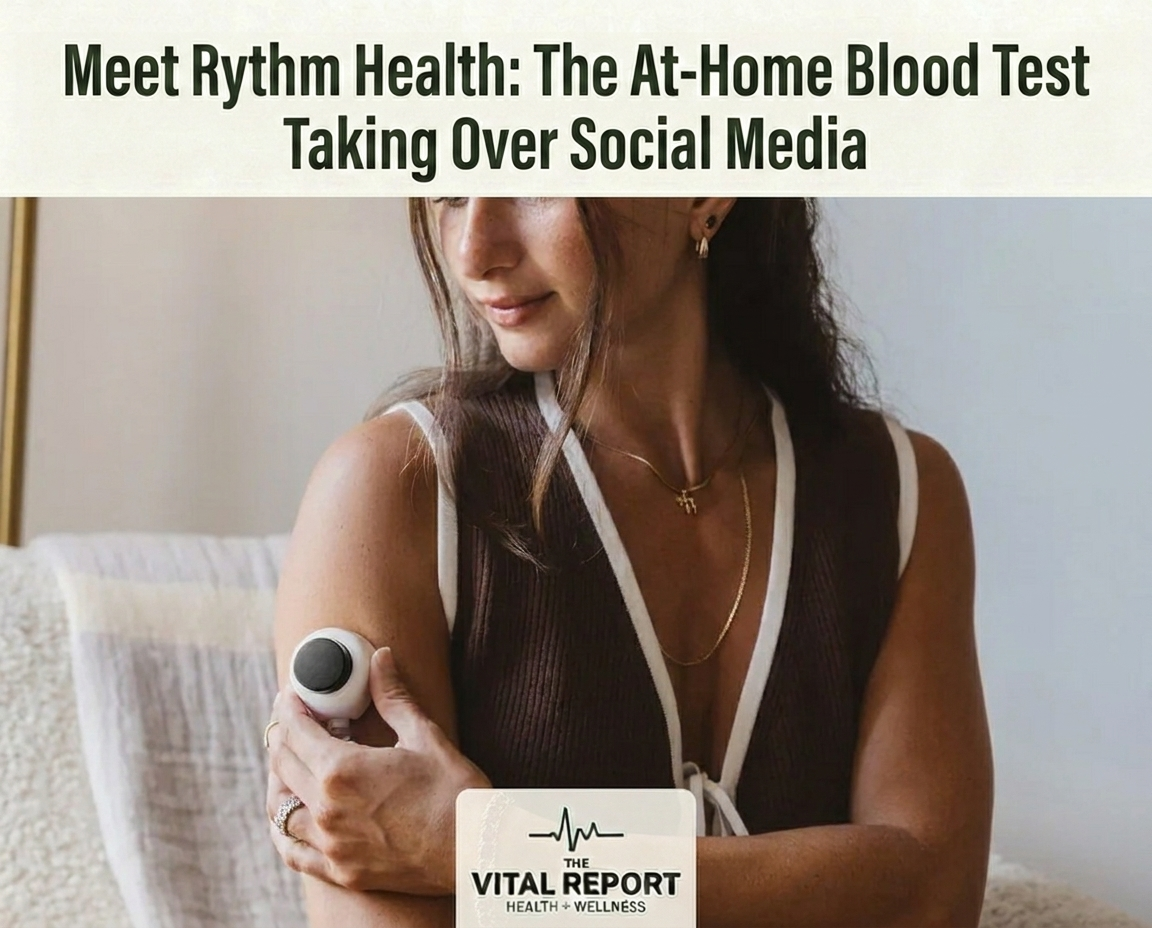
If you’ve spent any time on TikTok, Instagram, or wellness YouTube lately, you’ve probably seen creators talking about “optimizing your biomarkers.” Instead of waiting for an annual physical, more people are testing their blood regularly to understand what’s happening inside their bodies before symptoms appear. One company at the center of this movement is Rythm Health, an at-home blood testing platform that’s quickly become one of the biggest names in personalized wellness.
Unlike traditional lab work that often happens once a year at your doctor’s office, Rythm encourages users to monitor key health biomarkers monthly. The goal isn’t simply to diagnose disease—it’s to track trends over time so people can better understand how sleep, exercise, stress, nutrition, and lifestyle changes impact their health.
While Rythm has become incredibly popular online, it’s important to separate the hype from the science. Here’s what Rythm Health is, why everyone is talking about it, and whether it’s worth adding to your own health routine.
Why Is Rythm Everywhere?
Health optimization has exploded over the last few years. Consumers are becoming increasingly interested in preventive health instead of reactive healthcare, and wearable devices like smart rings, fitness trackers, and continuous glucose monitors have made people more comfortable monitoring their own health metrics.
Rythm fits perfectly into this trend.
Instead of only tracking your steps or heart rate, Rythm gives users access to dozens of laboratory biomarkers that measure everything from cholesterol and inflammation to hormones, thyroid health, vitamin levels, and metabolic function. According to the company, their testing platform uses a small at-home blood collection device that requires only a fraction of the blood needed for a traditional venous blood draw while still delivering laboratory-analyzed results.
The company’s clean branding, easy-to-read dashboards, and social-media-friendly reports have also helped fuel its popularity. Influencers frequently share improvements in biomarkers after changing their diet, exercising more consistently, or improving sleep, making blood testing feel almost like another fitness tracker.
What Does Rythm Actually Test?
Rythm offers one comprehensive biomarker panel that focuses on several major areas of health, including:
- Heart health
- Metabolic health
- Hormone balance
- Thyroid function
- Vitamin and nutrient status
- Liver and kidney function
- Inflammation
- Blood health
Some of the most discussed biomarkers include:
ApoB (Apolipoprotein B): One of the strongest indicators of cardiovascular risk because it measures the number of cholesterol-carrying particles that can contribute to plaque buildup.
hs-CRP: A marker of systemic inflammation that’s increasingly being used alongside cholesterol measurements to better understand cardiovascular health.
Vitamin D: Essential for bone health, immune function, and overall wellness.
Testosterone and Estradiol: Important hormones that influence energy, recovery, muscle development, mood, and reproductive health.
TSH and Free T3: Key thyroid markers that help evaluate metabolism and hormone regulation.
Rythm currently measures more than 25 biomarkers across multiple body systems through a single at-home collection.
Why Experts Are Paying More Attention to Biomarkers
Although there isn’t independent peer-reviewed research specifically evaluating Rythm Health as a company, there is growing scientific interest in many of the biomarkers it measures.
One of the biggest examples is ApoB.
Rather than simply measuring LDL (“bad cholesterol”), many cardiologists now believe ApoB provides a more accurate picture of cardiovascular risk because it counts the actual particles capable of causing plaque buildup. New research published in 2026 suggests that combining lipid biomarkers like ApoB with inflammatory markers and genetic information improves prediction of future coronary artery disease.
Similarly, biomarkers such as hs-CRP are increasingly being used to evaluate chronic inflammation, while HbA1c, triglycerides, and thyroid hormones remain well-established tools for monitoring metabolic health.
The takeaway is simple: the individual biomarkers have strong scientific backing, even though Rythm’s specific testing platform itself has not yet been studied in large independent clinical trials.
Who Should Consider Using Rythm?
Rythm isn’t designed to replace your primary care physician, but it may be valuable for people who enjoy tracking their health between annual physicals.
Good candidates include:
- People actively trying to lose weight
- Fitness enthusiasts monitoring recovery and performance
- Individuals making major nutrition changes
- Anyone focused on improving heart health
- Adults with a family history of cardiovascular disease
- People interested in tracking hormone changes over time
- Biohackers who enjoy using data to guide lifestyle decisions
Monthly testing can also help users determine whether changes like improving sleep, reducing alcohol consumption, increasing exercise, or eating more whole foods are actually moving biomarkers in the right direction.
Who Probably Doesn’t Need It?
For many healthy adults, annual blood work through a primary care physician remains completely appropriate.
People should also avoid interpreting biomarker results without medical guidance, especially if they have existing medical conditions or are taking prescription medications.
An abnormal laboratory value doesn’t automatically mean something is wrong, and a normal value doesn’t guarantee perfect health. Blood tests should always be interpreted within the context of symptoms, medical history, family history, and guidance from a healthcare professional.
Where Can You Get Rythm?
One reason Rythm has gained traction is convenience.
Rather than scheduling an appointment at a laboratory or physician’s office, customers order the testing kit directly through the company’s website. After collecting the sample at home, it’s mailed back to Rythm’s laboratory for analysis. Results are then delivered digitally along with explanations for each biomarker and personalized trend tracking over time. The company also notes that its laboratory is CLIA-certified and CAP-accredited.
Unlike services that require visits to partner laboratories, Rythm is built primarily around an at-home collection model.
Why Trend Tracking May Matter More Than One Test
One of Rythm’s biggest selling points is that health isn’t static.
A single blood test provides a snapshot, but repeated testing can reveal patterns that might otherwise go unnoticed. According to Rythm, many biomarkers—including ApoB, inflammatory markers, and triglycerides—can begin changing within weeks after meaningful improvements in diet, exercise, stress management, or sleep.
That’s why the company recommends consistent testing rather than treating blood work as a once-a-year event.
Whether monthly testing is necessary for everyone remains debated among healthcare professionals, but there’s little question that longitudinal data provides more context than a single isolated result.
Final Thoughts
Rythm Health has tapped into one of the biggest wellness movements of 2026: personalized, data-driven health tracking. By making laboratory testing more accessible and easier to understand, the company is helping people become more engaged with their own health.
That said, it’s important to remember that Rythm is a wellness tool—not a replacement for medical care. The biomarkers it measures, such as ApoB, hs-CRP, thyroid hormones, and vitamin levels, are supported by extensive scientific research and play an important role in understanding overall health. However, the strongest evidence supports using these biomarkers alongside guidance from healthcare professionals, rather than relying on any single testing platform alone.
For people who enjoy tracking progress and making informed lifestyle changes, Rythm offers an intriguing new way to monitor health beyond the annual physical. The biggest value may not be finding a single “perfect” number, but watching how your body responds over time—and using that information to build healthier habits for the long run.