
The late 1990s and early 2000s were a different era for technology.
Computers came in bright colors.
Game consoles had translucent shells.
And electronics weren’t afraid to look playful.
Now, as Y2K fashion and nostalgia continue influencing consumer culture, one wellness brand is bringing that aesthetic back.
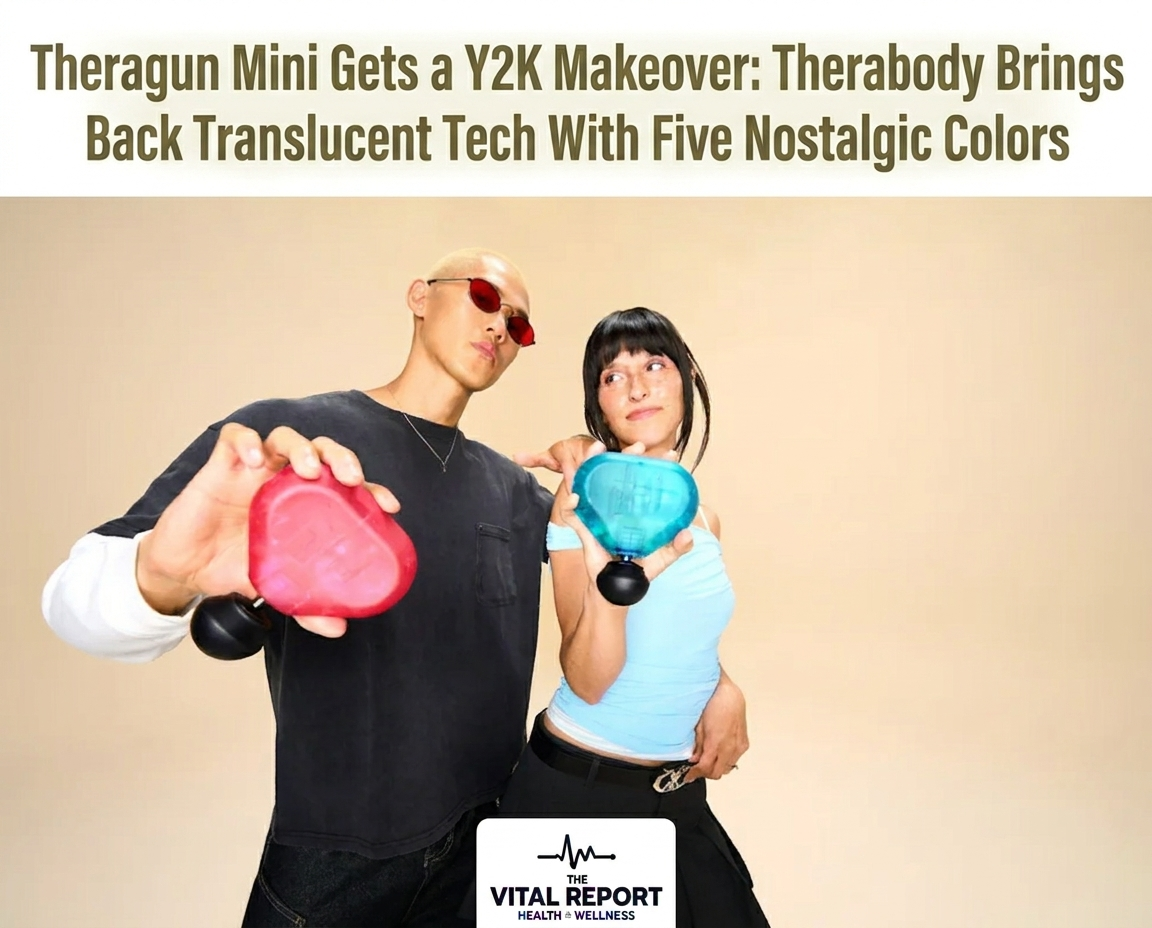
Therabody has introduced the limited-edition Theragun Mini Y2K Collection, transforming its portable massage gun into a colorful throwback inspired by the technology of the late ’90s and early 2000s.
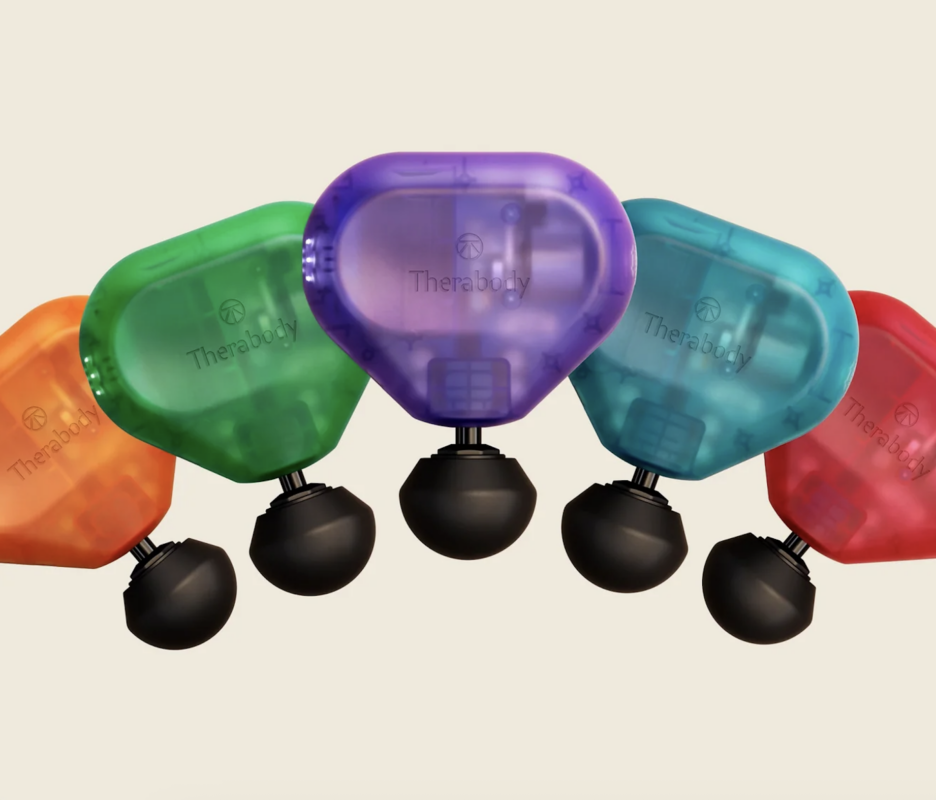
Launched in September 2026, the collection features five translucent colorways: Blue Raspberry, Grape Blast, Orange Crush, Strawberry Splash, and Green Apple.
Each device features a see-through exterior that reveals the internal engineering, combining the look of vintage electronics with the technology of Therabody’s third-generation Theragun Mini.
The company also partnered with actress Danielle Fishel, known for her role in Boy Meets World, to help introduce the collection.
Priced at $229.99, the limited-edition devices deliver the same percussion massage functionality as the standard Theragun Mini, including three speed settings, interchangeable attachments, and app-connected recovery guidance.
According to Therabody’s September 22 announcement, the collection was inspired by the colorful, translucent electronics that defined an earlier generation of consumer technology.
But the launch is about more than nostalgia.
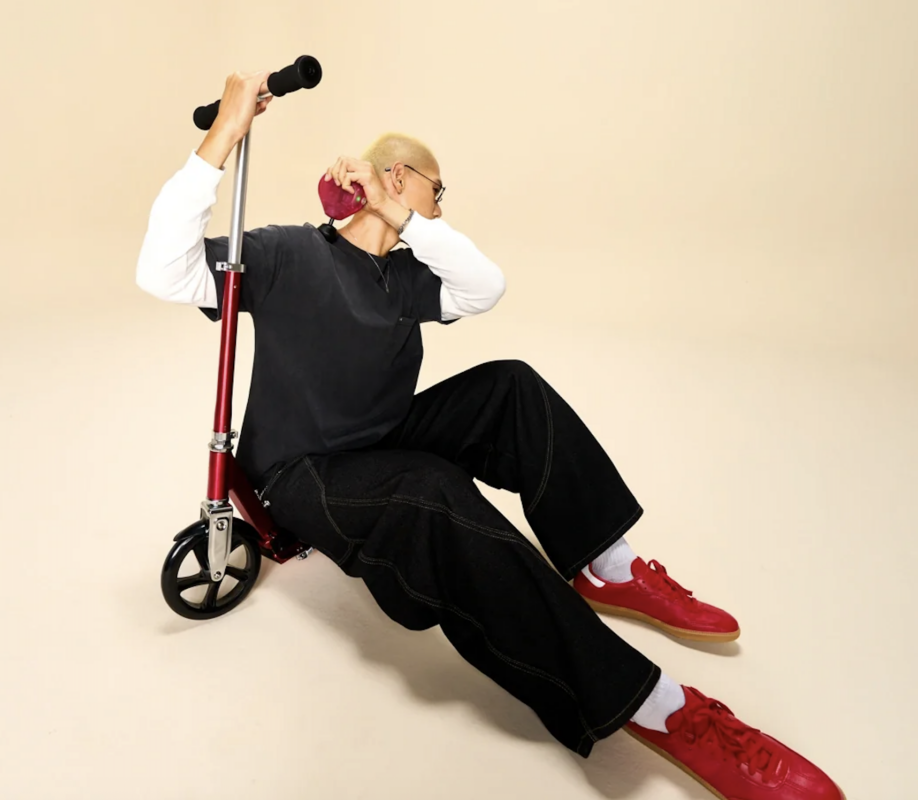
Therabody is turning a functional recovery device into a lifestyle accessory, showing how wellness technology is increasingly competing on design, personality, and cultural relevance.
The Theragun Mini Just Got a Retro Reboot
Therabody is taking one of its most recognizable recovery products and giving it an entirely different personality.
The Theragun Mini has traditionally been positioned as a compact, practical massage gun designed for people who want muscle relief without carrying a full-size device.
Its selling points have focused on portability, performance, and convenience.
The Y2K Collection introduces another reason to buy it.
Design.
Instead of the neutral finishes commonly associated with fitness technology, the new devices feature colorful, translucent shells inspired by electronics from the late 1990s and early 2000s.
Think see-through gaming consoles, colorful desktop computers, and the translucent plastic accessories that defined the era.
According to Therabody’s official announcement, the collection is designed to evoke the technology consumers grew up with while delivering the recovery capabilities they want today.
The result is a product that looks more like a nostalgic collectible than conventional gym equipment.
And that is precisely the point.
Therabody is bringing personality into a category traditionally dominated by black, gray, and metallic devices.
The company isn’t introducing a new massage mechanism or a dramatically redesigned recovery platform.
Instead, it is showing how an established product can reach a different audience through aesthetic innovation.
Five Colors Inspired by Y2K Technology
The collection features five limited-edition finishes, each with a translucent exterior:
- Blue Raspberry: A bright blue finish reminiscent of translucent gaming accessories.
- Grape Blast: A purple design inspired by the colorful electronics of the era.
- Orange Crush: A vibrant orange shell that makes the internal components visible.
- Strawberry Splash: A pink finish combining retro styling with a playful appearance.
- Green Apple: A bright green version that recalls classic see-through gadgets.
Each color uses the same Theragun Mini third-generation platform.
That means consumers are choosing an aesthetic rather than a different set of performance specifications.
The transparent housing is also a distinctive design decision.
Modern electronics often conceal their internal engineering behind opaque materials.
Therabody is doing the opposite.
The Y2K collection allows users to see into the device, making the mechanical components part of its visual appeal.
For consumers who remember the translucent electronics of the early 2000s, the design may feel familiar.
For younger shoppers, it fits into the ongoing revival of Y2K-inspired fashion, accessories, and technology.
Danielle Fishel Brings the Nostalgia Full Circle
To introduce the collection, Therabody partnered with Danielle Fishel, the actress best known for playing Topanga Lawrence on the television series Boy Meets World.
The partnership connects the product directly to the era that inspired its design.
Fishel became a recognizable television personality during the 1990s, making her a natural fit for a campaign built around nostalgia.
According to Rolling Stone’s September 23 coverage, Fishel helped introduce the collection through a social media campaign referencing the cultural trends of 1999.
The campaign contrasts the priorities of adolescence with the realities of adulthood.
Back then, consumers might have been thinking about butterfly clips, CDs, and low-rise jeans.
Today, those same consumers may be more concerned about muscle soreness, physical recovery, and the demands of busy schedules.
That contrast gives the collection its central message.
The aesthetic belongs to the past.
The recovery technology belongs to the present.
For Therabody, the partnership also provides a way to reach consumers outside traditional fitness audiences.
Rather than relying exclusively on athletes or trainers, the brand is connecting recovery to entertainment, nostalgia, and everyday life.
Underneath the Retro Design Is the Theragun Mini Gen 3
Although the Y2K Collection looks different from the standard model, the underlying technology remains the same.
The limited-edition devices are based on Therabody’s third-generation Theragun Mini.
According to the official product specifications, the device weighs approximately 0.40 kilograms, or about 0.88 pounds.
Its compact design is intended to fit comfortably into a gym bag, backpack, or travel case.
The massage gun offers three speed settings:
1,750 percussions per minute.
2,100 percussions per minute.
And 2,400 percussions per minute.
These settings allow users to adjust the intensity of the percussion massage.
The device also includes three interchangeable attachments.
The Dampener is designed for gentler treatment of sensitive or tender areas.
The Standard Ball provides general-purpose massage for larger muscle groups.
And the Thumb attachment allows more targeted pressure on smaller areas.
Together, the attachments make the Mini more versatile than its compact size might suggest.
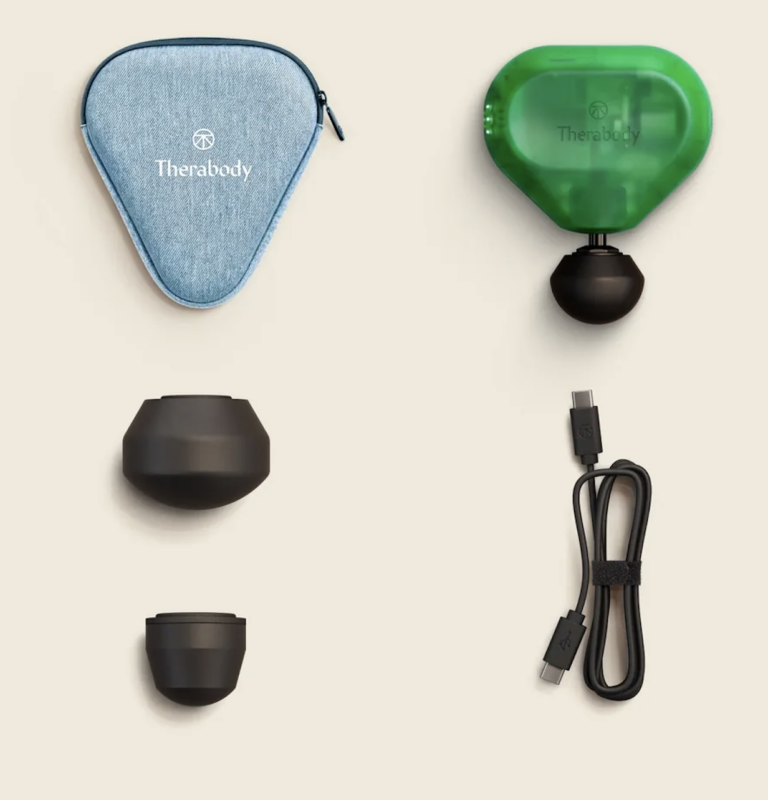
The device also includes USB-C charging, a travel lock, and a soft carrying case.
Therabody lists battery life at up to 150 minutes on its official product specification page.
For consumers who already own a Theragun Mini Gen 3, the Y2K version doesn’t represent a major performance upgrade.
Its appeal is primarily the new design and limited-edition availability.
Percussion Therapy Is Still the Main Attraction
Despite the colorful makeover, the Theragun Mini remains a recovery device.
It uses rapid mechanical pulses to apply repeated pressure to soft tissue.
This approach is commonly called percussion therapy.
Massage guns have become popular among athletes, fitness enthusiasts, and consumers looking for ways to manage temporary muscle soreness and stiffness.
They are frequently used before workouts as part of a warm-up routine or afterward to provide localized massage.
Research suggests percussion massage may offer certain short-term benefits, particularly for flexibility, perceived soreness, and range of motion.
However, the evidence is more limited for claims about faster tissue healing or long-term improvements in athletic performance.
A systematic review of percussion therapy research indexed by PubMed examines its potential effects on musculoskeletal performance and pain.
The broader literature suggests that benefits depend on the treatment protocol, population, and outcomes being measured.
That distinction matters.
A massage gun may help someone feel less stiff after exercise.
But that doesn’t necessarily mean it accelerates biological muscle repair.
Therabody markets the Mini around relief from everyday aches, tension, and soreness.
Consumers should understand those benefits as potential effects of massage rather than guarantees of faster recovery from every type of injury or workout.
Why the Mini Is Designed for Everyday Recovery
One reason the Theragun Mini has become an important part of Therabody’s lineup is its portability.
Full-size massage guns can offer substantial power and multiple treatment options.
But their size may make them less convenient for travel or everyday use.
The Mini is designed to address that problem.
Its compact shape allows users to carry it between work, the gym, and home.
Therabody positions the device for situations ranging from post-workout soreness to tension associated with long periods of sitting.
That broader positioning reflects how recovery technology has evolved.
Massage guns were once primarily associated with professional athletes, trainers, and physical therapy environments.
Today, they are marketed to a much wider consumer audience.
People use them after recreational workouts, long flights, demanding workdays, and other physically taxing activities.
The Y2K Collection extends that approach.
By making the device more visually appealing, Therabody is attempting to reach consumers who may view wellness products as part of their personal style.
The product isn’t simply something to store in a gym bag.
It’s designed to be seen.
The Therabody App Adds Personalized Recovery Guidance
The Theragun Mini also connects to Therabody’s digital recovery platform.
Through the Therabody app, users can access guided routines and recommendations intended to help them use the device more effectively.
The platform includes Coach by Therabody, an AI-assisted feature designed to personalize recovery suggestions.
According to Therabody’s product information, Coach can incorporate information from compatible fitness services and wearables, including Apple Watch, Garmin, Strava, and Google Health Connect.
The idea is to make recovery recommendations more relevant to a user’s activity patterns.
Someone who recently completed a lower-body workout, for example, may receive guidance focused on the muscle groups involved.
The app can also demonstrate where to position the massage gun and which attachment to use.
That digital integration is important because many consumers purchase recovery devices without fully understanding how to incorporate them into their routines.
Guided sessions can make the equipment feel more approachable.
However, AI-generated recovery suggestions shouldn’t be interpreted as individualized medical advice.
The system can provide general wellness guidance, but it cannot replace professional evaluation of persistent pain or injury.
Why Nostalgia Is Becoming a Wellness Marketing Strategy
The Theragun Mini Y2K Collection is part of a larger trend in consumer products.
Brands are increasingly revisiting the visual identity of the late 1990s and early 2000s.
Fashion companies have brought back low-rise silhouettes, metallic accessories, and brightly colored designs.
Technology brands have explored retro-inspired devices and translucent materials.
And beauty companies have revived packaging styles associated with earlier decades.
Therabody is applying that strategy to recovery technology.
The appeal comes from combining familiarity with modern functionality.
Consumers may recognize the design language of older electronics, but the product delivers features that didn’t exist in the same form during that era.
That combination creates a distinctive marketing opportunity.
The company can appeal to consumers who remember Y2K culture while also attracting younger audiences who appreciate the aesthetic.
The collection is particularly well suited to social media.
Bright colors and transparent shells are visually recognizable.
They photograph differently from conventional black massage guns.
And the limited-edition positioning gives consumers a reason to pay attention before the collection disappears.
This is where product design becomes part of brand strategy.
Therabody isn’t relying on a new health claim to generate excitement.
It’s creating interest through appearance, cultural relevance, and collectibility.
A Recovery Device That Looks Like a Lifestyle Accessory
One of the most interesting aspects of the launch is how it blurs the line between fitness equipment and lifestyle products.
Traditional recovery devices are usually evaluated through practical specifications.
Power.
Battery life.
Attachments.
Weight.
And price.
Those factors still matter.
But the Y2K Collection introduces another consideration.
Whether consumers enjoy the way the product looks.
That may seem superficial in a category associated with physical performance.
Yet design has long influenced purchasing decisions in consumer electronics.
People choose smartphones, headphones, watches, and other devices partly because of their appearance.
Therabody is bringing that logic to wellness equipment.
The translucent shell doesn’t necessarily improve the massage experience.
But it may make the product more desirable to consumers who value distinctive design.
It also creates an opportunity for gifting.
A colorful limited-edition massage gun may appeal to someone who wouldn’t otherwise purchase a conventional recovery device.
That expands the potential audience beyond dedicated athletes.
The Science Behind Recovery Is Still Evolving
Therabody has invested in research examining percussion therapy and related recovery techniques.
The company highlights studies involving soreness, flexibility, circulation, stress, and sleep.
In its Y2K collection announcement, Therabody describes percussion therapy as a tool that may support several aspects of recovery.
However, the strength of evidence varies across those applications.
Some studies have found short-term improvements in range of motion or perceived muscle soreness.
Others have investigated physiological responses to massage.
But the research does not establish that massage guns are necessary for effective recovery.
Sleep, adequate nutrition, appropriate training loads, and sufficient rest remain important foundations of physical recovery.
A massage gun can be an optional addition to those habits.
It should not be viewed as a replacement for them.
Safety also matters.
Users should avoid applying excessive pressure or using percussion devices directly over injured tissue, open wounds, or sensitive anatomical areas.
People with certain medical conditions should consult a healthcare professional before use.
The Y2K Collection may look playful, but it remains a device that applies mechanical force to the body.
How Much Does the Theragun Mini Y2K Cost?
The limited-edition Theragun Mini Y2K Collection launched at $229.99.
The five colors are available through Therabody’s website, with select retail partners also carrying the collection.
The Blue Raspberry model is listed at Ulta Beauty, while other retailers, including Scheels, have offered selected colorways.
Availability may vary because the collection is limited edition.
The product includes the Theragun Mini Gen 3, three massage attachments, a USB-C charging cable, and a soft travel case.
Therabody also provides a one-year limited warranty.
For consumers comparing the Y2K Collection with the standard Theragun Mini, the key consideration is design.
The limited-edition models don’t introduce a new motor or additional treatment speeds.
They deliver the established Gen 3 experience in a different exterior.
That makes the collection most appealing to consumers who specifically want the retro aesthetic.
The Bigger Shift: Wellness Products Are Becoming More Personal
The Theragun Mini Y2K Collection illustrates a broader change in the wellness market.
Health and fitness products are increasingly being designed for everyday life rather than exclusively for performance.
Consumers want equipment that is convenient.
They want products that fit into their routines.
And in many cases, they want those products to reflect their personal style.
This shift can be seen across categories.
Fitness wearables are becoming more fashion-conscious.
Recovery products are being designed for home interiors.
And wellness accessories are appearing in colors and materials once reserved for consumer electronics and beauty products.
Therabody’s Y2K Collection brings those trends together.
The device remains functional recovery equipment.
But its presentation is closer to a lifestyle product launch.
The brand is using nostalgia to make familiar technology feel new again.
That approach may become increasingly common as the recovery category matures.
When competing products offer similar core functions, design and brand identity can become important points of differentiation.
The Bottom Line
Therabody has given its Theragun Mini a nostalgic makeover with the limited-edition Y2K Collection.
The launch features five translucent colors inspired by the electronics of the late 1990s and early 2000s.
The company partnered with Danielle Fishel to introduce the collection, connecting the product’s retro appearance with a recognizable figure from the era.
Underneath the colorful exterior is the Theragun Mini Gen 3, offering three percussion speeds, three interchangeable attachments, and app-connected recovery guidance.
The collection launched at $229.99 and is available while supplies last.
From a technical perspective, this isn’t a major product upgrade.
The massage gun’s core functionality remains unchanged.
But from a branding perspective, the collection represents something more interesting.
Therabody is showing that recovery technology can be functional without looking purely utilitarian.
The Y2K Collection turns a familiar wellness device into something colorful, nostalgic, and visually distinctive.
The technology is built for 2026.
The aesthetic is straight out of 1999.
And for Therabody, that combination may be exactly what makes recovery feel exciting again.
The collection’s launch date, colors, specifications, celebrity campaign, and $229.99 launch price are supported by Therabody’s official materials and September 2026 reporting.