

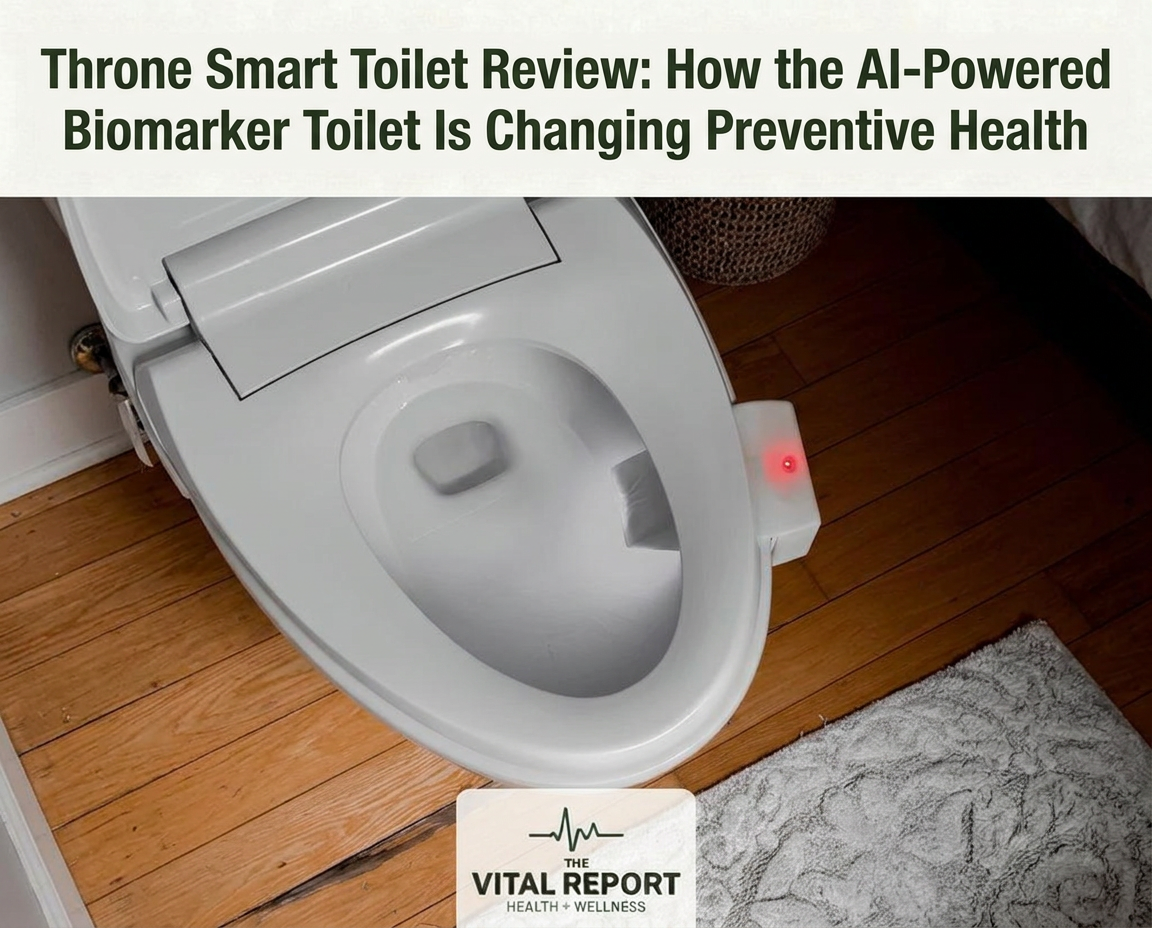
Wearable devices transformed how people think about health. Smart rings monitor sleep. Continuous glucose monitors track blood sugar. Preventive health scans can identify disease years before symptoms appear.
Now, another everyday object is entering the world of personalized healthcare:
Your toilet.
While it may sound futuristic, companies are investing heavily in what many experts believe could become one of the next frontiers of preventive medicine. Rather than requiring blood tests or doctor’s appointments, smart toilets can collect health information during something everyone already does multiple times a day.
Leading this movement is Throne, a startup building an AI-powered toilet device that analyzes bathroom habits and biomarkers to provide users with insights into hydration, digestive health, and long-term wellness.
As consumers become increasingly interested in continuous health monitoring, Throne represents a shift toward passive healthcare—technology that collects valuable information without requiring extra effort.
What Is Throne?
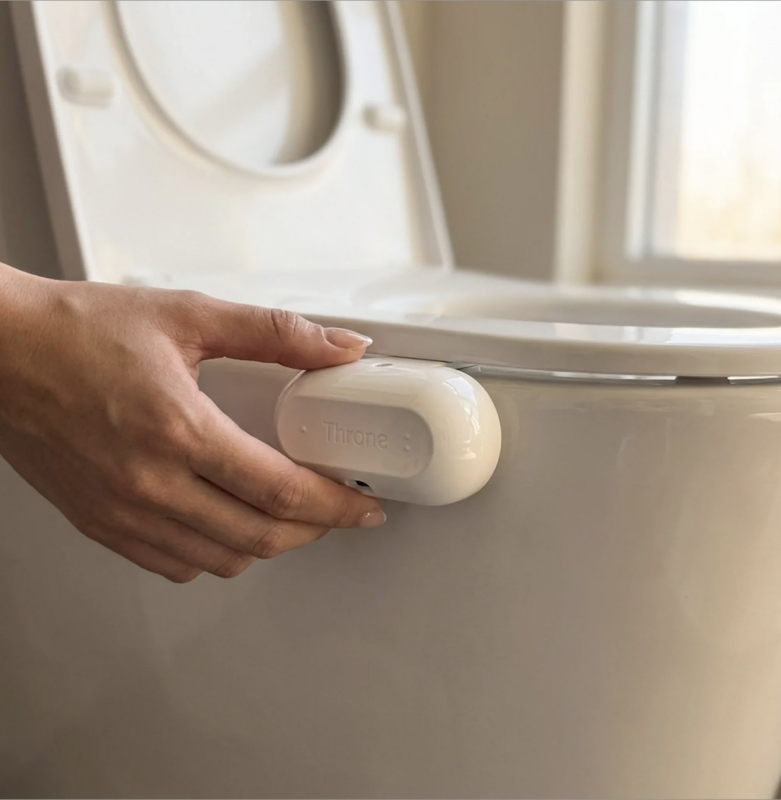
Unlike a completely redesigned smart toilet, Throne is a camera-equipped attachment that fits inside an existing toilet.
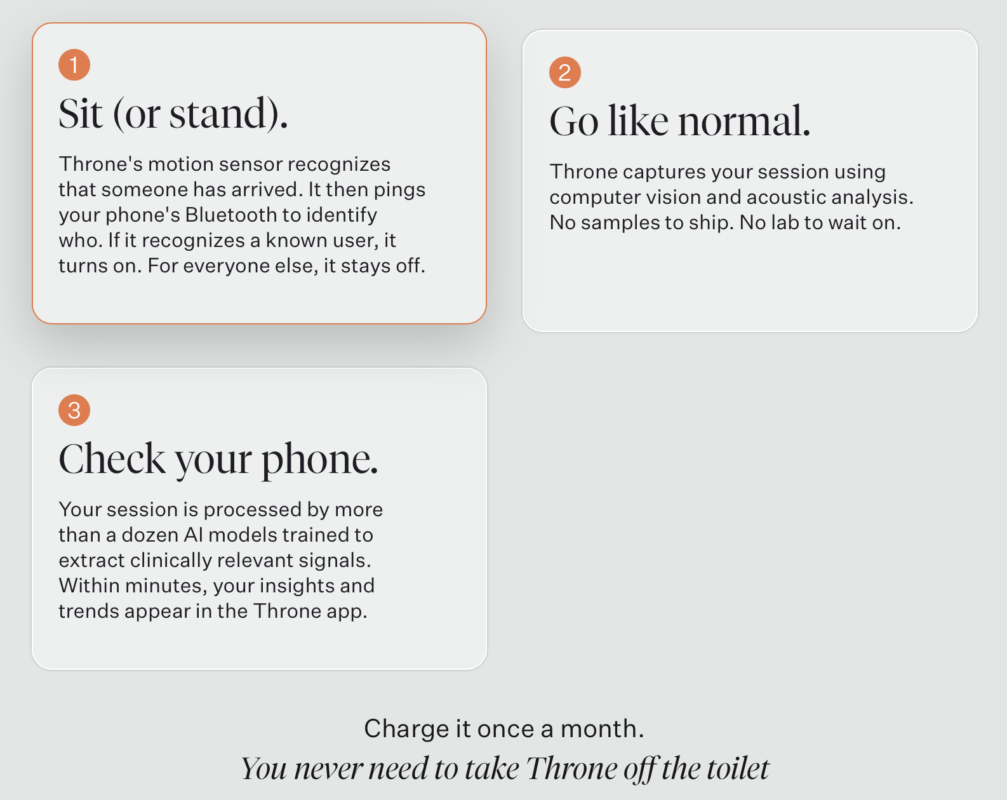
Using artificial intelligence and computer vision, the device automatically analyzes urine and stool after each bathroom visit. The data is processed privately to provide users with health insights through a companion mobile app.
Instead of asking users to remember symptoms or manually log bathroom habits, Throne creates a consistent health record over time.
Its goal isn’t simply to monitor bathroom activity.
It’s to identify meaningful changes that may signal improvements—or potential health concerns—before users would otherwise notice them.
Why Bathroom Data Matters
Most people don’t spend much time thinking about what happens after they flush.
Doctors do.
Urine and stool can reveal important information about hydration, digestive health, kidney function, infections, diet, medication side effects, and overall wellness.
Healthcare professionals have long relied on bathroom-related symptoms when diagnosing conditions ranging from dehydration to inflammatory bowel disease.
The problem has always been consistency.
Patients often struggle to accurately remember how frequently they use the bathroom or whether changes occurred weeks earlier.
Throne solves this by automatically collecting objective information every day.
Instead of relying on memory, users receive ongoing trends.
AI Meets Preventive Healthcare
Artificial intelligence has rapidly expanded across healthcare.
Today’s AI tools already assist physicians by interpreting medical imaging, identifying heart rhythm abnormalities, analyzing blood work, and supporting clinical decision-making.
Throne brings similar technology into the home.
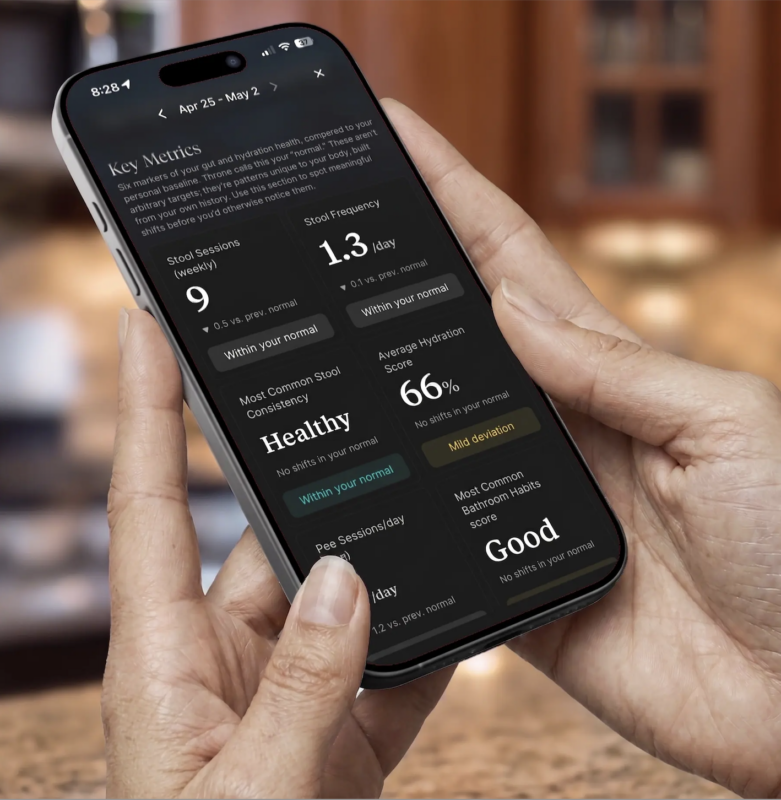
Its computer vision system identifies patterns in bathroom habits while tracking metrics such as:
- Bathroom frequency
- Stool consistency
- Urine color
- Hydration trends
- Potential digestive changes
- Long-term patterns
Rather than replacing healthcare providers, the system is designed to alert users when meaningful changes may warrant additional attention.
This shift reflects one of healthcare’s biggest movements:
Finding problems earlier instead of waiting until symptoms become severe.
The Rise of Passive Health Monitoring
Consumers are increasingly embracing technology that works quietly in the background.
Instead of manually logging meals, workouts, or symptoms, today’s health devices collect information automatically.
Examples include:
Oura Ring
Tracks sleep, recovery, heart rate variability, and body temperature.
WHOOP
Measures recovery, cardiovascular strain, and sleep performance.
Dexcom
Continuously monitors glucose levels.
Eight Sleep
Automatically adjusts mattress temperature throughout the night while tracking sleep.
Throne fits naturally into this trend.
Unlike many health devices, it doesn’t require users to wear anything.
Instead, it gathers information during a daily routine that already happens naturally.
Hydration Is More Than Drinking Water
One area where Throne may prove especially valuable is hydration monitoring.
Many people assume they’re adequately hydrated simply because they drink water throughout the day.
However, urine concentration, frequency, and color often provide additional clues about hydration status.
As more consumers prioritize athletic performance and longevity, hydration has become one of wellness’s fastest-growing topics.
Monitoring hydration consistently may help users better understand how exercise, travel, illness, alcohol, and nutrition affect their bodies.
Gut Health Remains One of Wellness’s Biggest Trends
Interest in gut health continues to accelerate.
Consumers are investing in probiotics, prebiotics, microbiome testing, fermented foods, and fiber-rich diets at unprecedented levels.
Bathroom habits represent another important piece of that puzzle.
Changes in stool consistency or bathroom frequency can reflect shifts in diet, hydration, stress, medications, or digestive health.
Rather than relying on occasional observations, Throne creates long-term trend data that may help users better understand how lifestyle choices affect digestive function.
If you’re interested in improving digestive wellness, check out Vital Report’s article Fiber Is the New Protein, which explores why gut health has become one of the biggest nutrition trends of 2026.
Privacy Questions
Whenever cameras enter the bathroom, privacy naturally becomes one of the biggest concerns.
Throne emphasizes that its technology focuses on analyzing waste—not identifying users personally.
The company has stated that protecting user privacy is central to its platform, with health information processed securely and user control over collected data.
As AI-powered health devices become more common, transparency around data handling will likely remain essential for consumer trust.
Who Could Benefit?
Throne may appeal to:
- Health-conscious consumers
- Athletes monitoring hydration
- Individuals managing digestive conditions
- Older adults tracking long-term health
- Families interested in preventive wellness
- Biohackers and longevity enthusiasts
Because the device collects information automatically, it removes much of the friction associated with traditional health tracking.
The Future of Smart Bathrooms
Smart bathrooms are no longer science fiction.
Researchers are already exploring toilets capable of detecting biomarkers associated with kidney disease, diabetes, urinary tract infections, colorectal cancer, and metabolic disorders.
Future versions may integrate with wearable devices, electronic medical records, AI health coaches, and preventive screening platforms.
Imagine your Oura Ring tracking sleep, your smartwatch measuring heart health, your continuous glucose monitor analyzing metabolism—and your toilet quietly monitoring hydration and digestive wellness.
Together, these devices could provide one of the most comprehensive pictures of human health ever available outside a hospital.
The Bottom Line
Throne represents one of the most innovative developments in preventive healthcare.
By transforming an everyday bathroom visit into an opportunity to monitor hydration, digestive health, and long-term wellness, the company is helping redefine what continuous health monitoring looks like.
While smart toilets won’t replace physicians or laboratory testing, they may become an increasingly valuable layer of preventive care.
As artificial intelligence continues moving into every corner of healthcare, your bathroom may soon become one of the smartest rooms in your home.
5 External Brand Links
- Throne — https://www.thronescience.com
- Oura — https://ouraring.com
- WHOOP — https://www.whoop.com
- Dexcom — https://www.dexcom.com
- Eight Sleep — https://www.eightsleep.com
Frequently Asked Questions
What is the Throne smart toilet?
Throne is an AI-powered toilet attachment that analyzes urine and stool patterns to provide insights into hydration, digestive health, and long-term wellness.
Does Throne diagnose diseases?
No. Throne is designed to monitor trends and provide health insights, not diagnose or treat medical conditions.
Is Throne replacing wearables?
No. It complements wearables like Oura and WHOOP by providing additional information that those devices cannot measure.
Is the Throne device private?
Throne states that it is designed to analyze waste rather than identify individuals, with user privacy and data security being central to its platform.
Why are smart toilets becoming popular?
They allow passive, continuous health monitoring and fit into the growing movement toward preventive, data-driven healthcare.