
The protein boom has created an entire industry around one question:
How can we eat more protein?
Protein shakes.
Protein bars.
Protein cereal.
Protein coffee.
Protein water.
Even traditionally low-protein foods are being reformulated to put a bigger number on the nutrition label.
But Thorne’s newest product is asking a different question:
What if the next opportunity isn’t consuming more protein — but getting more out of the protein you’re already eating?
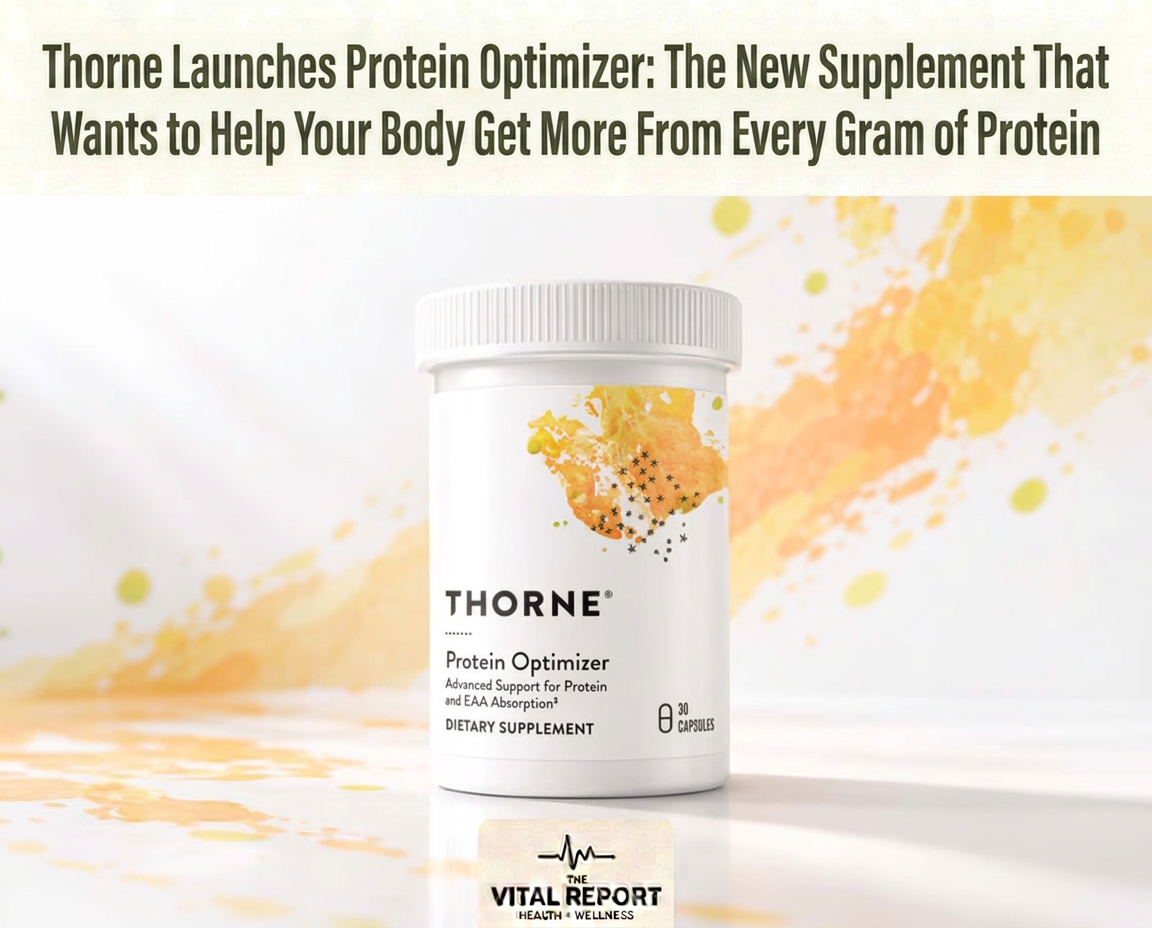
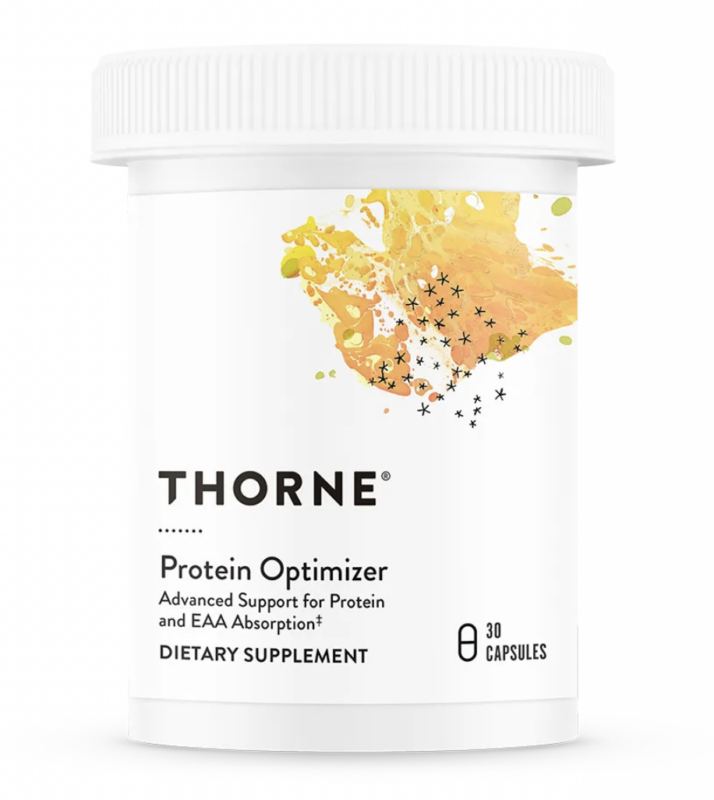
Thorne has launched Protein Optimizer, a new probiotic-and-enzyme supplement designed to support protein digestion and amino acid absorption through what researchers call the gut-muscle axis.
And despite its name, Protein Optimizer contains no protein.
Instead, each capsule combines probiotics with digestive-enzyme support in an attempt to help the body more effectively break down dietary protein, absorb amino acids and support muscle recovery.
The product arrives at an interesting moment.
Consumers are eating increasingly high-protein diets. GLP-1 medications have created new conversations around maintaining lean muscle during weight loss. Longevity-focused consumers are paying more attention to muscle as they age. And the microbiome is increasingly being investigated for its relationship with everything from metabolism to athletic performance.
Thorne is bringing all of those trends together in one capsule.
What Is Thorne Protein Optimizer?
Protein Optimizer is a once-daily capsule built around two primary components:
Bacillus coagulans SNZ 1969 and Thorne’s Mycohsa blend.
The product contains at least three billion active probiotic cultures per capsule.
According to Thorne, its Mycohsa blend combines several microorganisms — including Lactobacillus acidophilus, Lacticaseibacillus rhamnosus, Bifidobacterium breve, and Saccharomyces boulardii — alongside the digestive enzyme amylase.
The formula is designed to work along the gut-muscle axis by supporting protein digestion, amino acid absorption, digestive comfort and muscle recovery.
It is also NSF Certified for Sport, meaning it has been independently tested under a program that screens sports supplements for label accuracy and substances prohibited by major athletic organizations.
Most importantly, Protein Optimizer is not meant to replace protein.
You still have to eat it.
The idea is that Protein Optimizer helps support what happens after the protein enters your body.
The Protein Industry Has Been Obsessed With Quantity
Walk into almost any grocery store in 2026 and protein is everywhere.
Brands have figured out how to add it to nearly every imaginable food category.
Consumers can buy protein pancakes, protein cookies, protein chips, protein pasta, protein ice cream and high-protein versions of products that were never traditionally associated with muscle building.
There is a reason for the obsession.
Protein provides amino acids the body uses to build and maintain muscle and other tissues.
The International Society of Sports Nutrition has reviewed evidence around protein intake and exercise, noting that adequate protein intake can support muscle protein synthesis and exercise recovery.
But protein consumption is only one part of the process.
Before amino acids can be used throughout the body, dietary protein has to be digested.
That means breaking large protein molecules into smaller peptides and amino acids that can ultimately be absorbed through the gastrointestinal tract.
Thorne is essentially betting that consumers who already obsess over the first number — grams of protein consumed — will increasingly become interested in the second part:
How effectively is my body using it?
Enter the Gut-Muscle Axis
The science behind Protein Optimizer centers on an emerging research area called the gut-muscle axis.
The basic idea is that skeletal muscle and the gastrointestinal system do not operate completely independently.
Instead, researchers are investigating how the gut microbiome, intestinal barrier, inflammation, metabolites and nutrient absorption may interact with muscle health.
A review published in Nutrients described evidence suggesting that the gut microbiota may influence skeletal-muscle adaptation to exercise through mechanisms including nutrient metabolism, inflammation and microbial metabolites.
That does not mean taking a probiotic automatically builds muscle.
The relationship is considerably more complicated.
But it raises an interesting possibility:
Optimizing muscle health may eventually involve paying attention to what happens in the gut as well as what happens in the gym.
Thorne is putting that emerging concept directly into a consumer supplement.
Protein → Gut → Amino Acids → Muscle
Protein digestion is a multistep process.
It begins in the stomach, where acid and enzymes help break protein down.
Digestion continues in the small intestine, where additional enzymes break proteins and peptides into components that can be absorbed.
Those amino acids can then enter circulation and become available for numerous biological processes.
Muscle protein synthesis is one of them.
Protein Optimizer is designed to support that middle part of the process.
Not protein consumption.
Not resistance training.
The digestive step connecting the two.
That positioning differentiates Protein Optimizer from the enormous market of powders and shakes competing primarily on how much protein they contain.

Why Probiotics Are Entering Sports Nutrition
Probiotics have traditionally been associated with digestive health.
Now they are increasingly appearing in performance nutrition.
Researchers are investigating whether specific microorganisms can influence nutrient absorption, inflammation, gastrointestinal symptoms, immune function and exercise performance.
A 2024 review published in the International Journal of Molecular Sciences examined research into microbiota interventions and athletic performance, including potential relationships between probiotics, gut health and exercise outcomes.
The important word is specific.
"Probiotic" is an extremely broad category.
Different microbial strains can have different properties, and evidence involving one strain should not automatically be applied to another.
Protein Optimizer combines multiple organisms rather than treating probiotics as a single generic ingredient.
The centerpiece is Bacillus coagulans SNZ 1969, a spore-forming probiotic strain.
Thorne pairs it with the company’s Mycohsa blend containing additional microorganisms and digestive-enzyme support.
Together, the company says the ingredients are intended to support digestive comfort, microbial balance, gut-wall integrity and protein absorption.
The GLP-1 Connection
One of the most interesting potential audiences for Protein Optimizer has nothing to do with bodybuilding.
It is people taking GLP-1 medications.
Medications such as semaglutide and tirzepatide have transformed obesity treatment by producing significant weight loss in clinical trials.
But losing body weight does not exclusively mean losing fat.
Some lean mass can also be lost during significant weight reduction.
That has created a rapidly growing category of products marketed toward people taking GLP-1 medications.
Protein has become one of the biggest areas of focus.
The goal is generally to combine adequate nutrition with resistance exercise and appropriate medical care to support the preservation of lean mass during weight loss.
Thorne is positioning Protein Optimizer as potentially relevant to this population because people consuming fewer calories may have an increased incentive to make their dietary protein intake count.
But that distinction needs to be kept in perspective.
Protein Optimizer is not a treatment for muscle loss associated with weight reduction.
And it does not replace adequate protein intake or resistance training.
Instead, it sits downstream from both.
It is designed to support the digestion and absorption process.
Muscle Is Becoming a Longevity Metric
There is another demographic that could make Protein Optimizer interesting:
Older adults.
Muscle health increasingly sits at the center of the longevity conversation.
As people age, maintaining muscle mass and strength becomes particularly important for mobility and physical function.
The National Institute on Aging emphasizes resistance and strength exercises as an important component of physical activity for older adults.
Protein intake is part of that conversation as well.
But aging can also involve changes in appetite, digestion, physical activity and other factors affecting nutrition.
That makes the broader question of how the body digests and uses nutrients increasingly relevant.
Protein Optimizer appears positioned to benefit from that shift.
It is not simply an athlete product.
It can also fit into the rapidly expanding market around healthy aging and muscle preservation.
Plant-Based Protein Could Be Another Opportunity
Thorne is also targeting people eating plant-forward diets.
Plant proteins can differ from animal proteins in amino-acid composition and digestibility.
That does not mean someone following a plant-based diet cannot meet their protein needs.
They absolutely can.
But protein source and overall dietary composition matter.
Thorne’s timing here is interesting because the company has also introduced a new Plant Protein powder containing pea, chia seed and rice proteins.
A two-scoop serving provides 22 grams of protein and all nine essential amino acids.
That creates a fairly obvious pairing within Thorne’s own portfolio:
Plant Protein supplies the protein.
Protein Optimizer is designed to support digestion and absorption.
The combination demonstrates how Thorne may be thinking about the future of sports nutrition.
Rather than simply selling consumers more macronutrients, build an ecosystem around how those macronutrients are consumed and utilized.
Protein Optimization Is Becoming Its Own Category
This is where Protein Optimizer becomes more interesting from a business perspective.
The protein market is enormous.
But it is also crowded.
Hundreds of companies sell whey.
Hundreds sell plant protein.
Protein bars occupy entire grocery-store aisles.
Creatine has become mainstream.
Another protein powder is difficult to differentiate.
Protein optimization creates a different category.
Instead of competing over:
20 grams vs. 25 grams vs. 30 grams of protein
the conversation becomes:
What can we do to support the way the body processes those grams?
That creates room for probiotics.
Digestive enzymes.
Amino acids.
Gut-health products.
Recovery products.
And eventually potentially personalized nutrition based on individual digestive or microbiome data.
The protein boom may therefore be entering its next stage.

Thorne Is Expanding Beyond Traditional Supplements
Protein Optimizer also arrives during an interesting period for Thorne.
The company has spent years building its reputation around supplements used by athletes, clinicians and wellness consumers.
Its products span areas including foundational nutrition, performance, gut health, stress, sleep and healthy aging.
Now the lines between those categories are increasingly disappearing.
Protein Optimizer is simultaneously:
A gut-health product.
A sports-nutrition product.
A probiotic.
A digestive supplement.
A recovery product.
And potentially part of the growing healthy-aging market.
That convergence mirrors what is happening across wellness more broadly.
Gut health is no longer just about digestion.
Sleep is no longer just about feeling rested.
Protein is no longer just for bodybuilders.
Consumers increasingly want products that connect multiple systems in the body.
The gut-muscle axis gives Thorne a scientific framework for connecting two of the biggest categories in wellness:
Microbiome health and muscle health.
What Protein Optimizer Doesn’t Do
There is an important limitation to keep in mind.
Protein Optimizer does not contain protein.
It does not replace a balanced diet.
It does not replace resistance training.
And a probiotic supplement should not be interpreted as a shortcut to muscle growth.
The underlying gut-muscle-axis research is promising, but this remains an evolving area of science.
Much of the evidence examines associations and biological mechanisms rather than proving that manipulating the microbiome will produce major improvements in muscle mass or athletic performance for everyone.
That makes Thorne’s positioning important.
The product is best understood as something designed to support protein digestion and amino acid absorption, rather than something that independently builds muscle.
For consumers, that difference matters.
The Bigger Protein Opportunity
Protein Optimizer represents an interesting shift in the supplement industry’s protein obsession.
For years, innovation focused primarily on putting more protein into more products.
Now companies are beginning to move downstream.
Digestion.
Absorption.
Amino-acid availability.
Muscle protein synthesis.
Recovery.
Microbiome health.
The entire journey from eating protein to ultimately using its amino acids is becoming a potential wellness category.
As Vital Report has covered in our reporting on the growing microbiome space, companies are increasingly looking beyond the gut as simply a digestive organ and toward its potential connections with broader health.
Protein Optimizer applies that thinking directly to muscle.
The Bottom Line
Thorne’s Protein Optimizer does not give you another 20 grams of protein.
It is designed to help support what happens to the protein you’re already eating.
The new once-daily capsule combines probiotics and digestive-enzyme support to target the emerging gut-muscle axis, with the goal of supporting protein digestion, amino-acid absorption, digestive comfort and muscle recovery.
That gives Thorne several potential audiences at once:
Athletes consuming high-protein diets.
Plant-based consumers.
Older adults focused on maintaining muscle.
And the rapidly expanding population using GLP-1 medications while paying closer attention to protein and lean mass.
But the bigger story is what Protein Optimizer says about where the protein market may be heading.
The first phase of the protein boom was about quantity.
Then came quality.
Now companies are turning their attention toward utilization.
Because after years of asking how many grams of protein we can squeeze into a shake, bar or snack, the next question may be much more interesting:
How much are we actually getting out of it?