
We can track our heart rate throughout the day.
We can watch our glucose rise after a meal.
We can measure sleep, skin temperature, blood oxygen, recovery and activity from devices on our wrists and fingers.
But hormones — some of the body’s most dynamic biological signals — are still largely measured the old-fashioned way.
Go to a lab.
Give a sample.
Wait for a result.
Eli Health wants to change that.
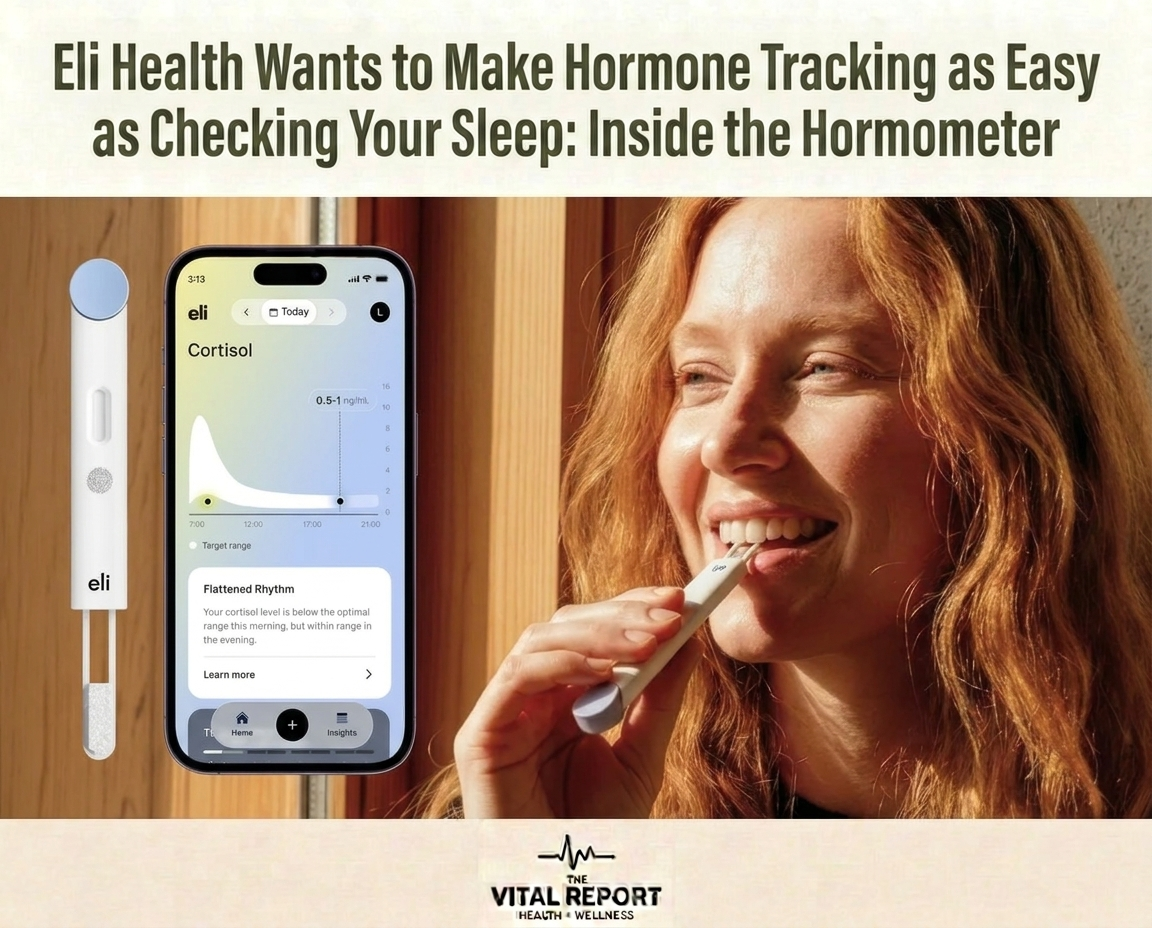
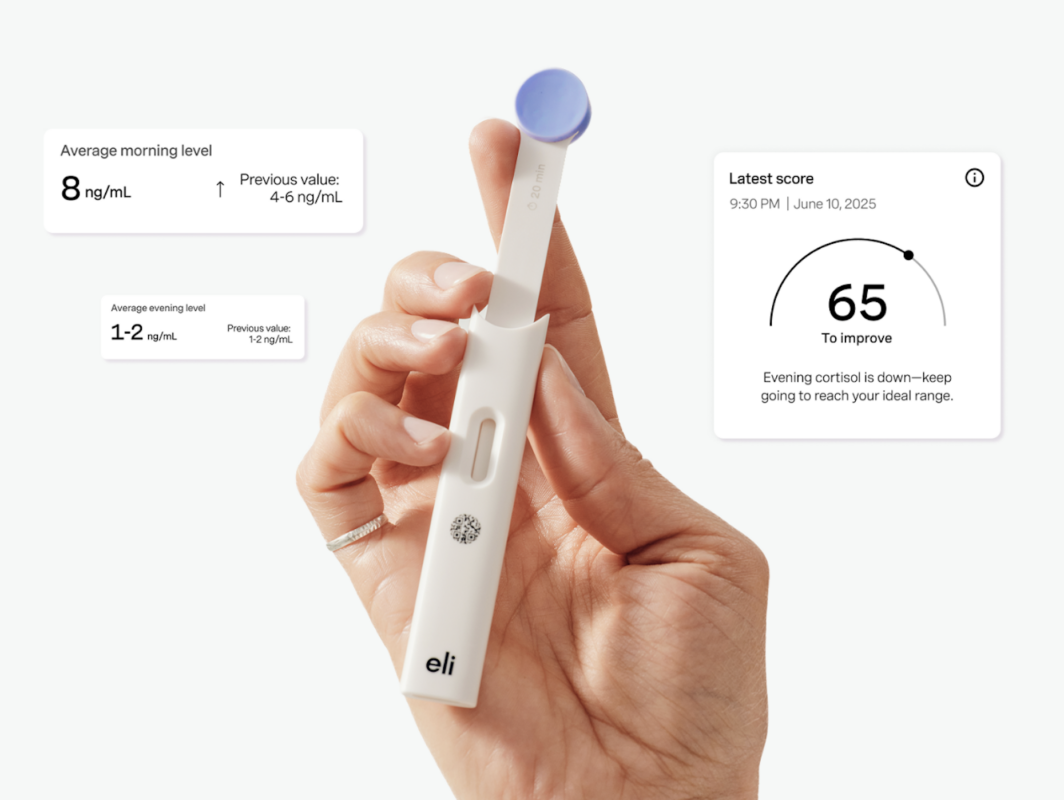
The health technology company has developed Hormometer, an at-home hormone monitoring platform that uses saliva, a disposable test and a smartphone camera to measure hormones without requiring blood draws or dedicated electronic hardware.
Its first commercially available target is cortisol.
Users collect saliva, scan the test using the Eli app and receive a result in about 20 minutes. The company is also developing tests for progesterone and testosterone as it works toward something much bigger:
Making hormone tracking a routine part of everyday health.
Eli Health says its long-term goal is to build a continuous hormone-monitoring platform capable of revealing how an individual’s hormones change over time.
And if the company succeeds, hormones could become another major layer of the quantified-self movement.
What Is the Eli Hormometer?
Hormometer is designed to turn hormone testing into something consumers can do at home in minutes.
There are three basic steps.
Collect saliva.
Scan the test.
View the results in the Eli app.
Unlike some health devices, Hormometer does not require a separate electronic reader. Eli uses a smartphone camera and AI-powered computer vision to analyze the test.
The result appears in roughly 20 minutes.
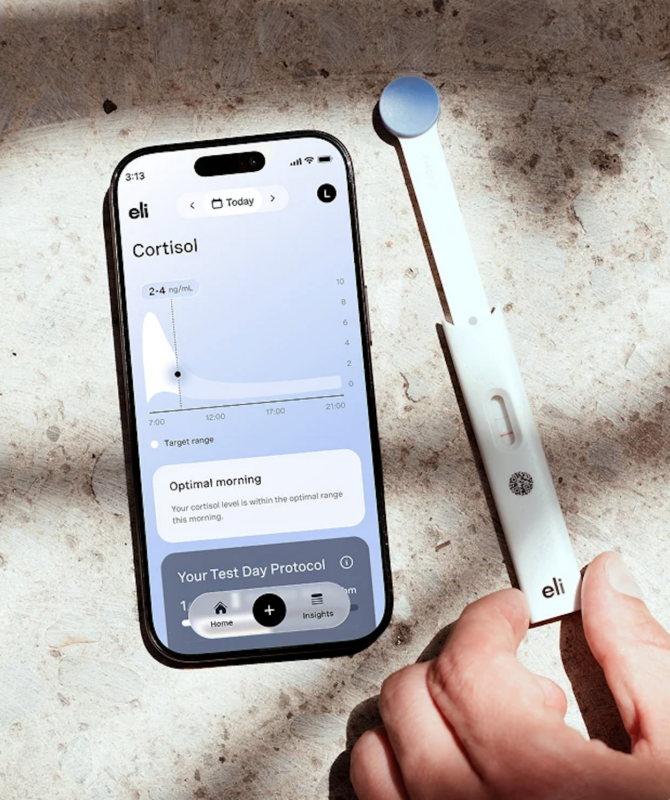
The company’s first commercially available test measures free cortisol in saliva.
Cortisol is produced by the adrenal glands and plays roles in metabolism, immune function and the body’s stress response.
But cortisol is also highly dynamic.
Levels naturally fluctuate throughout the day.
That makes cortisol an interesting target for repeated testing.
Instead of receiving one measurement from a traditional lab, Eli wants users to understand their cortisol rhythm.
The company recommends testing at different times of day to understand how cortisol rises and falls and potentially observe how factors such as exercise, sleep, travel and stress correlate with those patterns.
Why One Hormone Test Doesn’t Always Tell the Whole Story
Hormones are not static.
Cortisol is a perfect example.
Cortisol generally follows a daily rhythm, typically rising around waking and declining as the day progresses.
That means a cortisol measurement taken in the morning can look very different from one taken later in the day.
The Endocrine Society explains that hormones act as chemical messengers controlling numerous biological processes, from metabolism and reproduction to stress and development.
Traditional laboratory testing remains essential for diagnosing and managing endocrine disorders.
But Eli is targeting a different use case.
Its product is explicitly positioned as a wellness device, not a replacement for clinical laboratory testing or a tool for diagnosing diseases such as Cushing syndrome or Addison’s disease.
Instead, Eli wants repeated measurements to help consumers understand their personal patterns.
That distinction is important.
One measurement provides a snapshot.
Repeated measurements create a timeline.
And increasingly, consumer health technology is built around the timeline.
The Continuous Glucose Monitor Playbook — But for Hormones
The easiest way to understand Eli’s ambition may be to look at what happened with glucose.
For years, glucose measurements primarily occurred in specific medical contexts.
Then continuous glucose monitors changed the experience.
Instead of seeing one isolated glucose measurement, users could observe a curve.
They could see what happened after eating.
After exercising.
While sleeping.
During stressful periods.
The information became longitudinal.
Companies such as Dexcom then expanded CGM technology beyond traditional diabetes management, while consumer platforms layered software and personalized insights on top of glucose data.
Hormones could represent another frontier.
Not because Hormometer literally measures hormones continuously every second — it does not.
Instead, repeated low-friction saliva tests could allow users to build a much denser picture of hormonal changes than occasional testing.
That is what Eli means when it describes its system as continuous hormone monitoring.
The company says it is building what it hopes will become the first large-scale longitudinal dataset of daily hormone levels.
Cortisol Is Just the Beginning
Cortisol is Eli’s entry point.
But the company’s roadmap makes the larger ambition clearer.
Eli is also developing progesterone and testosterone tests, which it lists as coming soon.
That opens up entirely different use cases.
Progesterone plays an important role in the menstrual cycle and pregnancy.
Testosterone is involved in reproductive function, muscle mass, bone health and other physiological processes in both men and women.
The Cleveland Clinic explains that progesterone levels change throughout the menstrual cycle, particularly after ovulation.
Imagine being able to observe those changes repeatedly from home.
Instead of relying entirely on cycle predictions based on calendar data, users could potentially add biochemical information.
For athletes, hormone data could potentially become another signal examined alongside recovery, sleep and training load.
For people navigating fertility or perimenopause, repeated hormone measurements could provide another source of information to discuss with clinicians.
For longevity-focused consumers, hormone tracking could join blood biomarkers, glucose, sleep and cardiovascular metrics as another dataset.
The key word is could.
The clinical usefulness of any specific monitoring pattern depends on the hormone, testing method and use case, and consumer hormone data should not be confused with a medical diagnosis.
But the technological direction is compelling.
Why Saliva Matters
A major reason this idea is becoming possible is saliva.
Blood tests remain fundamental to medicine, but they create friction for frequent consumer testing.
Blood usually requires either a needle or finger prick.
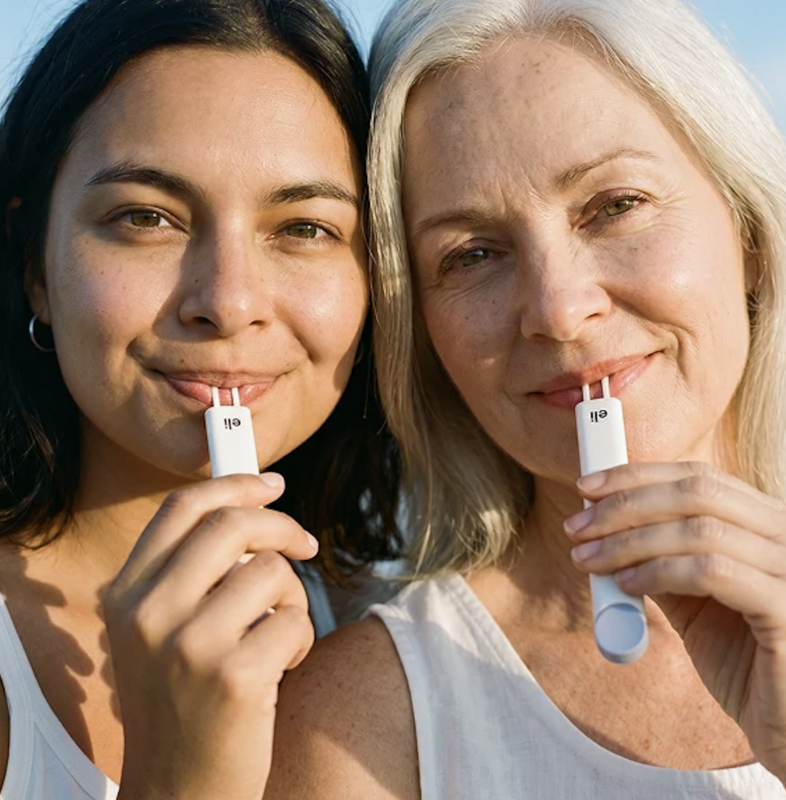
Saliva can be collected noninvasively.
That makes it far easier to imagine someone testing repeatedly.
Salivary cortisol is already used in established medical and research settings.
The National Library of Medicine has indexed research examining salivary cortisol as a measure of free cortisol and its applications in assessing hypothalamic-pituitary-adrenal axis activity.
Eli’s challenge was turning that underlying biological sample into a consumer-friendly testing system.
The company says it spent more than six years on research and development and completed roughly 2,000 assay iterations while developing Hormometer. It also reports more than 12 patent-pending technologies across its platform.
The end product looks deceptively simple.
Saliva.
Test.
Phone.
Result.
But behind that experience are microfluidics, chemistry, computer vision and machine learning.
Your Smartphone Is Becoming a Medical Sensor
One particularly interesting element of Hormometer is what it doesn’t include.
A dedicated reader.
Instead, Eli turns the smartphone camera into part of the testing system.
Users scan the test using the Eli app, and the company’s computer-vision technology interprets the result.
That reflects a larger trend in consumer health.
The smartphone is becoming more than a place where health information is displayed.
Increasingly, it is part of the measurement process itself.
Cameras can analyze images.
Microphones can capture respiratory information.
Motion sensors can analyze movement.
Connected devices can send biological information directly into apps.
And AI can increasingly interpret those signals.
Removing dedicated hardware could also make health tests cheaper and easier to scale.
Instead of buying an expensive electronic reader, consumers can use hardware they already own.
Hormone Tracking Meets the Quantified Self
Eli is arriving at an ideal moment for this type of product.
Consumers have become comfortable with enormous amounts of personal health data.
An Oura Ring might tell someone their resting heart rate rose overnight.
An Apple Watch might detect changes in wrist temperature.
A continuous glucose monitor might show a glucose spike after lunch.
A sleep tracker might reveal poor recovery.
But those signals often leave consumers asking another question:
Why?
Hormones could potentially provide another piece of that puzzle.
Cortisol, for example, interacts with sleep and circadian rhythms.
Sex hormones change across menstrual cycles and life stages.
Testosterone varies with age and other biological factors.
That doesn’t mean every bad night’s sleep or poor workout can be explained by a hormone reading.
Human physiology is far more complicated.
But combining hormonal measurements with behavioral and wearable data could eventually create a richer picture.
As Vital Report has covered with emerging hormone-monitoring companies, the race is increasingly about making previously difficult-to-access biomarkers visible outside the clinic.
Eli is taking one approach:
Don’t build another wearable.
Build a test that can be used whenever the user wants another data point.
The Women’s Health Opportunity Is Particularly Big
Although Eli positions Hormometer for a broad population, the technology has obvious implications for women’s health.
Female hormones change significantly across the menstrual cycle, pregnancy, postpartum period, perimenopause and menopause.
Yet much of consumer health tracking still relies on indirect signals.
Cycle apps use dates.
Wearables use temperature.
Algorithms use symptoms and historical patterns.
Direct hormone measurements could add another layer.
That is especially relevant as investment pours into areas such as fertility and menopause.
Companies are already trying to make hormonal health more measurable, understandable and personalized.
The opportunity is not simply fertility tracking.
It could eventually include understanding menstrual patterns, midlife hormonal changes and how hormone levels relate to sleep, mood, recovery and other signals.
Eli’s upcoming progesterone test could therefore become one of the most interesting additions to the platform.
Eli Is Building a Dataset, Not Just a Test
This may be the most important part of the company’s strategy.
Every measurement potentially contributes to longitudinal hormone data.
And longitudinal biological datasets can become incredibly valuable.
Imagine hormone readings connected with:
Sleep.
Exercise.
Menstrual cycles.
Stress.
Symptoms.
Nutrition.
Recovery.
Age.
Time of day.
Over months or years, patterns could emerge that are nearly impossible to observe from occasional laboratory measurements.
Eli says its goal is to build the first large-scale longitudinal dataset of daily hormone levels.
That could ultimately be more important than the physical Hormometer itself.
The test generates the data.
The software organizes it.
AI looks for patterns.
And the dataset becomes more valuable as more measurements are collected.
Where Eli Fits Into the Future of Preventive Health
Preventive health is increasingly becoming a data problem.
Consumers can already collect an extraordinary amount of information.
The next challenge is connecting it.
Hormones could become another major input.
As Vital Report recently covered in our story on Evvy and the vaginal microbiome, women’s health companies are increasingly building proprietary biological datasets rather than simply selling standalone wellness products.
Evvy is approaching that opportunity through microbiome data.
Eli is approaching it through hormones.
The underlying strategy is similar.
Measure something that historically has been difficult to measure frequently.
Make the measurement easier.
Collect longitudinal data.
Use software and AI to find patterns.
Then translate those patterns into information consumers can understand.
The Important Limitation
There is an important distinction between tracking and diagnosing.
Eli itself makes this clear.
Hormometer is currently a wellness product and is not intended to diagnose, treat or manage medical conditions.
Someone concerned about abnormal cortisol, testosterone, progesterone or symptoms related to an endocrine disorder still needs appropriate medical evaluation.
More data does not automatically equal better medical care.
Hormone levels can vary for many reasons, and interpreting them without clinical context can be misleading.
The opportunity for Eli is therefore not necessarily replacing endocrinologists or laboratory testing.
It is making one part of human biology more visible between those traditional snapshots.
The Bottom Line
Wearables made heart rate visible.
Smart rings made sleep and recovery visible.
Continuous glucose monitors made glucose curves visible.
Eli Health wants hormones to be next.
Its Hormometer takes a saliva sample and turns it into a hormone measurement on a smartphone in about 20 minutes.
Cortisol is available now.
Progesterone and testosterone are next.
But the bigger idea isn’t any single hormone.
It’s frequency.
Instead of checking a biomarker once or twice a year, Eli imagines a future where people can build longitudinal maps showing how their hormones change alongside sleep, stress, exercise, menstrual cycles and everyday life.
That makes Hormometer less interesting as another at-home test and more interesting as part of a much larger movement.
Consumer health technology spent the last decade teaching us to track what our bodies do.
The next generation wants to show us what’s happening inside them.