

For decades, much of women’s reproductive health has been treated reactively.
A symptom appears. A patient visits a doctor. A test searches for a relatively narrow list of possible causes. Treatment begins. If the problem returns, the process often starts again.
Evvy is betting that there is a better way — and investors just put another $40 million behind that idea.
The women’s health company has raised an oversubscribed $40 million Series B led by Catalio Capital Management, with participation from new investors including Rethink Impact, Muse Capital and Alumni Ventures, alongside existing investors including Labcorp Venture Fund, General Catalyst, Left Lane Capital and BBG Ventures.
The round represents more than an expansion of Evvy’s popular at-home vaginal microbiome test.
Evvy wants to take the massive biological dataset it has accumulated from more than 100,000 patients and use artificial intelligence to identify new biomarkers, develop new diagnostic models and ultimately build a precision-medicine platform specifically around female biology.
The first major expansion: fertility.
And the implications could stretch far beyond vaginal health.
What Is Evvy?
Founded in 2021 by Priyanka Jain, Laine Bruzek and Pita Navarro, Evvy began with a relatively simple premise:
What if women could understand their vaginal microbiome with far more detail than conventional testing typically provides?
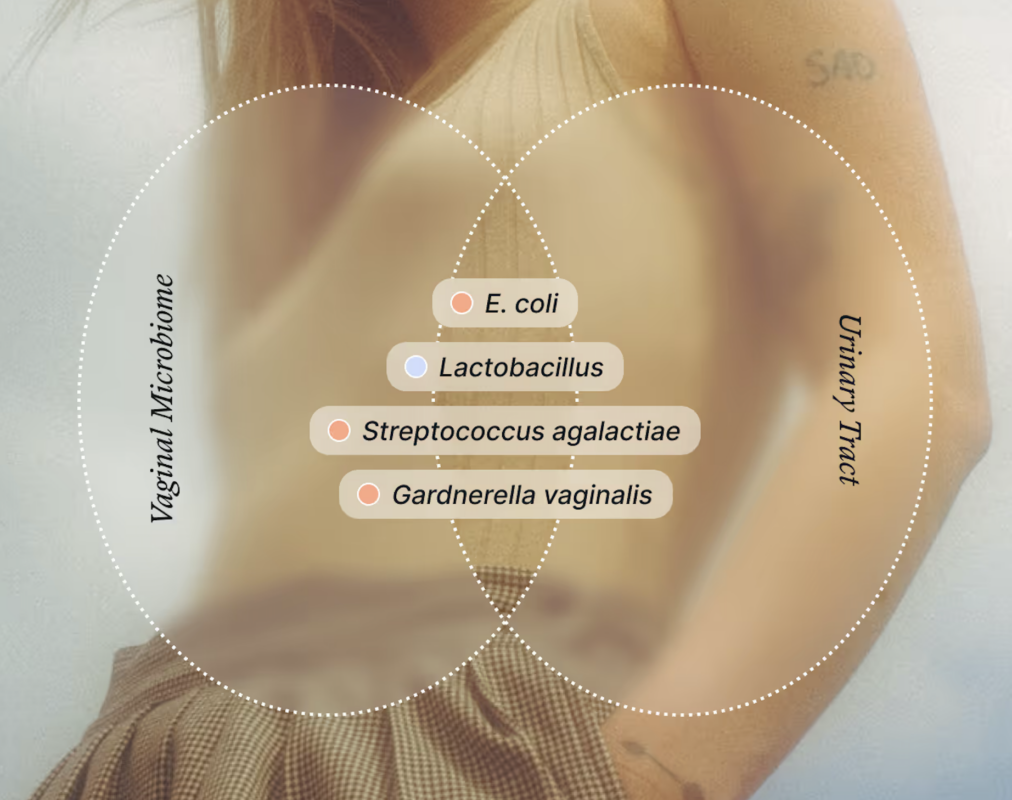
The vaginal microbiome is the ecosystem of microorganisms living within the vagina.
Like the gut microbiome, its composition can have meaningful implications for health.
But while gut-health testing has become a significant consumer wellness category, the vaginal microbiome has historically received considerably less attention.
Evvy built an at-home test designed to change that.
A patient collects a sample using a vaginal swab and sends it to Evvy’s laboratory. The company uses metagenomic next-generation sequencing to analyze the sample and can identify more than 700 types of bacteria and fungi.
Results are then reviewed by clinicians and delivered through Evvy’s platform alongside interpretation and potential next steps.
For relevant cases, patients can also receive personalized prescription treatment.
Evvy says its testing methodology is CLIA-certified and New York State CLEP-approved.
But the individual test is increasingly only one part of the company.
Every sample also contributes to something potentially much larger:
Data.

Why Evvy Just Raised $40 Million
Evvy’s Series B was led by Catalio Capital Management and included a mix of new and returning investors.
The funding will help the company clinically validate a new generation of AI-powered diagnostic and care models, expand distribution through physicians and healthcare partners and move into additional areas of women’s health.
The first target is fertility.
That expansion is important because it demonstrates how Evvy’s business is evolving.
The company started with vaginal health testing.
Now it wants to build infrastructure.
Evvy says it has created what it describes as the world’s largest proprietary clinical-grade dataset connecting the vaginal microbiome with women’s health outcomes.
More than 100,000 patients have used the platform, while approximately 3,000 practitioners are working with Evvy.
The company has also contributed to more than a dozen peer-reviewed publications and abstracts and says its research has helped identify novel bacterial vaginosis subtypes and previously uncatalogued vaginal microbiome genomes.
That dataset is becoming the foundation for the company’s next phase.
EvvyAI Could Be the Bigger Story
The $40 million financing may make headlines, but EvvyAI could ultimately be the more consequential part of the announcement.
Artificial intelligence in healthcare is only as useful as the underlying information available to train and validate systems.
And women’s health has a historical data problem.
Women were frequently underrepresented or excluded from medical research, particularly in earlier eras of clinical research. The National Institutes of Health notes that the NIH Revitalization Act of 1993 established requirements for including women and minorities in NIH-funded clinical research.
The legacy of those gaps matters as medicine enters the AI era.
Algorithms trained on incomplete or poorly representative datasets risk carrying those limitations into new healthcare systems.
Evvy is taking the opposite approach.
Instead of beginning with a generalized healthcare dataset and trying to adapt it to women’s health, the company is building a dataset specifically around female biology.
Its machine-learning platform, EvvyAI, is designed to analyze relationships between microbiome composition, symptoms, treatments and health outcomes.
As more patients test over time, Evvy can potentially examine how microbiomes change, how different interventions affect those changes and which biological patterns correlate with different outcomes.
The result is effectively a feedback loop.
Test → analyze → treat → track → learn.
That could make the underlying dataset increasingly valuable as it grows.
Why the Vaginal Microbiome Matters
The vaginal microbiome may sound like a niche area of medicine.
Increasingly, research suggests otherwise.
A healthy vaginal microbiome is frequently dominated by Lactobacillus species, although microbial composition varies substantially between individuals.
Changes in the microbial environment have been associated with conditions including bacterial vaginosis and other reproductive-health outcomes.
A major review published in Nature Reviews Microbiology describes the vaginal microbiome as an important component of female reproductive health and discusses its relationship with conditions ranging from bacterial vaginosis to sexually transmitted infections and adverse pregnancy outcomes.
That makes the microbiome potentially relevant to far more than treating an occasional vaginal infection.
Evvy sees it as a biological signal that could eventually provide information across multiple stages of women’s health.
The company’s research ambitions include fertility, pregnancy, menopause and other gynecological conditions.
And fertility is becoming the first major test.

Evvy Is Going After Fertility Next
Fertility is a logical expansion for Evvy.
More than 10,000 patients have already come to the platform specifically for fertility-related reasons, CEO Priyanka Jain recently told FutureFemHealth.
Meanwhile, researchers are increasingly investigating relationships between the reproductive microbiome and fertility outcomes.
A systematic review and meta-analysis published in Scientific Reports examined associations between the vaginal microbiota and outcomes in women undergoing in vitro fertilization.
The science is still developing, and microbiome composition should not be interpreted as a simple fertility score.
But the potential is significant.
Traditional fertility testing commonly looks at factors such as ovarian reserve, hormone levels, ovulation, semen parameters and reproductive anatomy.
Microbiome information could eventually provide another layer.
Evvy’s goal is not simply to add another consumer test.
The company plans to use its new funding to validate AI-driven diagnostic and care models that could connect microbiome patterns with fertility outcomes.
If successful, the vaginal microbiome could become another data source clinicians consider when evaluating reproductive health.
From One-Time Testing to Longitudinal Health Data
Another important part of Evvy’s strategy is time.
A single biological measurement provides a snapshot.
Repeated measurements create a timeline.
That distinction has already transformed other parts of health technology.
Continuous glucose monitors do not simply tell users their glucose once.
Wearables do not measure heart rate once.
Sleep trackers do not record one night.
The value comes from observing patterns.
Evvy appears to see vaginal microbiome testing moving in a similar direction.
Instead of only testing when something feels wrong, women could potentially test periodically and build a longitudinal record of their vaginal health.
Jain has described a future in which microbiome testing could become something closer to a routine part of women’s healthcare.
That could allow patients and clinicians to understand a person’s baseline microbiome and recognize meaningful changes over time.
It is an ambitious vision.
But it mirrors one of the biggest shifts happening across preventive health:
Moving from episodic measurements to continuous or repeated biological data.
The Women’s Health Data Race Is Getting Bigger
Evvy is not operating in isolation.
A wave of startups is attempting to build better datasets around areas of female biology that have historically been difficult to measure.
Companies are developing technologies around hormone monitoring, fertility, menopause, metabolic health, reproductive health and at-home diagnostics.
As Vital Report has previously covered, Clair Health is developing a non-invasive wearable designed to make hormone monitoring more continuous and accessible.
The approaches are different.
Clair is interested in hormones.
Evvy is focused on the vaginal microbiome.
Wearables such as Oura analyze signals including temperature, sleep and cardiovascular metrics.
Fertility platforms track cycles and reproductive biomarkers.
But they are all moving toward a similar idea:
Women’s health needs better data.
The next generation of women’s health companies may compete not only on the products they sell but on the proprietary biological datasets they can build.
Why This Matters for Precision Medicine
Precision medicine has been one of healthcare’s biggest promises for years.
Instead of treating every patient with the same generalized protocol, clinicians could theoretically use genetics, biomarkers, environmental information and longitudinal health data to make treatment increasingly individualized.
The FDA describes precision medicine as an approach that considers variability in genes, environment and lifestyle when developing disease treatment and prevention strategies.
Evvy wants the vaginal microbiome to become another layer of that model.
Imagine two patients experiencing similar vaginal symptoms.
Under a conventional approach, both might receive similar treatment.
But their microbial ecosystems could be very different.
One patient might have one bacterial profile.
Another might have an entirely different combination of microorganisms.
A sufficiently sophisticated diagnostic platform could theoretically identify those differences and help clinicians choose more targeted interventions.
That is the broader promise behind Evvy’s platform.
Not simply more testing.
More specific care.
A $40 Million Bet on Women’s Health Infrastructure
The financing also reflects a larger shift in women’s health investment.
Women’s health startups have historically struggled to attract the same level of venture capital as many other healthcare categories.
Evvy reaching a $40 million Series B represents another example of investors putting larger amounts of capital behind companies attempting to build durable healthcare infrastructure rather than standalone wellness products.
The distinction matters.
An at-home microbiome kit is a product.
A proprietary dataset of more than 100,000 patients, an AI interpretation engine, clinical treatment pathways, physician distribution and ongoing biomarker research begins to look more like a platform.
That appears to be where Evvy wants to go.
The Bottom Line
Evvy’s $40 million Series B is not primarily a bet on selling more vaginal microbiome tests.
It is a bet on what happens when those tests become data.
After serving more than 100,000 patients, Evvy has accumulated a large proprietary dataset connecting vaginal microbiome composition with symptoms, treatments and health outcomes.
Now the company wants to use artificial intelligence to find patterns inside that information.
Fertility is first.
But the longer-term opportunity could extend across pregnancy, recurrent vaginal conditions, menopause and other areas of women’s health.
That puts Evvy at the intersection of several of healthcare’s fastest-moving trends:
At-home diagnostics.
The microbiome.
Artificial intelligence.
Precision medicine.
Women’s health.
The company’s original product helped women understand what was happening inside their vaginal microbiome.
With another $40 million in funding, Evvy is trying to answer a much larger question:
What else can that microbiome tell us about women’s health?