
For years, women’s wellness brands built products around fertility, pregnancy, postpartum recovery, and reproductive health.
Now, another life stage is finally getting its own category.
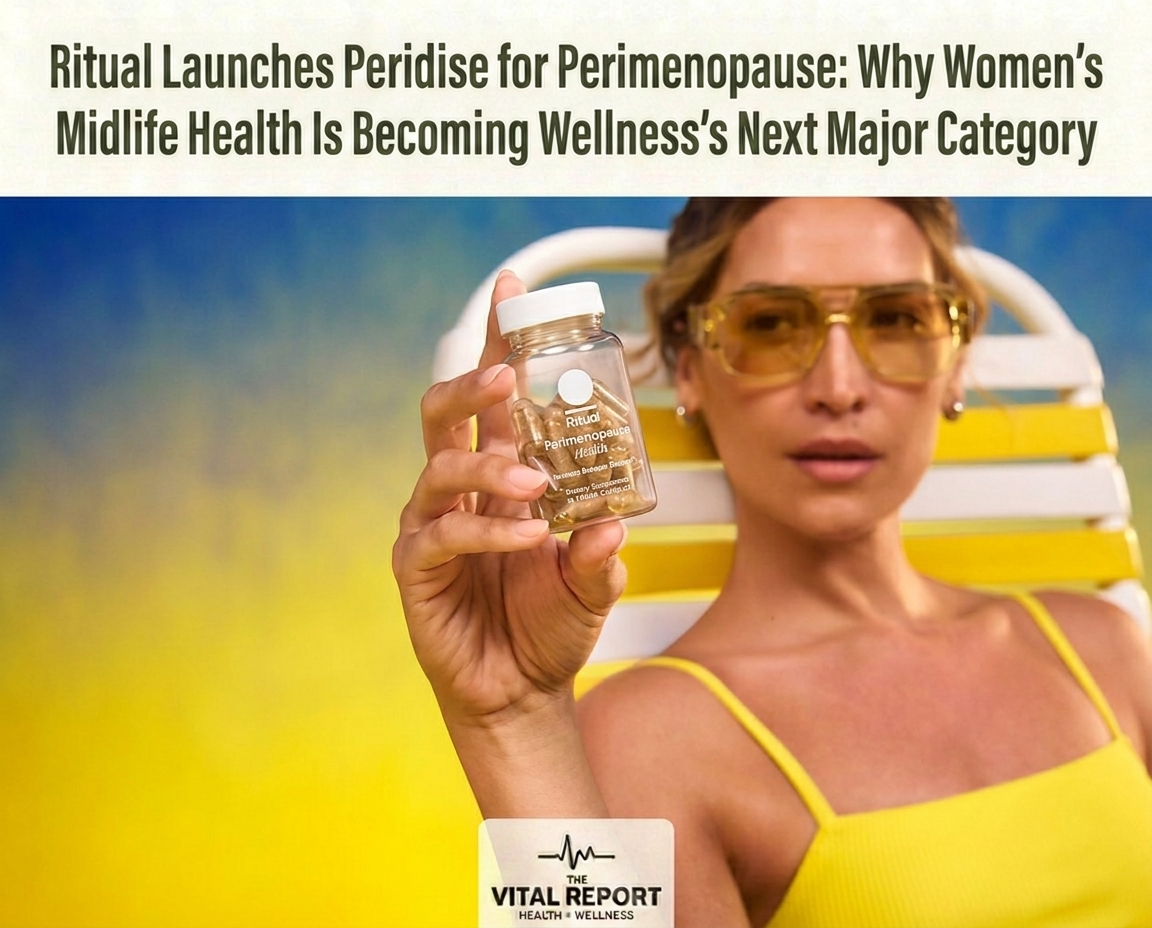
During Perimenopause Awareness Month, Ritual has launched Peridise, its first new product category in six years and the company’s first major move into perimenopause.
The expansion is significant not only because of what Ritual is launching, but because of who the company says it is launching it for.
Ritual founder and CEO Katerina Markov Schneider says roughly 40% of the company’s customers have entered the perimenopausal stage. Many of the same consumers who discovered Ritual through prenatal vitamins years ago are now navigating a completely different hormonal transition.
For Ritual, that created an obvious question: what happens when a women’s health company’s customers grow up alongside the brand?
Peridise is the answer.
And Ritual is not alone.
Companies including Womaness, Oura, Midi Health, Alloy, and a growing ecosystem of women’s-health startups are increasingly treating perimenopause and menopause as distinct health categories deserving dedicated products, technology, education, and clinical attention.
The result could be one of the biggest expansions in women’s wellness since the rise of modern fertility technology.
What Is Perimenopause?
Perimenopause is the transition leading up to menopause, when ovarian hormone production begins changing and menstrual cycles can become increasingly unpredictable.
According to the National Institute on Aging, this transition can bring symptoms including hot flashes, night sweats, sleep disruption, joint and muscle discomfort, pain during sex, mood changes, forgetfulness, and difficulty concentrating.
But there is no single universal perimenopause experience.
One woman might first notice changes in her menstrual cycle.
Another might experience disrupted sleep.
Another could notice mood changes, brain fog, vaginal dryness, fatigue, or hot flashes.
And some women experience relatively few symptoms at all.
That variability is part of what can make the transition confusing.
Research published in the medical literature has also shown that no single symptom or laboratory test can definitively identify perimenopause in every woman. A systematic review indexed by the National Library of Medicine concluded that age and menstrual history are particularly important when clinicians evaluate the menopausal transition.
In other words, perimenopause can be very real without arriving with one obvious biological signal announcing that it has begun.
That uncertainty has created an enormous opening for healthcare providers, wellness brands, digital health companies, and consumer technology platforms.

“The Perimenopause Transition”
REPRODUCTIVE YEARS
More predictable menstrual cycles
↓
PERIMENOPAUSE
Hormonal fluctuations
Irregular periods
Sleep changes
Hot flashes
Mood changes
Brain fog
Vaginal dryness
Changes in energy
↓
MENOPAUSE
12 consecutive months without a menstrual period
↓
POSTMENOPAUSE
The years following menopause
THE BIG IDEA:
Perimenopause is not one symptom or one moment. It is a transition that can affect multiple systems across the body.
Why Ritual Is Entering Perimenopause Now
Ritual’s entry into the category is particularly interesting because the company was originally built around another poorly served period in women’s health: pregnancy.
Markov Schneider founded Ritual in 2016 after becoming frustrated with the prenatal-vitamin market while pregnant.
That experience eventually became the foundation for a broader supplement company spanning prenatal, postnatal, women’s multivitamins, gut health, protein, fertility support, skin health, and other categories.
Now Ritual is following its original customers into midlife.
The company says approximately 40% of its customers are entering perimenopause, creating an unusual form of product-market fit: the customer base itself is aging into a new health need.
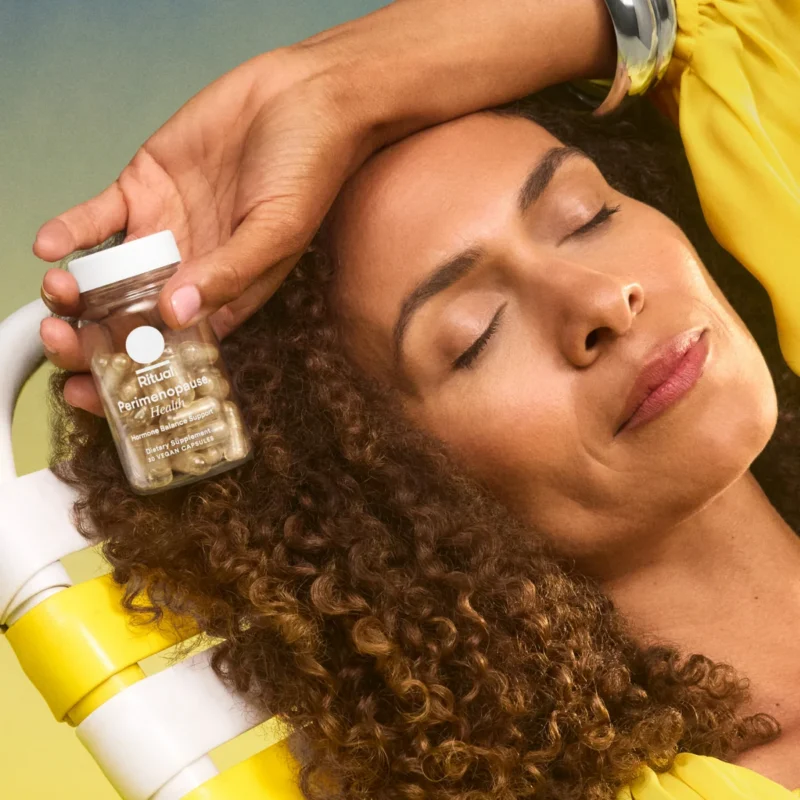
Ritual’s new Perimenopause Health supplement is positioned as a hormone-free product for women over 40 designed to support areas including hormone balance, mood, sleep, mental clarity, fatigue, and common symptoms associated with the menopausal transition.
The launch represents Ritual’s first entirely new product category in six years.
But strategically, the more interesting piece may be the branding surrounding it.
Ritual is calling the broader platform Peridise.
Rather than presenting perimenopause exclusively through the language of decline, the brand is attempting to build an identity around the stage itself.
That matters because the perimenopause market is increasingly becoming about more than symptom management.
It is becoming a consumer category.
Perimenopause Has an Awareness Problem
One of the biggest opportunities in this market comes from something surprisingly basic:
Many women still do not immediately recognize when they have entered perimenopause.
Symptoms can overlap with stress, aging, sleep deprivation, mental health conditions, thyroid disorders, medication effects, and other health issues.
Menstrual changes may provide a clue, but the transition does not always look identical from person to person.
Recent healthcare data illustrate how limited formal menopause recognition can be.
A Health Care Cost Institute analysis found that only 14.7% of commercially insured women ages 45 to 64 in its dataset had any menopause diagnosis in 2022. That does not mean everyone else had undiagnosed symptomatic perimenopause, but it demonstrates the gap between the number of women moving through midlife and the number receiving menopause-related diagnoses within healthcare claims.
A separate 2026 study of nearly 300,000 insured U.S. women newly diagnosed with perimenopausal or menopausal symptoms found that primary care, internal medicine, and OB/GYN clinicians were the most common providers making those diagnoses. The study also found that most newly diagnosed patients did not receive medication treatment.
The larger point is not that every woman needs a diagnosis or medication.
It is that millions of women are moving through a major physiological transition without the kind of standardized consumer roadmap that exists around pregnancy.
That is exactly the gap companies are beginning to target.
Womaness Saw the Opportunity Early
Ritual is entering a category where dedicated menopause brands have already spent years building an audience.
One of the most visible examples is Womaness, a wellness company founded specifically around the needs of women navigating menopause and aging.
Rather than treating menopause as one problem requiring one solution, Womaness has built products across supplements, skincare, sexual wellness, vaginal health, sleep, hot flashes, brain fog, mood, and other areas.
Its Me.No.Pause. supplement, for example, is marketed toward perimenopausal and menopausal women experiencing issues including hot flashes, night sweats, brain fog, mood changes, vaginal dryness, and changes in libido.
Womaness also sells products addressing skin changes and intimate wellness, reflecting an important shift in how brands are approaching the category.
Perimenopause is not being treated simply as a hormone issue.
It is being treated as a whole-body consumer health category.
Womaness has leaned directly into that positioning during Perimenopause Awareness Month, publishing educational resources and building collections around common concerns such as irregular periods, vaginal dryness, sleep disruption, and changing skin.
Ritual entering the same broader market adds another major wellness brand to the movement.
And it probably will not be the last.

“The New Perimenopause Wellness Category”
SUPPLEMENTS
Ritual
Womaness
↓
CLINICAL CARE
Hormone therapy
Telehealth
Specialized menopause clinics
↓
WEARABLES + DATA
Sleep
Temperature
Cycle tracking
Hormone monitoring
↓
PERSONAL CARE
Skincare
Vaginal health
Sexual wellness
↓
EDUCATION
Symptom recognition
Treatment options
Lifestyle support
THE SHIFT:
Perimenopause is moving from an overlooked transition to a dedicated health and wellness category.
The Next Opportunity Could Be Data
Supplements and symptom-focused products are only one part of what is happening.
Technology companies are increasingly interested in helping women identify patterns associated with hormonal changes.
Wearables can already monitor variables such as sleep, resting heart rate, heart-rate variability, temperature trends, stress, recovery, and menstrual cycles.
The next generation of women’s health technology wants to go even further.
As Vital Report recently covered, Clair Health is developing a non-invasive wearable designed around continuous hormone monitoring, with potential applications spanning fertility, athletic performance, menstrual health, and perimenopause.
That could become particularly relevant during the menopausal transition.
Today, a woman experiencing poor sleep, fatigue, mood changes, cycle irregularity, and temperature changes may have those signals spread across different apps, doctor visits, and personal observations.
Future platforms could potentially bring more of that information together.
The opportunity is not necessarily to have an algorithm diagnose menopause.
It is to give women better longitudinal information about what is changing in their bodies and better tools for discussing those changes with healthcare providers.
Why Perimenopause Is Becoming a Major Wellness Market
There is a larger business story underneath Ritual’s launch.
For much of the modern wellness boom, consumer health companies concentrated heavily on younger demographics.
Fitness.
Protein.
Fertility.
Prenatals.
Skincare.
Sleep.
Weight management.
But women entering their 40s and 50s represent an enormous population with health needs that historically received much less product innovation.
Perimenopause touches several categories simultaneously.
Sleep can change.
Skin can change.
Body composition can change.
Sexual health can change.
Mood and cognition can change.
Menstrual cycles can change.
Temperature regulation can change.
Those needs create opportunities across supplements, telehealth, diagnostics, wearables, skincare, sexual wellness, fitness, nutrition, and pharmaceuticals.
It also creates an unusual consumer-health market where education itself becomes part of the product.
Before someone can shop for a perimenopause solution, she often has to recognize that perimenopause may be what she is experiencing.
Brands that help consumers understand that transition can potentially build relationships that last through menopause and well into later life.
Perimenopause Care Is Bigger Than Supplements
The explosion of consumer products should not obscure an important distinction.
Perimenopause is a medical transition, and supplements are not substitutes for individualized medical care.
Treatment depends on symptoms, medical history, risk factors, and personal preferences.
For some women, lifestyle adjustments may be sufficient.
Others may discuss prescription medications or menopausal hormone therapy with a healthcare professional.
The American College of Obstetricians and Gynecologists notes that systemic estrogen therapy, with progestin when appropriate, is one of the most effective treatments for hot flashes and night sweats related to menopause. Other hormonal and nonhormonal treatments may be considered depending on the individual.
That distinction will become increasingly important as more wellness companies enter the space.
There is room for supplements, skincare, wearables, educational platforms, and lifestyle products.
But there is also a need for evidence-based clinical care.
The most useful future ecosystem may combine both.
“Perimenopause Support Is Becoming an Ecosystem”
UNDERSTAND
Recognize symptoms
Track patterns
Learn what is changing
↓
MEASURE
Cycles
Sleep
Temperature
Recovery
Potential future hormone data
↓
SUPPORT
Nutrition
Exercise
Sleep
Supplements
Personal care
↓
TREAT
Healthcare provider
Hormone therapy when appropriate
Nonhormonal medications
Individualized care
THE BIG IDEA:
The future of perimenopause care may combine consumer wellness, health technology, and traditional medicine rather than relying on any single solution.
Women’s Health Brands Are Growing Up With Their Customers
Perhaps the most interesting part of Ritual’s launch is what it says about the evolution of women’s health companies.
A customer relationship that begins with a prenatal vitamin does not have to end after pregnancy.
That consumer may later need postpartum support.
Then fertility or general wellness products.
Then perimenopause support.
Then menopause care.
Then healthy-aging products.
Ritual is effectively betting that women want brands capable of moving through those stages with them.
Womaness is approaching the same opportunity from the opposite direction, beginning with midlife and building a broader ecosystem around the physical changes associated with aging.
Wearable companies are adding women’s health features.
Telehealth platforms are building dedicated menopause practices.
Supplement brands are creating perimenopause formulas.
Healthcare startups are developing hormone-monitoring technologies.
The category is becoming crowded because the underlying need has been underserved for so long.
The Bottom Line
Ritual launching Peridise during Perimenopause Awareness Month is more than another supplement release.
It is another indication that perimenopause is becoming one of the next major categories in consumer health.
Ritual says approximately 40% of its customers are now entering this stage of life. Instead of allowing those consumers to age out of the brand, the company is expanding alongside them.
Womaness has already demonstrated how broad the opportunity can become, building products around everything from hot flashes and brain fog to skincare, sleep, vaginal health, and sexual wellness.
Meanwhile, healthcare platforms, wearables, and hormone-tracking startups are approaching the same transition from entirely different directions.
For decades, perimenopause existed in an unusual blind spot.
Millions of women experienced it.
Few consumer brands talked directly about it.
Many women did not have a clear framework for recognizing it.
That is changing quickly.
Pregnancy became a major consumer health category.
Sleep became a major consumer health category.
Longevity became a major consumer health category.
Now perimenopause is beginning to get the same treatment.
And Ritual’s newest launch suggests the wellness industry believes this category is only getting started.