
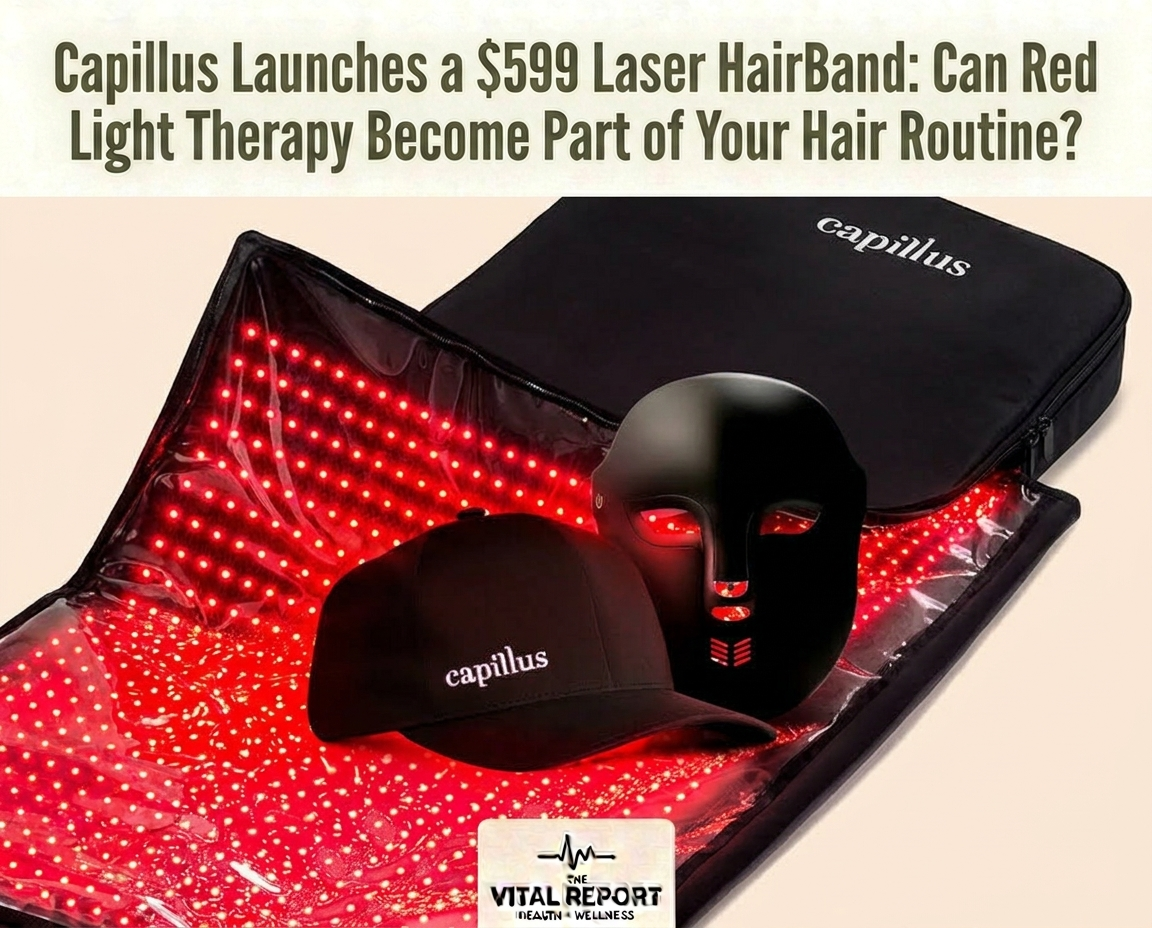
Red light therapy has already moved from clinics into masks, panels, caps, brushes, and increasingly elaborate at-home wellness devices.
Now Capillus wants to put it into something that looks more like a headband.
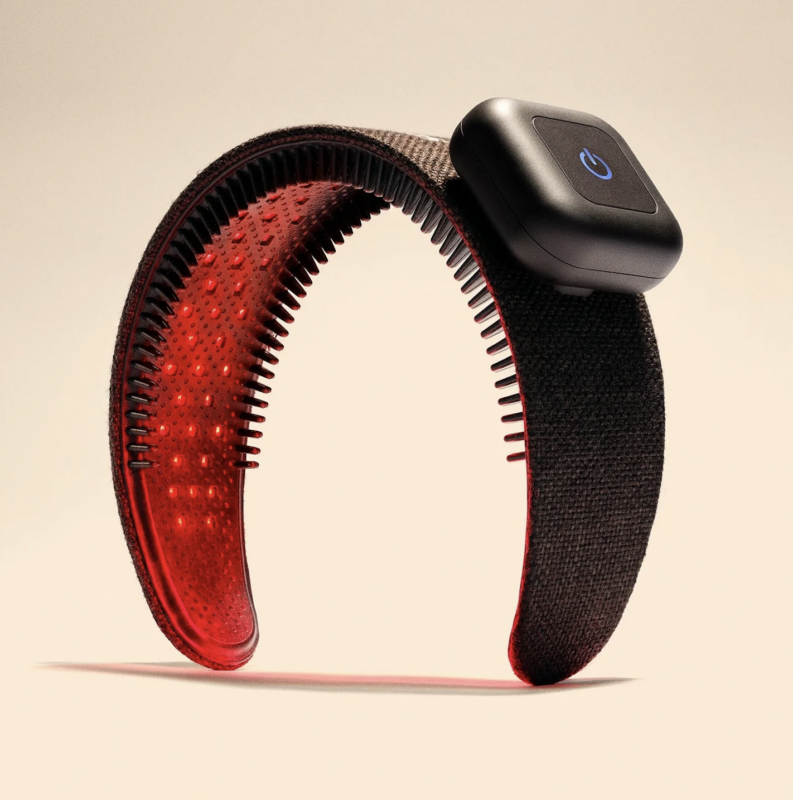
The hair restoration technology company has officially launched the Capillus HairBand, a $599.99 wearable that uses 82 laser diodes to deliver 650-nanometer low-level laser light to targeted areas of the scalp.
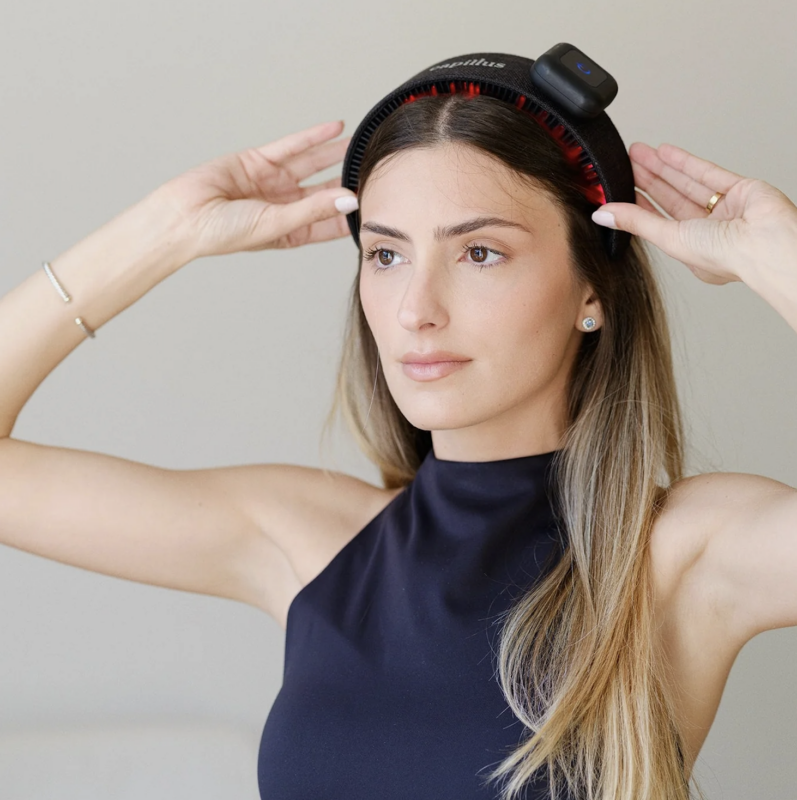
Unlike the company’s full-coverage laser caps, the HairBand is specifically designed around areas where women may first notice changes: the part, hairline, and front of the scalp.
According to Capillus, the lightweight device is designed to be worn for just five minutes, three times per week, with a built-in timer automatically ending each session.
No topical serum.
No daily pill.
No helmet-style cap.
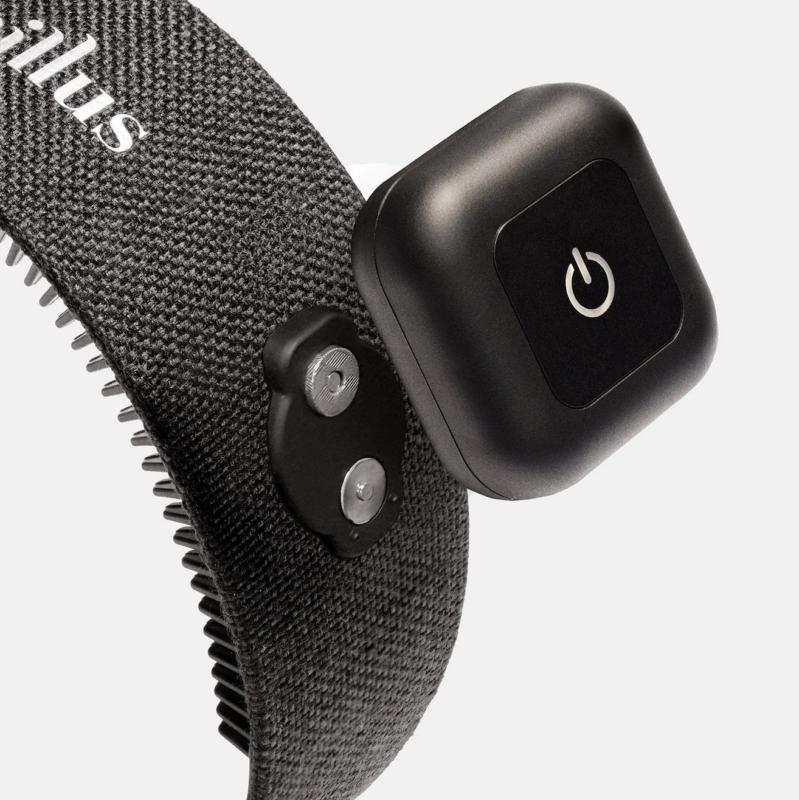
Just a flexible band, a rechargeable battery, and 82 lasers pointed toward a specific area of the scalp.
It’s another example of how red light therapy is becoming less like a treatment someone schedules—and more like another step in an everyday wellness routine.
Capillus Is Shrinking the Laser Cap
Capillus isn’t new to laser hair technology.
The company already sells an extensive lineup of laser caps, including the $1,699 Capillus PRO, $2,699 Spectrum, and $3,299 TriSpectrum. Its broader product portfolio now stretches into red light face masks, panels, brushes, eye devices, and full-body systems.
The HairBand takes a different approach.
Instead of illuminating the entire scalp, it concentrates light around a smaller area.
The flexible band can be positioned around the hairline, part, or frontal scalp, while small hair-parting teeth are designed to help move hair aside so more light can reach the scalp.
That solves one of the practical challenges with light-based hair devices.
Hair itself can get in the way.
The goal isn’t simply to shine red light onto someone’s head. The light needs to reach the scalp beneath the hair.
Capillus designed the HairBand around that problem.
And because the device doesn’t need to cover the entire head, it can also be smaller, lighter, and significantly less expensive than the company’s premium laser caps.
Inside the 82-Laser System
The HairBand uses 82 laser diodes, each rated at 5 milliwatts.
Those lasers emit light at 650 nanometers, a wavelength commonly used in low-level laser therapy and photobiomodulation research.
Capillus describes the system as delivering concentrated light directly toward the frontal scalp while maintaining a hands-free design.
There’s also a rechargeable magnetic battery.
It snaps onto the device, charges through USB-C, and Capillus says a full charge provides up to eight hours of use.
Considering each session lasts five minutes, that’s potentially dozens of sessions between charges.
The experience is intentionally simple.
Put it on.
Position the lasers.
Press the button.
Wait five minutes.
The HairBand automatically turns itself off.
That simplicity may be just as important as the lasers themselves.
What Is Low-Level Laser Therapy?
The technology behind the HairBand is generally referred to as low-level laser therapy, or LLLT.
It also falls under the broader category of photobiomodulation.
Unlike surgical lasers designed to cut or heat tissue, low-level light devices expose tissue to relatively low-intensity wavelengths of red or near-infrared light.
The technology has been studied for a variety of applications, including hair growth.
Capillus says its 650nm light is intended to support the cellular and vascular environment surrounding hair follicles.
The broader theory behind photobiomodulation is that specific wavelengths of light can interact with cellular processes, potentially influencing mitochondrial activity, circulation, inflammation, and other biological pathways.
For hair, researchers have investigated whether that interaction can help support follicles and influence the hair-growth cycle.
But there’s an important distinction between evidence for LLLT as a category and evidence for this particular HairBand.
The HairBand Is Not FDA-Cleared for Hair Regrowth
This is probably the most important context around the launch.
Capillus has FDA-cleared hair-loss devices in its broader portfolio.
The company says its laser caps use FDA-cleared technology, and some Capillus devices are marketed specifically for hereditary hair loss and thinning.
But the HairBand is different.
Capillus explicitly states that the HairBand is a general scalp-wellness device and is not currently FDA-cleared for the treatment of hair loss or hair regrowth.
That’s a meaningful distinction.
The HairBand uses the same general category of 650nm low-level laser technology found across the company’s hair products, but consumers shouldn’t automatically assume that regulatory clearance or clinical evidence attached to another Capillus device transfers directly to this one.
Capillus itself notes that research statements around LLLT generally refer to the technology broadly rather than specifically to the HairBand.
So the story isn’t:
Capillus created a clinically proven $599 hair-regrowth headband.
It’s closer to:
Capillus took an established category of hair-focused light therapy and redesigned it into a smaller wellness wearable.
Why Target the Hairline and Part?
The targeted design is also central to the product.
Full-scalp devices make sense for someone looking for broad coverage.
But not everyone first notices hair changes across the entire scalp.
For many women, changes can become particularly visible around the part or frontal hairline.
Capillus designed the HairBand around those areas rather than trying to replace its existing caps entirely.
That changes both the form factor and the price.
Capillus’s PRO contains 272 laser diodes and costs $1,699, while its Spectrum uses 312 laser diodes and costs $2,699.
The HairBand has 82 lasers and costs $599.99.
So consumers are essentially trading broad scalp coverage for a smaller, more targeted device.
That could open Capillus to someone interested in light therapy but unwilling to spend several thousand dollars on a full laser cap.
Hair Tech Is Becoming More Wearable
There’s also a larger consumer-tech story here.
Hair care has historically been dominated by things consumers apply or ingest.
Shampoo.
Conditioner.
Serums.
Minoxidil.
Supplements.
Prescription medications.
Light therapy adds a different category:
hardware.
And Capillus is increasingly treating that hardware like consumer electronics.
The HairBand uses USB-C charging.
It has a magnetic battery.
It runs automatically.
It shuts itself off.
And instead of looking like a piece of clinical equipment, the company has intentionally designed it as a sleek wearable.
Capillus has taken the same approach with its Red Light Brush, a $225 device that puts 32 red-light diodes into something consumers already use during their hair routine.
The strategy is clear.
Don’t ask consumers to build their day around red light therapy.
Put red light therapy inside behaviors they’re already comfortable with.
Five Minutes Could Be a Bigger Selling Point Than It Sounds
Any at-home wellness technology has one major obstacle:
people actually have to use it.
A device can have impressive specifications, but those specifications don’t matter much if it ends up sitting in a drawer.
Capillus is clearly designing around adherence.
The HairBand requires three five-minute sessions per week.
That’s 15 minutes total.
Someone can wear it while drinking coffee, doing skincare, reading, or getting ready.
And unlike a topical treatment, there’s nothing to apply to the scalp afterward.
That doesn’t establish that the device will produce a particular hair outcome.
But from a consumer-product perspective, reducing friction matters.
The easier a health or wellness behavior is to repeat, the easier it becomes to turn it into a routine.
That’s increasingly how companies are designing at-home technology.
Not around occasional treatments.
Around rituals.
Capillus Is Building a Bigger Red Light Ecosystem
The HairBand also makes more sense when viewed alongside the rest of Capillus’s portfolio.
The company is no longer only selling hair-loss caps.
It now offers red light products for the face, eyes, scalp, hair, body, and recovery.
Its lineup includes the HairBand, Red Light Brush, Face Mask, EyeLift, Red Light Therapy Panel, Healing Pod, and multiple tiers of laser caps.
That looks increasingly similar to what has happened in other wellness categories.
One technology becomes the foundation.
Then companies build different form factors around different use cases.
A large device for maximum coverage.
A smaller device for convenience.
A targeted device for specific areas.
A wearable for everyday use.
The HairBand fills that targeted-wearable slot for Capillus.
The Bottom Line
Capillus is trying to make laser-based scalp care smaller, simpler, and more wearable.
The new $599.99 Capillus HairBand uses 82 medical-grade laser diodes emitting 650nm light and is designed specifically for the part, hairline, and front of the scalp. Sessions last five minutes and are recommended three times per week.
Compared with Capillus’s full-scalp laser caps, the proposition is straightforward.
Less coverage.
Fewer lasers.
Lower price.
And a form factor that looks much closer to a beauty wearable than a piece of hair-restoration equipment.
But consumers should understand what they’re buying.
The broader field of low-level laser therapy has been studied for hair growth, and Capillus sells other FDA-cleared hair-loss devices. The HairBand itself, however, is currently marketed as a general scalp-wellness device and is not FDA-cleared to treat hair loss or regrow hair.
That makes the HairBand interesting for a different reason.
It’s another sign that red light therapy is becoming increasingly consumerized.
First came the clinical devices.
Then the laser caps.
Then masks, panels, and brushes.
Now Capillus is betting that the next step is something small enough to wear while you drink your morning coffee.
Hair care is becoming hardware.
And the hardware is starting to look a lot less like medical equipment.