
The better-for-you snack industry has spent years attracting private equity investors.
Now one of its biggest success stories is moving in the opposite direction.
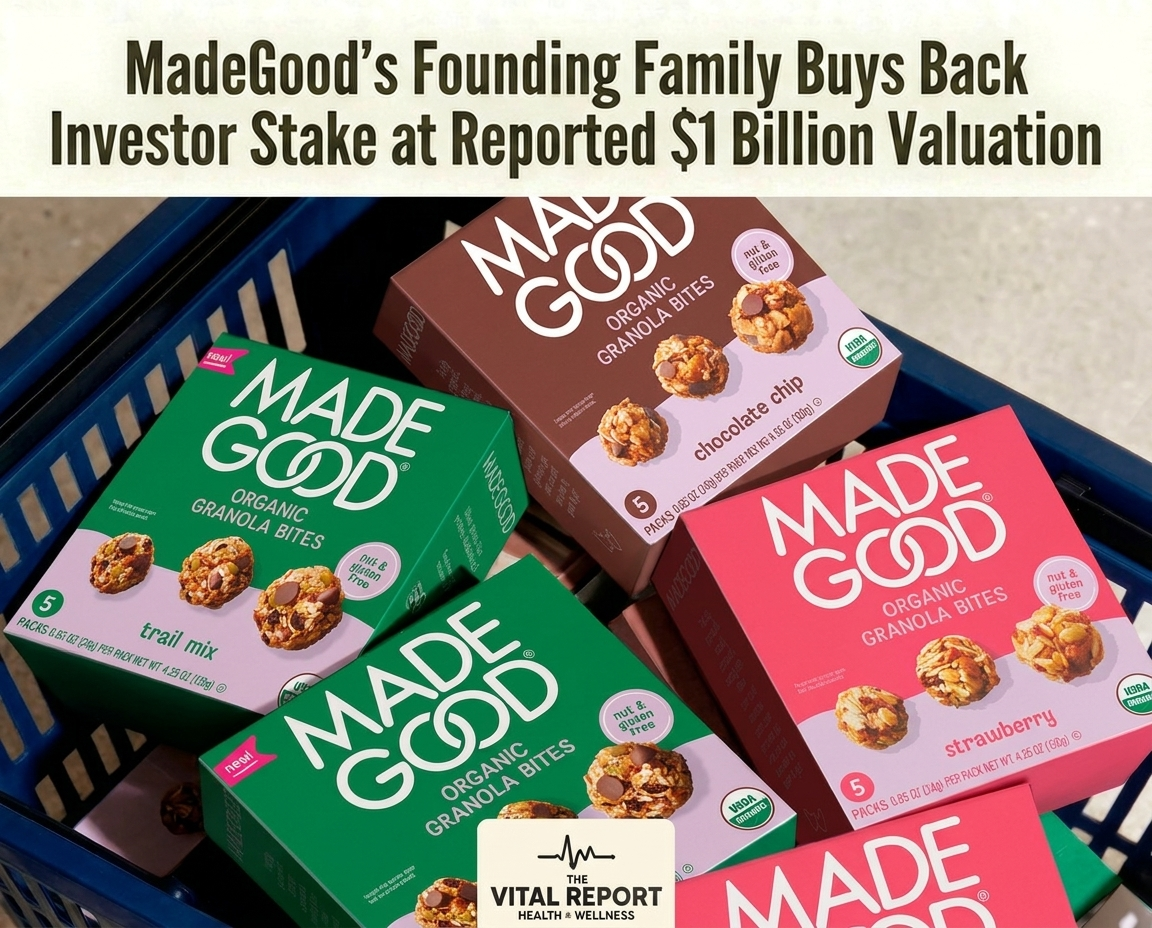
The Fotovat family, founders of MadeGood parent company Riverside Natural Foods, has bought back the minority stake held by Prelude Growth Partners, returning the Canadian snack manufacturer to full family ownership.
Financial terms weren’t disclosed, but Bloomberg reportedly values Riverside at $1 billion or more.
The transaction comes four years after Prelude became MadeGood’s first outside investor in 2022.
During that period, Riverside’s net sales grew 2.5 times, while MadeGood expanded its retail footprint to approximately 40,000 stores, including retailers in every U.S. state.
For the Fotovat family, the deal represents a return to complete ownership of a business they built from the ground up.
But for the broader food industry, it highlights something bigger.
Better-for-you snack brands are no longer just emerging challengers. They’re becoming billion-dollar businesses.
A Family Business Built From the Ground Up
MadeGood’s story begins in 2013, when siblings Nima, Salma, and Sahba Fotovat founded Riverside Natural Foods in Canada.
The family had already spent years in the food business, having previously operated a fruit and nut company.
But Riverside represented an opportunity to build something different.
Instead of competing exclusively on taste or price, the founders wanted to create snacks that could appeal to families looking for more transparent ingredients, organic certifications, and allergy-friendly options.
That idea eventually became MadeGood.
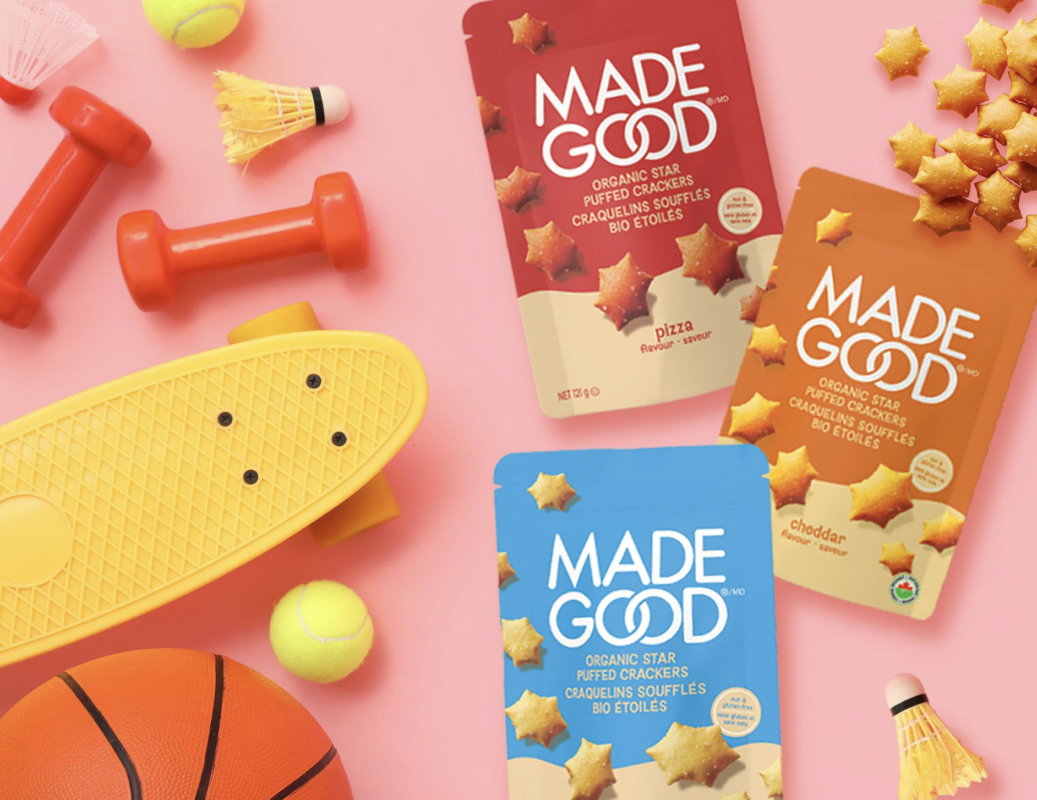
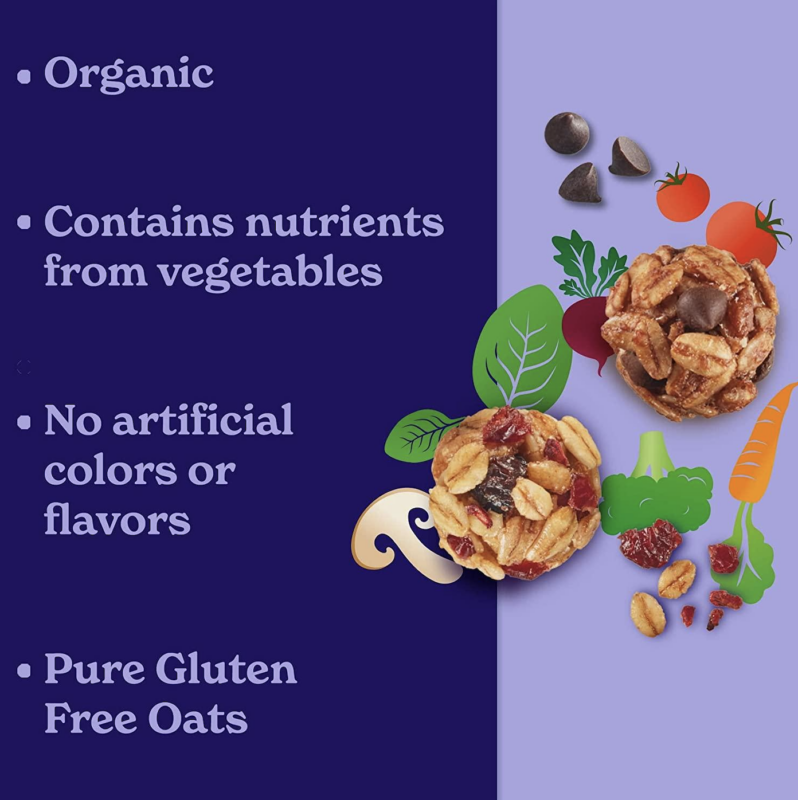
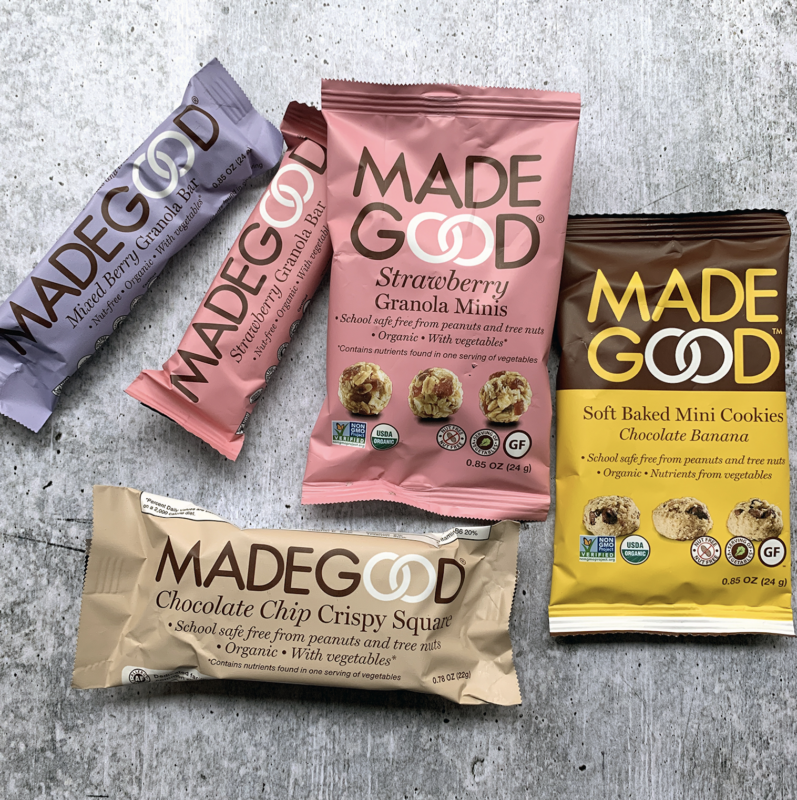
Today, the brand is best known for its granola bars, granola bites, and other convenient snacks marketed around organic ingredients and allergen-conscious manufacturing.
According to MadeGood’s official website, its products are made with organic ingredients and are designed to accommodate consumers avoiding common allergens.
That positioning helped the company carve out space in a crowded snack aisle.
But it also gave MadeGood something increasingly valuable: a clear identity.
Rather than creating an entirely new eating occasion, MadeGood took familiar products and rebuilt them around the preferences of health-conscious consumers.
Granola bars were already popular.
Bite-sized snacks were already familiar.
Parents were already packing lunchboxes.
MadeGood simply offered a different version of something consumers understood.
And that strategy helped turn a family-owned business into a billion-dollar company.
Prelude Growth Partners Entered in 2022
By 2022, MadeGood had established a strong position in better-for-you snacking.
But expanding a food brand nationally requires more than a popular product.
Manufacturing capacity.
Retail relationships.
Distribution.
Leadership.
Marketing.
And capital.
That’s where Prelude Growth Partners entered.
The New York-based growth equity firm became Riverside’s first outside investor, acquiring a minority stake in the business.
Prelude specializes in investing in consumer brands, particularly founder-led companies operating in categories such as food, beauty, wellness, and personal care.
According to the official October 6 announcement, the Fotovat family selected Prelude because of its operating experience and shared vision for the business.
The investment wasn’t simply about raising money.
It was about helping MadeGood reach the next stage of growth.
Over the following four years, Riverside strengthened its leadership team, entered new U.S. retail partnerships, expanded manufacturing, and invested in product innovation.
Those investments helped transform MadeGood from a growing Canadian snack brand into a much larger North American business.
MadeGood Grew Sales 2.5 Times in Four Years
The numbers help explain why the buyout is such a significant milestone.
During Prelude’s ownership period, MadeGood increased net sales by 2.5 times.
That’s equivalent to 150% cumulative growth across approximately four years.
The company also expanded to 40,000 retail locations globally, including 35,000 stores in the United States.
Its products are now available through major retailers including Costco, Target, Walmart, Whole Foods, Kroger, and Sprouts.
The company’s signature Granola Bites have become particularly important, accounting for approximately 50% of new consumer discovery, according to Riverside.
That suggests the product isn’t just generating repeat purchases.
It’s helping introduce new shoppers to the brand.
And in a competitive grocery environment, that can be a major advantage.
A consumer may initially discover MadeGood through one package of granola bites.
But once that consumer becomes familiar with the brand, MadeGood has an opportunity to introduce other products across its portfolio.
That’s how a single successful product can become the foundation for a much larger food business.
Why the Family Bought Back the Business
The most interesting part of the transaction may be who purchased Prelude’s stake.
It wasn’t another private equity firm.
It wasn’t a multinational food conglomerate.
And it wasn’t a publicly traded consumer goods company.
It was the founding family.
The Fotovats repurchased Prelude’s minority position, bringing Riverside back under full family ownership.
Financial terms weren’t disclosed.
However, Bloomberg’s reporting, republished by Prelude Growth Partners, indicates the transaction values Riverside at $1 billion or more.
That valuation refers to the overall business, not necessarily the amount the family paid to acquire Prelude’s minority stake.
The distinction matters because the size of Prelude’s ownership position and the actual repurchase price have not been publicly disclosed.
The deal is unusual in an industry where successful consumer brands are frequently acquired by larger corporations or financial sponsors.
MadeGood followed a different path.
Bring in a growth investor.
Scale the business.
Expand distribution.
Strengthen operations.
Then buy back the ownership stake.
For the Fotovat family, the result is a much larger business without a permanent outside equity partner.
Better-for-You Snacks Are Becoming Big Business
MadeGood’s valuation also reflects a larger shift in the food industry.
For years, better-for-you products occupied a relatively small section of grocery stores.
Organic snacks.
High-protein alternatives.
Reduced-sugar foods.
Allergen-friendly products.
But these categories have increasingly moved into mainstream retail.
Consumers are no longer necessarily choosing between familiar snacks and healthier alternatives.
Brands are trying to deliver both.
MadeGood represents that strategy particularly well.
Its products resemble traditional snack foods but are marketed around organic ingredients, allergen-conscious production, and family-friendly convenience.
That’s a formula that can appeal to parents looking for lunchbox options without requiring children to change what they like eating.
The brand isn’t asking consumers to abandon granola bars.
It’s offering a different kind of granola bar.
And that approach has helped MadeGood reach tens of thousands of retail locations.
The company is also vertically integrated, producing its products in its own Canadian facilities rather than relying entirely on outside manufacturers.
That provides greater control over production and ingredient handling, although it also requires significant investment in facilities and operations.
For a brand emphasizing allergen management, manufacturing control can be particularly important.
Prelude Growth Partners Adds Another Major Exit
The transaction is also a significant outcome for Prelude Growth Partners.
MadeGood joins several other consumer brands the firm has exited in 2026.
According to Inc.’s October reporting, Prelude has completed four exits this year, including MadeGood, So Good So You, Bachan’s, and Saltair.
Each represents a different route to liquidity.
Bachan’s was sold to The Marzetti Company.
So Good So You was acquired by Bansk Group.
Saltair was acquired by TSG Consumer.
MadeGood returned to its founding family.
That diversity is notable.
There isn’t one universal exit strategy for successful consumer brands.
Some sell to major food companies.
Others move between private equity investors.
And some, like MadeGood, return to their original owners.
For Prelude, the outcome demonstrates how growth capital can support a family business without necessarily requiring the founders to give up long-term control.
The Bigger Food Industry Shift
The MadeGood transaction is also another example of how quickly familiar food categories are being reinvented.
Protein bars have become mainstream.
High-protein snacks are expanding into everyday grocery products.
Functional beverages are moving beyond traditional sports nutrition.
And major food companies are increasingly investing in brands that offer a more health-conscious version of an existing product.
Vital Report recently covered a similar trend with David Protein’s expansion into ready-to-drink milkshakes, highlighting how companies are bringing functional nutrition into familiar food and beverage formats.
MadeGood follows a related playbook, although its focus is different.
Instead of maximizing protein, it emphasizes organic ingredients, allergen-friendly manufacturing, and family-oriented snacking.
The common thread is familiarity.
Consumers already know the product.
The innovation happens in the ingredients, nutritional positioning, and brand experience.
That’s increasingly how better-for-you brands are competing with established food companies.
What Happens Next for MadeGood?
The immediate outcome is clear.
Riverside is once again fully family-owned.
But the company’s next chapter will be shaped by how it builds on the growth achieved during Prelude’s investment.
The company has already expanded manufacturing, developed new retail relationships, and established a significant presence across North America.
Now it has the opportunity to pursue additional innovation and expansion under the Fotovat family’s ownership.
That could include further product development, new distribution opportunities, and continued growth across existing snack categories.
However, Riverside has not publicly detailed a specific new expansion strategy tied to the buyout.
What is clear is that the family now controls the direction of the business without Prelude as an equity partner.
And with a reported valuation of at least $1 billion, MadeGood has entered a very different category of consumer brand.
It’s no longer simply an emerging better-for-you snack company.
It’s a major independent player in North American snacking.
The Bottom Line
MadeGood’s founding family has completed an unusual move in the consumer food industry.
After bringing in its first outside investor in 2022, the Fotovat family has bought back Prelude Growth Partners’ minority stake in Riverside Natural Foods, returning the company to full family ownership.
The transaction reportedly values Riverside at $1 billion or more, although the actual financial terms remain undisclosed.
During Prelude’s four-year investment period, MadeGood increased net sales 2.5 times, expanded its manufacturing operations, strengthened its leadership team, and reached approximately 40,000 retail locations globally.
But the bigger story is what the transaction represents.
MadeGood used private equity capital to build a much larger business without permanently surrendering family ownership.
And its success reflects how far the better-for-you snack industry has come.
Products once considered niche alternatives are now competing across major national retailers.
Organic ingredients, allergen-friendly formulations, and recognizable snack formats have become the foundation of billion-dollar consumer businesses.
For MadeGood, the next chapter begins with the same family that started the company in 2013.
Only this time, they’re running a business reportedly worth more than $1 billion.
The brand grew up. The family bought it back. And the better-for-you snack category just got another billion-dollar success story.