

SEO Title: Kendall Toole Launches DRESSi Protein Salad Dressing With 4g of Protein
Meta Description: Former Peloton instructor Kendall Toole and Alexander Brzozowski have launched DRESSi, a protein-packed salad dressing made with olive oil and 4 grams of protein per serving.
Protein has already made its way into cereal, pasta, chips, coffee, pancakes, ice cream, and just about every other corner of the grocery store.
Now it is coming for salad dressing.
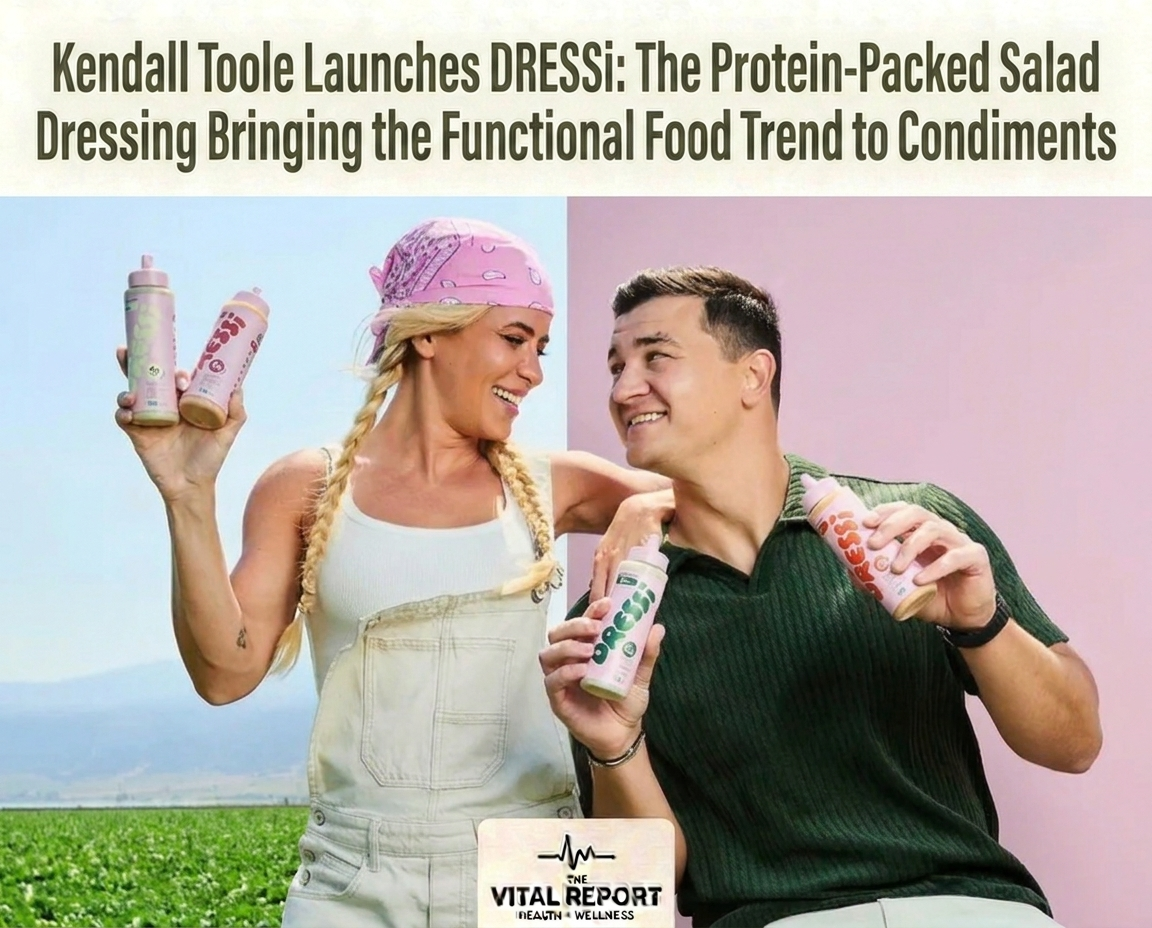
Former Peloton instructor and fitness personality Kendall Toole and Alexander Brzozowski have launched DRESSi, a new dressing and drizzle brand built around an unusual proposition: turning the condiment already going onto your salad, bowl, sandwich, or wrap into another source of protein.
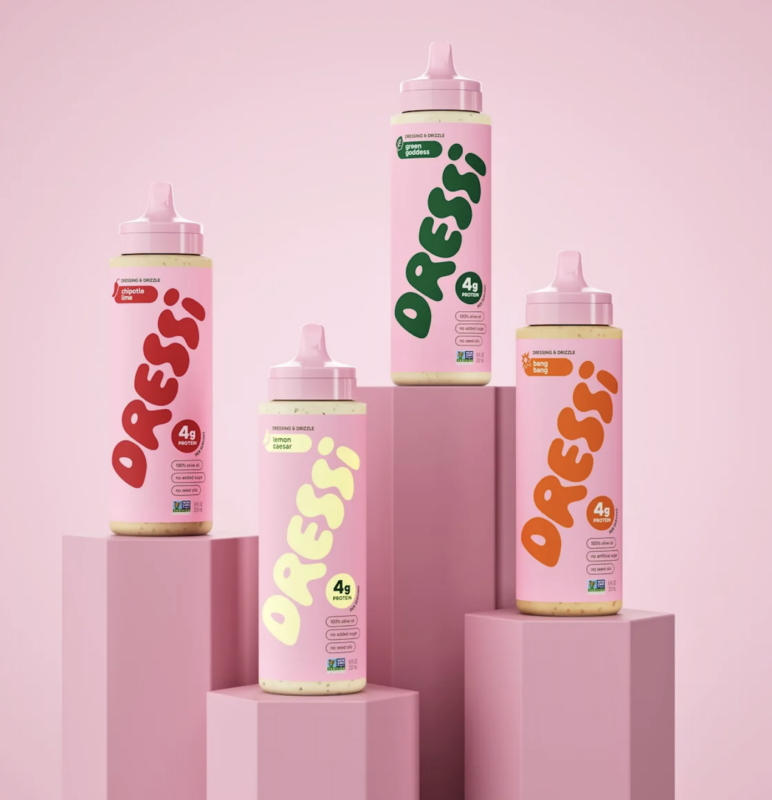
DRESSi launched with four flavors — Green Goddess, Lemon Caesar, Bang Bang, and Chipotle Lime — each delivering 4 grams of protein per serving through whey protein isolate.
But protein is only part of the pitch.
The dressings use 100% olive oil as their oil source and are made without seed oils, gums, artificial preservatives, or added sugar. The lineup is also gluten-free and Non-GMO Project Verified, according to the company.
It is an interesting combination of several of the biggest forces currently reshaping packaged food: protein, recognizable ingredients, creator-led brands, and consumers increasingly looking for functionality from foods they already eat.
Instead of asking consumers to add another protein shake or bar to their routine, DRESSi is betting it can sneak a little more protein into something they are already pouring onto dinner.
And it could be another sign that the protein boom is entering its next phase.

What Is DRESSi?
DRESSi describes itself as a “dressing & drizzle” brand rather than simply a salad dressing company.
That distinction is intentional.
The company wants consumers using the products on salads, but also on protein bowls, sandwiches, wraps, meats, dips, and marinades.
The four launch flavors are:
Green Goddess
A creamy, herb-forward dressing designed for salads, sandwiches, and bowls.
Lemon Caesar
DRESSi’s take on Caesar dressing, which Toole says she likes using on a chicken Caesar wrap.
Bang Bang
A creamy, more flavor-forward option that Brzozowski uses on poke and ground beef bowls.
Chipotle Lime
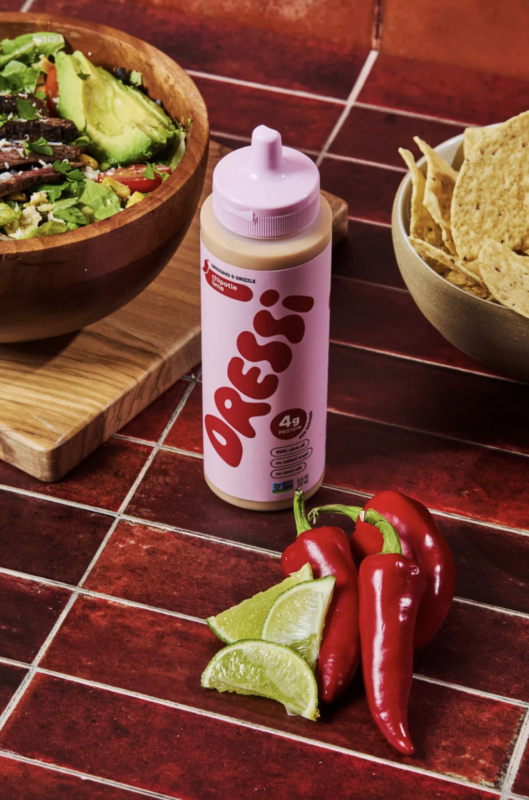
A smoky, citrus-forward dressing positioned for bowls, proteins, and Southwestern-inspired meals.
The nutritional differentiator running across the lineup is the protein.
Each serving provides 4 grams of protein from whey protein isolate, according to DRESSi.
Four grams is not going to replace the chicken on your salad or the protein in your post-workout shake — and DRESSi explicitly says its product is not designed to replace traditional protein sources.
Instead, the company is positioning the protein as an incremental addition.
Add dressing to a meal you were already eating, and that condiment now contributes something nutritionally beyond flavor.
That sounds simple, but it represents a larger shift in how food brands are thinking about protein.
Protein Is Moving Beyond the Protein Aisle
For decades, protein products were relatively easy to identify.
Protein powder looked like protein powder.
Protein bars looked like protein bars.
Sports nutrition largely existed in its own section of the store.
That distinction is disappearing.
Consumers can now buy protein cereal, protein pancakes, protein chips, protein pasta, protein cookies, protein candy, protein coffee, and high-protein versions of products that historically had little connection to sports nutrition.
Even major fresh-food companies are following the trend.
Earlier this year, Taylor Farms introduced an entire protein-forward platform across salads, snacks, dressings, dips, and toppings. Its Protein Caesar Chopped Salad Kit, for example, incorporates whey protein into the dressing and other components to deliver 21 grams of protein per bag.
DRESSi takes that concept and isolates one overlooked part of the meal: the dressing itself.
It also fits into a broader packaged-food movement Vital Report has been tracking.
As we explored with David Protein’s expansion into ready-to-drink milkshakes, newer protein brands increasingly want to move beyond the traditional protein bar and supplement categories.
The opportunity is becoming less about creating another dedicated “protein product” and more about adding protein to foods consumers already understand and eat regularly.
DRESSi may be one of the clearest examples yet.
Why Put Protein in Salad Dressing?
The answer is convenience.
Protein is an essential macronutrient, but adding more of it to a diet traditionally requires consumers to change something about their meal.
Add chicken.
Cook eggs.
Open Greek yogurt.
Make a shake.
Eat cottage cheese.
Grab a protein bar.
DRESSi’s proposition is different.
Keep eating the meal you were already planning to eat.
Just change the dressing.
The company uses whey protein isolate, a dairy-derived protein ingredient widely used in sports nutrition and packaged high-protein foods. The National Institutes of Health’s Dietary Supplement Label Database classifies whey protein isolate within its protein ingredient group.
DRESSi describes the ingredient as a complete protein containing all nine essential amino acids.
Still, the serving size matters.
Four grams is an addition, not a complete protein strategy.
Someone looking to substantially increase their daily protein intake would still need meaningful sources such as meat, fish, eggs, dairy, legumes, soy, or larger servings of supplemental protein.
DRESSi’s advantage is that the consumer does not necessarily have to think about it.
The products are also gluten-free and Non-GMO Project Verified.
DRESSi says its Non-GMO verification involves an independent review through NSF, including examination of ingredient sourcing and, when animal-derived ingredients are involved, upstream sourcing considerations.
That positioning puts DRESSi squarely into the “clean label” movement reshaping packaged food.
Whether every ingredient consumers are avoiding actually needs to be avoided is a separate question.
Seed oils in particular have become one of the most polarizing topics in wellness, despite nutrition science being significantly more nuanced than much of the conversation online.
But from a consumer-brand perspective, the trend is unmistakable.
People increasingly turn bottles around.
They read ingredient labels.
They recognize oils.
They question preservatives.
And many premium food brands are responding by making what is not inside the product almost as important as what is.
DRESSi has clearly been built for that shopper.
From Viral Recipes to a Packaged Food Brand
The origin of DRESSi also says something about how modern consumer brands are being created.
According to the company, Toole had been sharing protein-forward recipes with her social media audience when several of her homemade dressing recipes went viral in 2024 and 2025.
The reaction created a straightforward question:
Could those recipes become an actual product?
Toole and Brzozowski began developing what would eventually become DRESSi.
That path is increasingly common in consumer packaged goods.
Historically, a company might identify a market opportunity through consumer research, develop a product, launch it, and then spend heavily trying to build an audience around it.
Creators can reverse that process.
Build the audience first.
Share an idea.
Watch how people respond.
Then build the product.
By the time the product arrives, there is already evidence that consumers are interested in the concept.
DRESSi’s protein dressing recipes essentially served as an early test.
The bottled product came later.
That gives the brand something traditional food startups often spend millions trying to manufacture: an existing relationship with potential customers.
Kendall Toole Makes Sense as a Food Founder
Toole is particularly well positioned for a product like this.
She built much of her public profile through fitness, most notably as an instructor at Peloton, before leaving the company in 2024.
Her audience already associates her with exercise, wellness, motivation, and an active lifestyle.
DRESSi therefore does not require the kind of leap that sometimes accompanies celebrity consumer brands.
A fitness personality launching a protein-forward food product is relatively intuitive.
More importantly, DRESSi says Toole and Brzozowski are operating the business day to day rather than simply licensing a recognizable name to an existing food company.
The brand describes itself as a small family business run by the two founders.
That could become important as consumers grow more skeptical of celebrity brands that feel detached from the people promoting them.
DRESSi’s story is instead built around the idea that the product originated in Toole’s own kitchen and social content before becoming something scalable.
DRESSi Wants to Be More Than Salad Dressing
The word “salad” can also limit a dressing company.
DRESSi appears aware of that.
Its website repeatedly encourages customers to use the products on bowls, wraps, sandwiches, dips, marinades, and proteins.
Recipes include a Chipotle Lime rice bowl, Green Goddess chicken sandwich, and Bang Bang chicken wrap.
That broader positioning matters because the condiment market extends far beyond salad.
Consumers already use products like ranch, hot sauce, mayonnaise, pesto, barbecue sauce, tahini, and chili crisp across multiple meals.
DRESSi wants the same flexibility.
The company is effectively trying to turn dressing into a finishing sauce.
That gives consumers more occasions to use the product — and makes 4 grams of protein more relevant.
A bottle that only comes out for salad has limited utility.
A bottle used at lunch, dinner, meal prep, and as a dipping sauce becomes a different proposition.
The Condiment Aisle Is Ready for Reinvention
Condiments are an interesting target for wellness brands because they have traditionally been treated primarily as flavor.
Consumers carefully construct a high-protein bowl, salad, or wrap and then top it with whatever dressing happens to be in the refrigerator.
DRESSi is betting that the final ingredient deserves the same scrutiny as everything underneath it.
That creates room for differentiation.
Oil type.
Protein.
Sugar.
Preservatives.
Ingredient simplicity.
Functionality.
All of those attributes can turn what was once a commodity product into something consumers are willing to compare.
It is a familiar playbook.
Better-for-you brands have already transformed cereal, soda, candy, pasta, ice cream, and chips by taking familiar products and rebuilding their nutritional profiles.
Condiments could be next.
DRESSi Is Already Moving Beyond DTC
The brand’s distribution also appears to be moving quickly.
DRESSi’s website says the products are available directly through the company as well as Amazon and TikTok Shop, while also directing customers to Sprouts stores nationwide.
The company says additional retailers are planned for 2027.
That is significant because DRESSi needs to prove it can work outside Toole’s existing audience.
Direct-to-consumer launches can capitalize on creator followings quickly.
Retail is a different test.
On a grocery shelf, DRESSi has to convince someone who may know nothing about Kendall Toole that 4 grams of protein, olive oil, and the ingredient profile justify choosing it over established dressing brands.
If that proposition works, DRESSi becomes more interesting than a creator brand.
It becomes evidence that functional condiments can become a meaningful grocery category.
The Bigger Opportunity: Protein Everywhere
DRESSi arrives at a moment when protein has become one of the most powerful words in food marketing.
But the most interesting part of the trend may not be consumers simply eating more protein.
It is where brands are putting it.
Protein used to require a dedicated behavior.
Drink the shake.
Eat the bar.
Take the powder.
Increasingly, brands are trying to eliminate that extra step.
Your cereal has protein.
Your pasta has protein.
Your snack has protein.
Your coffee has protein.
And now your salad dressing can have protein.
That shift could ultimately make the term “protein food” less meaningful because protein-enhanced products will simply become normal foods.
DRESSi is betting that consumers do not necessarily want another supplement.
They want the products already sitting in their refrigerator to do more.
The Bottom Line
Kendall Toole and Alexander Brzozowski’s DRESSi is entering the food market with a simple idea: salad dressing can do more than add flavor.
Its four launch flavors — Green Goddess, Lemon Caesar, Bang Bang, and Chipotle Lime — each provide 4 grams of protein per serving through whey protein isolate while using 100% olive oil and avoiding seed oils, gums, artificial preservatives, and added sugar.
But DRESSi’s real significance extends beyond its nutrition label.
The brand represents the convergence of creator-led consumer products, clean-label food, protein culture, and the growing demand for everyday products with added functionality.
The protein boom started with powders and bars.
Then it moved into snacks, cereal, pasta, and beverages.
Now it is reaching the condiment aisle.
And if DRESSi works, your next high-protein product might not look like a protein product at all.