

For years, wearable technology has focused on counting steps, tracking sleep, monitoring heart rate, and measuring recovery. Smart rings, smartwatches, and health patches have become staples for people looking to better understand their bodies.
Now, a new category is emerging: environmental health wearables.
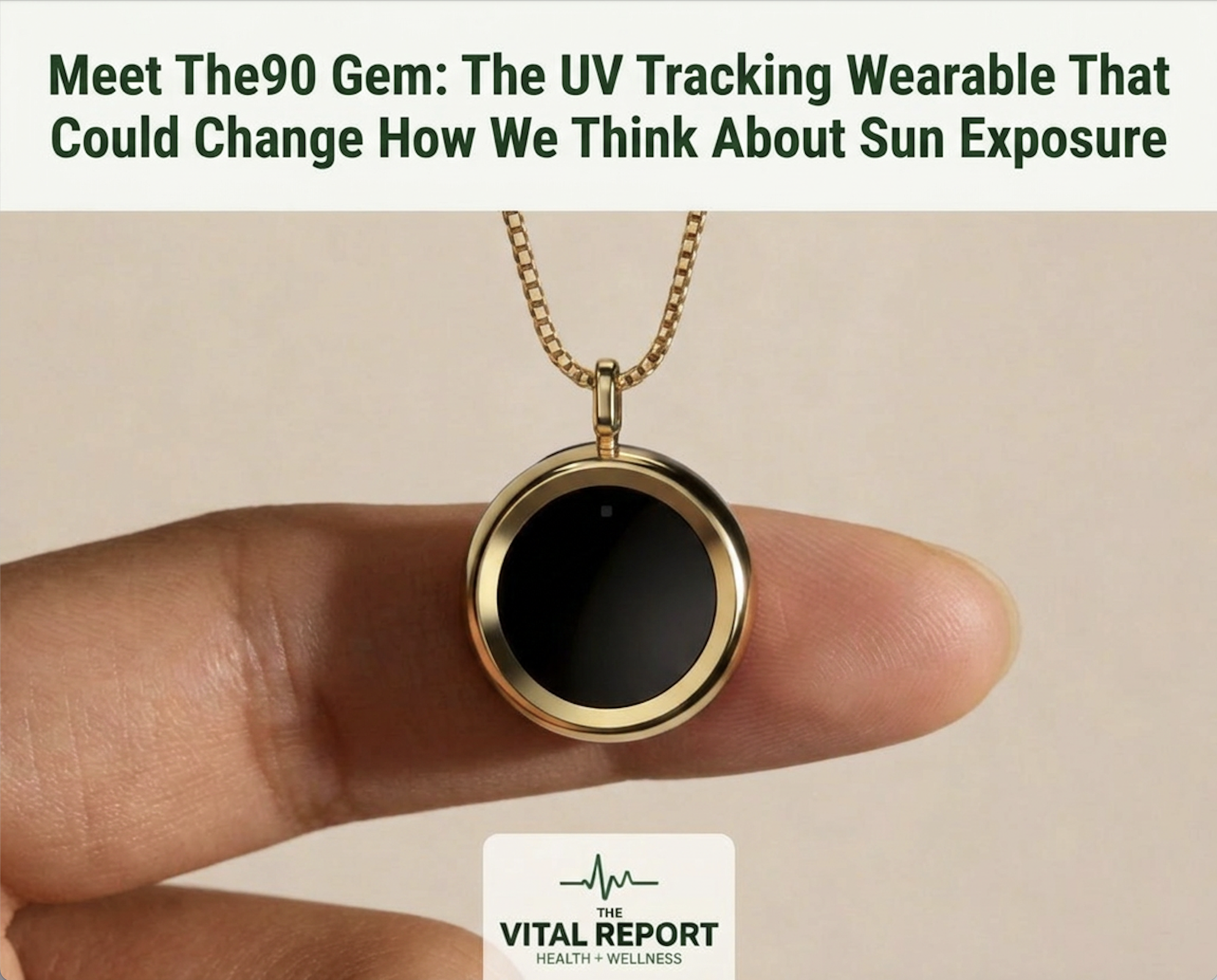
Leading that movement is The90 Gem, a jewelry-inspired wearable designed to track your personal UV exposure in real time. Rather than simply telling you the UV Index in your city, it measures the actual ultraviolet radiation your skin experiences throughout the day and offers personalized recommendations based on your skin type, sunscreen use, and daily habits.
It’s one of the most interesting wellness launches of 2026, not because it’s another fitness tracker, but because it addresses one of the biggest yet least measured contributors to long-term skin health.
As preventative health continues moving toward personalized data, devices like The90 Gem may represent the next frontier in wearable technology.
Why UV Exposure Matters More Than Most People Think
Most people associate sun damage with getting sunburned.
Dermatologists have spent years explaining that the real story is far more complicated.
Ultraviolet light is divided primarily into two categories:
- UVB rays, which are responsible for sunburn
- UVA rays, which penetrate deeper into the skin and contribute significantly to wrinkles, collagen breakdown, pigmentation, and premature aging
Unlike UVB, UVA damage often occurs silently. You won’t necessarily feel it happening.
You can accumulate exposure while:
- Driving
- Sitting next to windows
- Walking between meetings
- Eating lunch outside
- Running errands
- Spending time on patios
That cumulative exposure adds up over decades.
Research frequently cited by dermatologists estimates that roughly 90% of visible skin aging is caused by UV exposure rather than chronological aging, making consistent protection one of the most effective anti-aging strategies available. The90 has built much of its platform around helping users visualize that otherwise invisible accumulation.
What Is The90 Gem?
The90 Gem is a pendant-style wearable that combines onboard UV sensors with a smartphone app to provide personalized sun intelligence throughout the day.
Instead of relying on generalized weather forecasts, the wearable continuously monitors the UV conditions in your immediate environment.
The device measures:
- Real-time UVA exposure
- Real-time UVB exposure
- Estimated burn risk
- Cumulative UV load
- Personalized UV thresholds
The companion app then translates that information into practical recommendations, including:
- When to reapply sunscreen
- When to seek shade
- When to cover up
- Estimated “time to burn”
- Long-term exposure trends
Because recommendations are based on an individual’s skin profile, sunscreen habits, genetics, and environmental exposure, the experience is far more personalized than checking the weather app before heading outside.
Beyond the UV Index: Why Personal Data Matters
The weather app on your phone already shows a UV Index.
So why wear another device?
The answer comes down to personalization.
The UV Index is based on broad geographic forecasts. It doesn’t know:
- whether you’re sitting in direct sunlight or shade
- whether you’re inside near a large window
- how long you’ve actually been outside
- your skin type
- whether you’ve applied SPF
- when that sunscreen has likely worn off
The90 Gem attempts to solve that gap by measuring what you are actually experiencing rather than relying on city-wide estimates. That shift mirrors broader trends in wearable technology, where consumers increasingly want data tailored to their individual behaviors instead of generalized averages.
Designed Like Jewelry Instead of Technology
One reason many wellness wearables fail is simple:
People stop wearing them.
The90 appears to have learned from companies like Fitbit, Oura, and Apple by prioritizing design as much as functionality.
Instead of another bulky wrist device, the Gem is worn as a minimalist necklace that blends into everyday outfits.
That decision reflects a growing trend in wellness technology:
Health devices increasingly need to be fashionable if they’re going to become lifelong habits.
The company describes the Gem as “smart jewelry” rather than simply another wearable, aiming to integrate seamlessly into daily life.
The Founder Brings Serious Wearable Experience
The90 wasn’t built by newcomers.
Founder and CEO Stacy Salvi previously worked at Fitbit during one of wearable technology’s fastest growth periods before later helping build the women’s health-focused Evie Ring.
That experience is evident in The90’s philosophy.
Rather than trying to become another smartwatch competitor, The90 focuses on solving one specific problem exceptionally well: helping people make smarter decisions about sun exposure.
The company has also attracted backing from beauty entrepreneur Lauryn Bosstick, highlighting growing investor interest in the intersection of beauty, skincare, and wearable technology.
Who Should Consider The90 Gem?
While almost anyone spends time outdoors, some people may benefit more than others.
Ideal users include:
Skincare Enthusiasts
Consumers already investing in quality skincare often spend hundreds—or even thousands—of dollars annually on serums, treatments, lasers, and cosmetic procedures.
Preventing UV damage before it occurs may provide greater long-term value than trying to reverse it later.
People Focused on Longevity
Modern longevity isn’t just about living longer.
It’s about preserving health, mobility, and appearance over time.
Managing cumulative UV exposure fits naturally alongside habits like sleep optimization, exercise, nutrition, and continuous health monitoring.
Outdoor Athletes
Golfers, runners, cyclists, hikers, tennis players, and beachgoers often underestimate their daily UV load.
Having real-time reminders could improve sun protection without eliminating outdoor activity.
Fair-Skinned Individuals
People who burn easily may appreciate personalized burn predictions rather than relying on guesswork.
Parents
While designed primarily for adults, many parents may use the insights to make smarter family decisions about outdoor activities during peak UV hours.
The Future of Wearables Is Becoming More Specialized
The first generation of wearables tried to do everything.
Today’s most successful devices increasingly solve one problem extremely well.
Examples include:
- Continuous glucose monitors
- Fertility wearables
- Smart rings
- Recovery trackers
- Sleep optimization devices
- Environmental sensors
The90 Gem fits squarely into that trend.
Rather than replacing your smartwatch, it complements it by measuring something most existing wearables ignore entirely: your environment.
Experts increasingly expect future wearables to track far more than steps and heart rate, expanding into areas such as air quality, environmental toxins, hydration, stress biomarkers, and UV exposure. The90’s launch reflects that broader evolution.
Is The90 Gem Worth It?
The biggest question for most consumers is whether personalized UV tracking justifies adding another wearable.
For people who:
- spend significant time outdoors,
- prioritize preventative skincare,
- regularly invest in wellness technology,
- or simply want more accurate information than a weather app can provide,
The answer may very well be yes.
The wearable isn’t designed to replace sunscreen—it aims to help users use sunscreen more effectively by making invisible exposure visible.
At around $199 introductory pricing (with a higher standard retail price), it sits in the premium wearable category. That means it likely won’t be for everyone, but it aligns with a broader consumer shift toward investing in preventative health technologies before problems arise.
Final Thoughts
The wellness industry has entered an era where data is becoming increasingly personalized.
We’ve moved from counting steps to tracking sleep quality, glucose responses, recovery metrics, heart rhythm, and now even sun exposure.
The90 Gem represents more than another gadget—it reflects a larger movement toward proactive, individualized health monitoring. Instead of reacting to sunburn or visible signs of aging, users can make informed decisions in real time based on what their skin is actually experiencing.
Whether UV-tracking wearables become as common as smartwatches remains to be seen. But as consumers continue prioritizing prevention over treatment, devices like The90 Gem suggest that the future of wellness won’t just be about understanding our bodies—it will also be about understanding the environments we move through every day.