
For years, the wellness industry has been obsessed with what is happening inside the body.
Consumers track sleep with smart rings, monitor glucose with continuous glucose monitors, test dozens of blood biomarkers, analyze gut health, and increasingly use technology to search for early signs that something may be changing.
But one part of the body has largely been left out of the longevity conversation:
The mouth.
That is beginning to change.
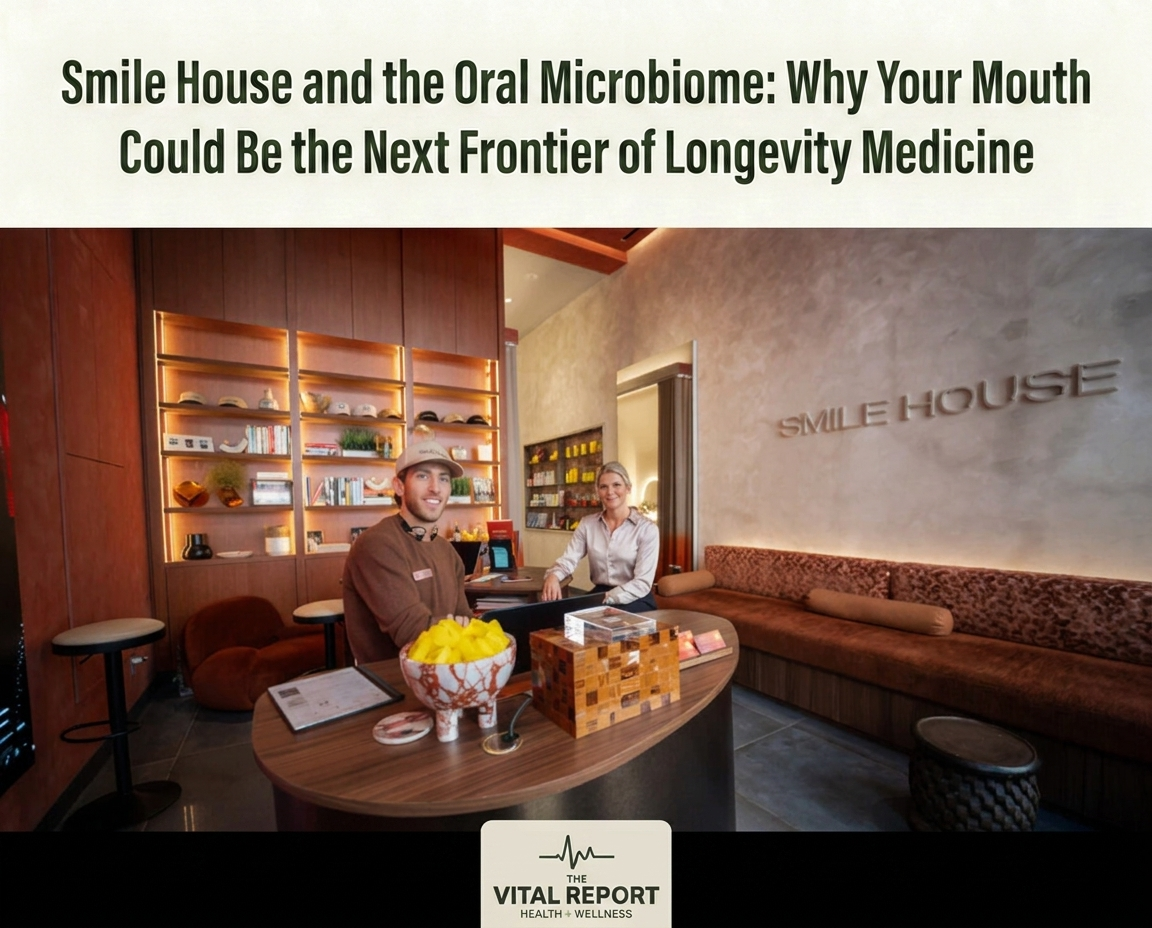
New York-based Smile House is building its approach to dentistry around what it calls "dental longevity," combining traditional dental care with advanced imaging, salivary diagnostics, oral microbiome testing, airway evaluation, and other measurements designed to create a more complete picture of oral health.
At the center of that approach is a growing area of scientific interest: the oral microbiome.
Just as researchers have spent years investigating the trillions of microorganisms living throughout the gastrointestinal tract, scientists are increasingly studying the complex microbial ecosystem living inside the mouth — and what changes in that ecosystem may tell us about both oral and systemic health.
The result could help change the way consumers think about going to the dentist.
What Is the Oral Microbiome?
Your mouth isn’t sterile.
It contains an extraordinarily complex ecosystem of bacteria, fungi, viruses, archaea, and other microorganisms living across your teeth, tongue, gums, saliva, and other oral surfaces.
A major review published in Nature Reviews Microbiology describes the oral microbiome as a highly diverse and organized microbial ecosystem whose members occupy distinct environments throughout the mouth.
Most of these microorganisms aren’t automatically harmful.
Like the gut microbiome, oral health depends partly on the relationship between microbes, their environment, and the host.
Problems can emerge when that ecosystem shifts toward dysbiosis — an imbalance in microbial communities associated with conditions such as dental caries and periodontal disease.
That means modern dentistry increasingly has the opportunity to ask a different question.
Instead of simply looking for a cavity or inflamed gums, could clinicians learn something useful by examining the biological environment contributing to those problems?
That is part of what Smile House is attempting to do.
THE BIG IDEA:
Oral health isn’t only about individual teeth. It also involves the microbial ecosystem surrounding them.
Smile House Wants to Turn the Dentist Into a Health-Data Experience
Smile House’s approach fits into a much larger movement occurring across healthcare.
Consumers increasingly want data before symptoms.
Instead of waiting until something hurts, they want to understand risk earlier.
Smile House applies that philosophy to dentistry through a diagnostic process called Mouth Mapping®.
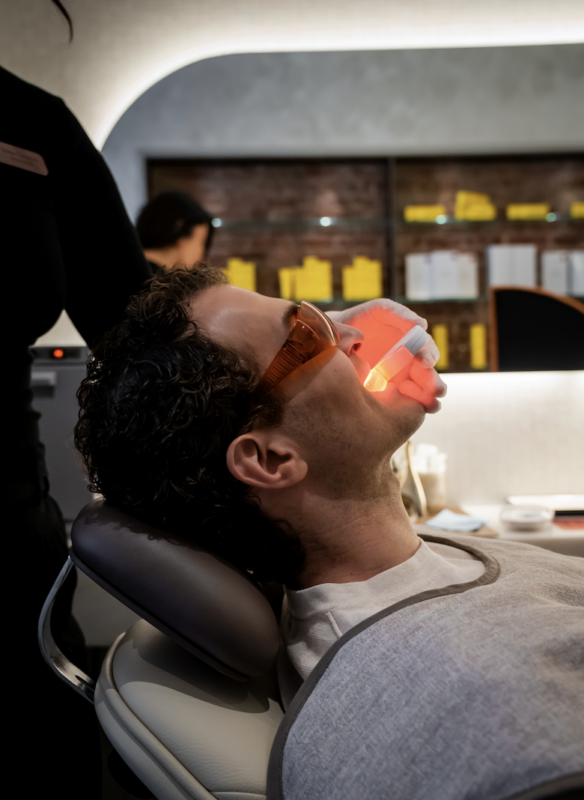
According to the company, the assessment looks at more than 30 oral biomarkers and incorporates areas including inflammation, microbiome health, airway, structure, function, and other potential risk indicators.
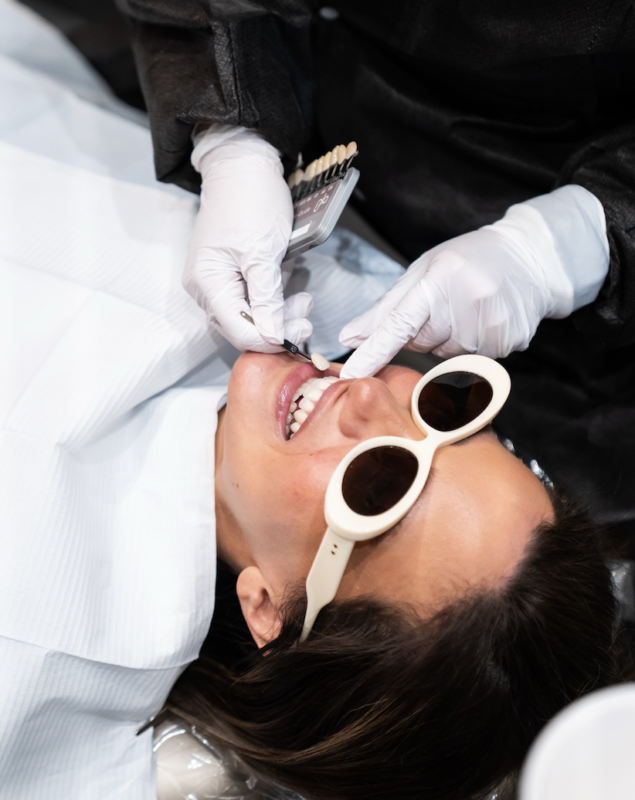
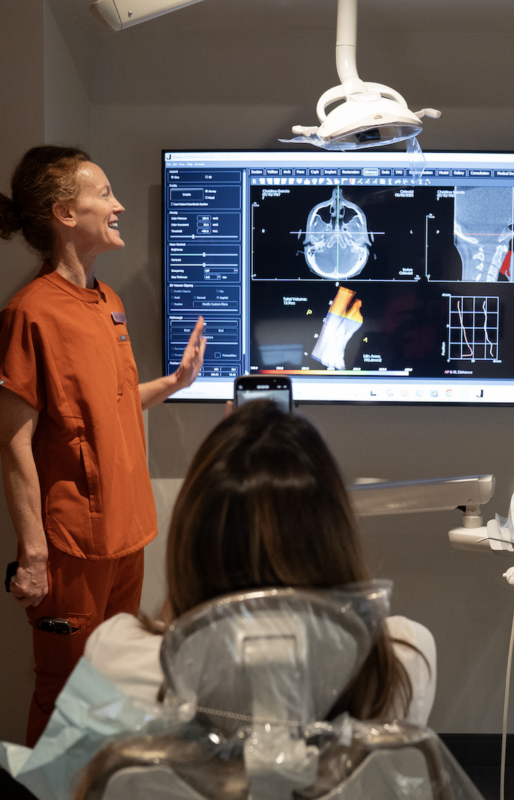
The practice also uses salivary and microbiome testing as part of its preventive approach, alongside dental examinations, periodontal screening, digital scans, and 3D imaging.
The concept is essentially to create a more comprehensive baseline of the mouth rather than viewing each dental problem independently.
That idea isn’t completely disconnected from where dental research is heading.
A scoping review published in Frontiers in Oral Health examined the potential use of salivary biomarkers in personalized oral healthcare and precision dentistry.
Saliva is particularly interesting because it can contain biological information related to inflammation, immune activity, microbial composition, and oral conditions — all collected without a blood draw.
That could eventually make the dentist’s office another important location for personalized health monitoring.
Why Scientists Are Paying Attention to the Mouth-Body Connection
The most interesting part of the oral microbiome isn’t necessarily what happens inside the mouth.
It is what may happen beyond it.
Researchers are increasingly investigating relationships between oral microbial dysbiosis, periodontal inflammation, and systemic conditions.
A recent review of the oral microbiome and systemic health found evidence of associations between oral dysbiosis and conditions including cardiovascular disease, type 2 diabetes, respiratory infections, and adverse pregnancy outcomes, while also discussing emerging research involving other diseases.
But this is where wellness content needs an important reality check.
Association does not automatically mean causation.
Finding certain microbial patterns more frequently in people with a disease does not necessarily mean those microbes caused the disease.
Many oral-systemic relationships are likely complicated and potentially bidirectional.
Systemic health can influence the mouth.
The mouth may influence systemic inflammation.
Lifestyle, medications, diet, smoking, genetics, age, and numerous other factors can influence both.
Researchers are still working to understand exactly where those relationships begin and end.
Your Mouth and Heart Health
Cardiovascular health is one of the most actively investigated areas of the mouth-body connection.
Researchers have studied associations between periodontal disease, oral microbial communities, inflammation, and cardiovascular disease for years.
A 2025 review examining oral microbiota and cardiovascular health discusses several possible mechanisms connecting the two, including systemic inflammation and the movement of oral bacteria or bacterial products beyond the mouth.
One theory centers around gum inflammation.
When periodontal tissues become chronically inflamed, the barrier separating oral bacteria from the bloodstream may become more vulnerable.
Researchers are investigating whether microbes, microbial products, and inflammatory mediators originating in the mouth can then contribute to processes elsewhere in the body.
That doesn’t mean brushing your teeth is a treatment for heart disease.
But it does help explain why researchers increasingly view oral health as one component of overall health rather than an isolated cosmetic concern.
The Oral-Gut Connection May Be Even More Interesting
The gut microbiome has become one of the biggest topics in modern wellness.
Probiotics.
Prebiotics.
Fiber.
Fermented foods.
Microbiome tests.
But the gut isn’t an isolated ecosystem either.
Your mouth sits directly upstream from it.
Every day, humans swallow enormous quantities of saliva containing oral microorganisms. Researchers are therefore studying whether changes in oral microbial communities can influence the gastrointestinal ecosystem.
A 2024 review in Nature Reviews Microbiology explored the emerging oral-gut microbiome axis, including evidence that oral microorganisms can reach the gastrointestinal tract and, under certain conditions, potentially colonize it.
The mechanisms — and their importance for human disease — remain areas of active research.
Still, the oral-gut axis changes the way we might think about microbiome health.
The wellness world has spent years asking:
"What’s happening in your gut?"
The next question may be:
"What’s happening before microbes even get there?"
Why Saliva Could Become a Powerful Health Biomarker
Blood currently dominates preventive health testing.
But saliva has several obvious advantages.
It is easy to collect.
It doesn’t require needles.
Samples can potentially be collected repeatedly.
And saliva contains biological information that may provide insight into oral microbial communities and inflammatory processes.
Research into salivary biomarkers is therefore expanding across precision dentistry and personalized healthcare.
The long-term vision is compelling.
Imagine going to the dentist and receiving more than:
"No cavities. See you in six months."
Instead, future dental appointments could potentially create longitudinal datasets around oral inflammation, microbial composition, periodontal health, saliva characteristics, airway health, structural changes, and other indicators.
Over years, those trends could potentially become more useful than a single isolated dental exam.
This is similar to what has already happened elsewhere in wellness.
Dentistry Is Joining the Biomarker Boom
Smile House isn’t operating in a vacuum.
Healthcare is undergoing a broader shift from occasional measurements toward continuous and comprehensive health data.
Companies like Function Health have made extensive blood biomarker testing more consumer-friendly.
Oura helped normalize daily sleep and recovery scores.
Continuous glucose monitors allow people to watch glucose change throughout the day.
And new devices are trying to collect biological information from places consumers previously never imagined.
As Vital Report recently covered in our article on the oral microbiome revolution, oral health is increasingly becoming part of the broader wellness conversation. Scientists now understand that the mouth contains a complex microbial ecosystem, and emerging research is changing how we think about everything from toothpaste and mouthwash to probiotics, inflammation, gut health, and preventive care.
What if the dentist became part of your preventive-health dashboard?
Your blood tells one story.
Your wearable tells another.
Your glucose tells another.
Your gut tells another.
And increasingly, your mouth may have something to add.
What Makes Smile House Different?
Smile House isn’t simply selling an oral microbiome test.
Its larger bet is that dentistry itself should become more integrated.
The practice brings multiple dental specialties together while combining conventional dental assessments with advanced diagnostics and a longevity-focused philosophy.
Its Mouth Mapping® approach evaluates areas spanning:
- Oral microbiome and saliva
- Gum and periodontal health
- Teeth and enamel
- Bite alignment
- TMJ and jaw function
- Airway and breathing
- 3D dental imaging
- Inflammation and other biological indicators
That makes the oral microbiome one piece of a larger diagnostic puzzle.
And that distinction matters.
Microbiome data without clinical context can easily become another wellness metric consumers don’t know how to interpret.
The more useful approach may ultimately be combining microbial information with established clinical measurements, symptoms, imaging, medical history, and professional evaluation.
Oral Microbiome Testing Isn’t a Crystal Ball
This is where expectations need to remain realistic.
The science of the oral microbiome is advancing quickly, but researchers still have major questions to answer.
Scientists have identified relationships between microbial communities and numerous diseases.
That does not mean a saliva test can reliably predict whether someone will develop Alzheimer’s disease, heart disease, diabetes, or cancer.
A systematic review examining mechanistic links between the oral microbiome and systemic health concluded that oral dysbiosis is a promising area for diagnosis, prevention, and potentially therapy — while emphasizing the need for greater methodological standardization and stronger causal evidence.
That’s an important distinction.
Microbiome testing may provide useful information about an individual’s oral environment.
But consumers should be cautious about interpreting every bacterial signal as a diagnosis.
The technology may be most valuable when combined with traditional clinical evaluation rather than positioned as a replacement for it.
Could the Dentist Become Part of Longevity Medicine?
This may ultimately be the biggest opportunity.
Longevity medicine is increasingly focused on finding small changes before they become large problems.
Cardiovascular disease can develop for decades before symptoms.
Insulin resistance can progress before diabetes is diagnosed.
Sleep problems can accumulate quietly.
Dental disease works similarly.
Cavities don’t appear overnight.
Periodontal disease develops over time.
Enamel gradually erodes.
Bone loss progresses.
Inflammation can persist.
If dentists can combine traditional examinations with better imaging, salivary biomarkers, microbiome data, airway assessment, and longitudinal tracking, dentistry could potentially become much more preventive.
Instead of repairing damage, the goal becomes identifying the conditions that make damage more likely.
That philosophy is essentially what Smile House means by dental longevity.
The Bigger Trend: Every Part of the Body Is Becoming Measurable
The oral microbiome story reflects something much larger happening in healthcare.
For most of medical history, people received health information when something went wrong.
Now consumers increasingly expect information continuously.
We measure sleep before insomnia becomes severe.
We measure glucose before diabetes.
We measure cardiovascular biomarkers before a heart attack.
We measure body composition before physical decline.
We monitor digestive patterns before symptoms become impossible to ignore.
The mouth may be the next major dataset to join that ecosystem.
And unlike many experimental longevity technologies, dental care already has something incredibly valuable:
regular access to patients.
Millions of people already visit dentists every year.
If those appointments evolve from basic examinations into richer biological assessments, dentistry could occupy a much larger role within preventive health.
The Bottom Line
The oral microbiome may become one of the next major frontiers of personalized wellness.
Research increasingly shows that the mouth contains a complex microbial ecosystem connected not only to cavities and periodontal disease but also to biological pathways researchers are studying across systemic health.
Smile House is attempting to bring that science into a new model of dentistry.
Through Mouth Mapping®, salivary and microbiome testing, advanced imaging, airway evaluation, periodontal assessment, and multi-specialty care, the company is betting that the dentist’s office can become a place where consumers learn more about their long-term health — not simply where they go when a tooth hurts.
The science still requires nuance.
Oral microbiome associations should not be confused with proof that specific microbes cause systemic diseases, and microbiome testing should complement rather than replace established medical and dental care.
But the direction is fascinating.
The wellness industry spent the last decade learning to measure the wrist, blood, glucose, sleep, and gut.
The mouth may be next.
Frequently Asked Questions
What is the oral microbiome?
The oral microbiome is the community of microorganisms — including bacteria, fungi, viruses, and other microbes — living throughout the mouth. Different microbial communities occupy the teeth, gums, tongue, saliva, and other oral surfaces.
What is Smile House?
Smile House is a New York dental practice focused on what it calls dental longevity. Its approach combines multi-specialty dentistry with advanced diagnostics, including its Mouth Mapping® assessment, salivary testing, microbiome analysis, imaging, and evaluations of areas such as gum, bite, airway, and structural health.
What is Smile House Mouth Mapping®?
Mouth Mapping® is Smile House’s comprehensive diagnostic approach. The company says it assesses more than 30 oral biomarkers while examining areas including biology, structure, function, inflammation, microbiome health, and airway-related factors.
Can the oral microbiome affect gut health?
Researchers are actively studying an oral-gut microbiome axis. Oral microorganisms are continuously swallowed, and research suggests some may reach or colonize the gastrointestinal tract under certain conditions. Scientists are still determining exactly how important these interactions are for human disease.
Is the oral microbiome linked to heart disease?
Research has found associations among periodontal disease, oral microbial dysbiosis, inflammation, and cardiovascular disease. However, association does not automatically establish causation, and cardiovascular disease has many contributing risk factors.
Can an oral microbiome test diagnose disease?
An oral microbiome test should not be treated as a standalone diagnosis of systemic disease. Microbiome information may help characterize the oral environment and complement clinical evaluation, but results need appropriate professional interpretation.
Why is saliva useful for health testing?
Saliva can be collected noninvasively and contains microbial and biological information. Researchers are investigating salivary biomarkers for applications in precision dentistry, oral disease monitoring, and personalized healthcare.