

SEO Title: Caraway Plastic-Free Coffee Maker: Inside the $495 Clean Brew System
Meta Description: Caraway has launched its first powered appliance, a $495 10-cup coffee maker with a stainless-steel-and-glass brew path designed so no plastic touches the water or coffee.
Caraway built its name by convincing consumers to think more carefully about what touches their food. Now, the cookware brand wants people asking the same question about their morning coffee.
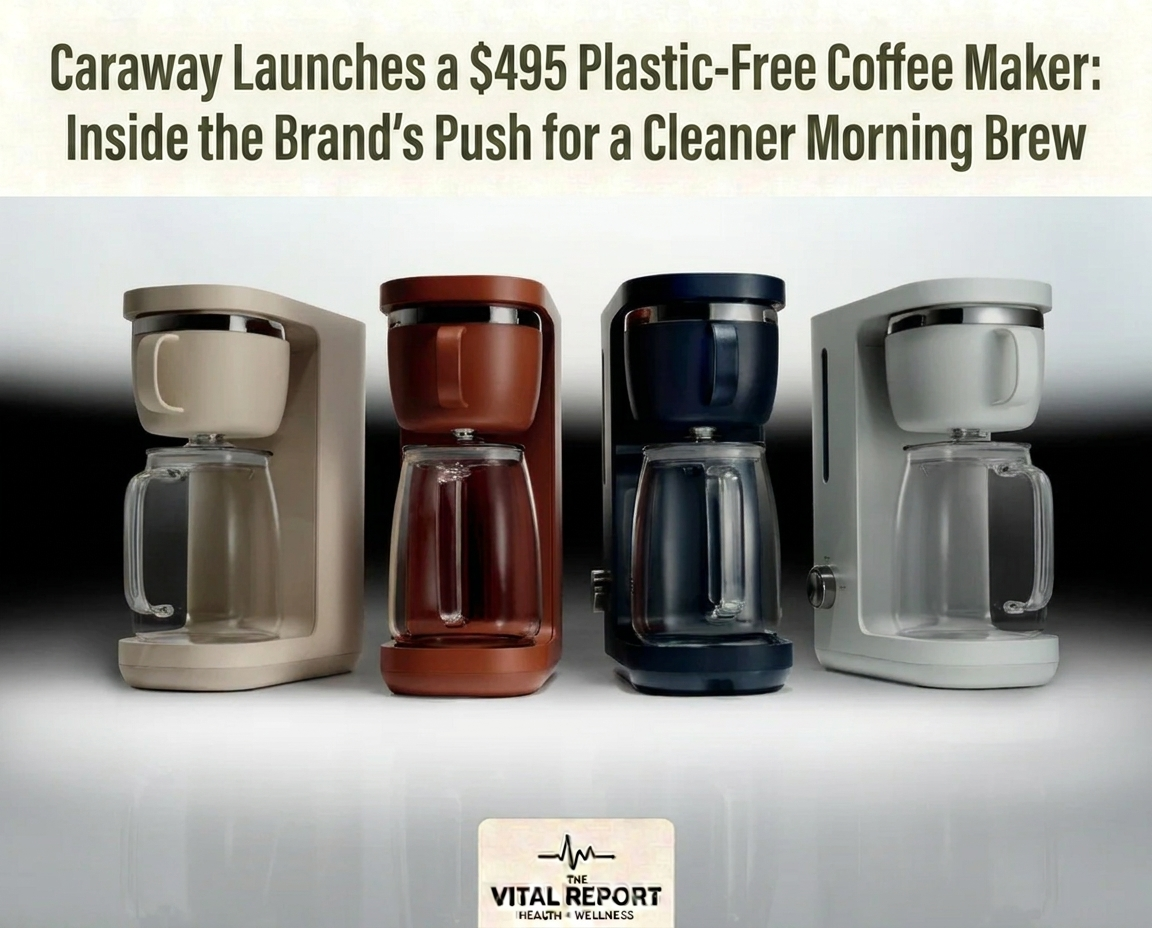
The company has officially launched the Caraway Coffee Maker, a $495, 10-cup drip machine built around what the brand calls its “Clean Brew System.” Instead of routing hot water through plastic tubing and components, Caraway uses a combination of glass and stainless steel throughout the entire brew path.
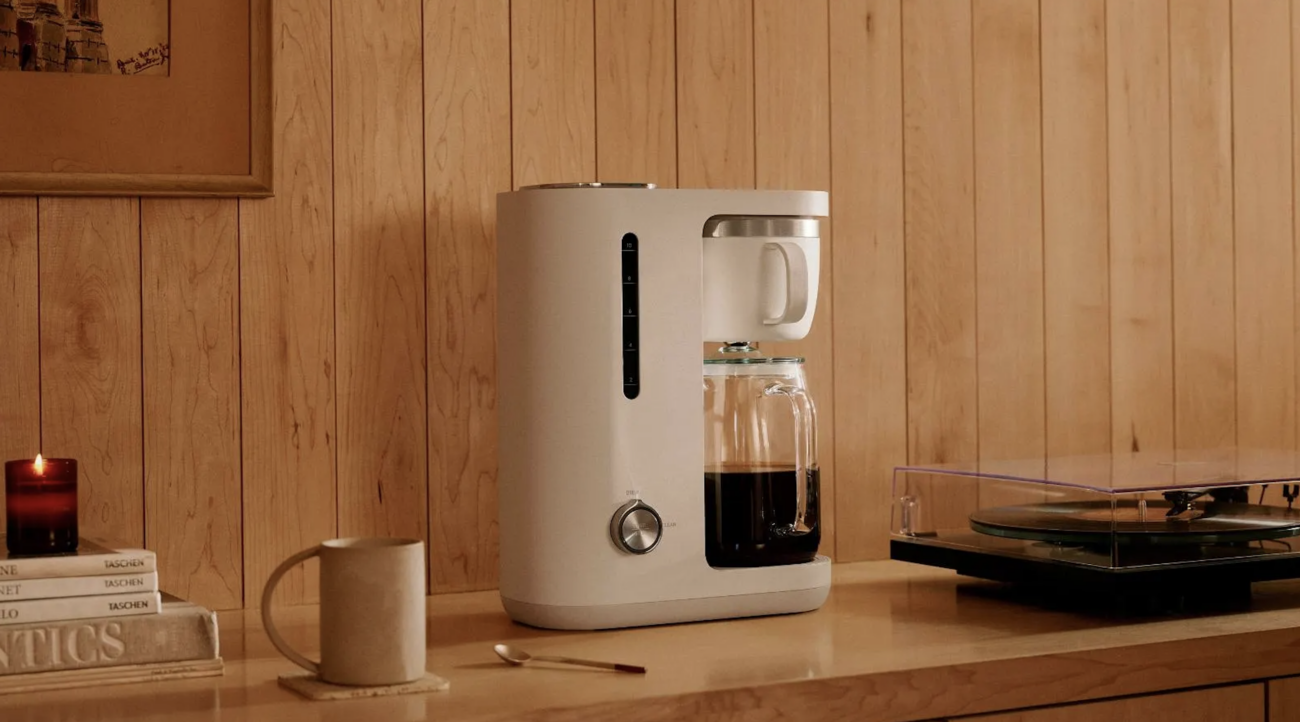
That means water begins in a glass reservoir, travels through a stainless steel water path and showerhead, reaches the coffee inside a stainless steel brew basket and reusable filter, and ultimately lands in a glass carafe.
The central promise is simple: no plastic touches the water or coffee during brewing.
It is a surprisingly significant product for Caraway. The Coffee Maker is the company’s first powered appliance since launching in 2019, and Caraway says it spent five years, more than 200 design iterations, and accumulated more than 10 pending patents while developing the machine.
But the bigger story may be what the launch says about the next phase of the clean-home movement.
Consumers have spent years examining ingredients in food, skincare, supplements, cookware, cleaning products, and water bottles. Increasingly, attention is moving beyond ingredients toward the materials that food and beverages touch before they reach the body.
Coffee makers could be one of the next products to get that treatment.
Caraway Is Taking Its Materials-First Strategy Into Appliances
The Coffee Maker makes more sense when viewed through the history of Caraway.
Founder Jordan Nathan launched the company in 2019 after an experience overheating a traditional nonstick pan prompted him to reconsider the materials used in everyday cookware. Caraway subsequently built its identity around modern kitchen products, particularly ceramic-coated cookware made without PTFE, PFOA, and PFAS.
The strategy helped turn something traditionally utilitarian — pots and pans — into a wellness and lifestyle purchase.
Caraway cookware became recognizable not only because of its materials story but because of its design. Muted colors, countertop-friendly aesthetics, organized storage systems, and social-media-ready kitchens became part of the brand.
The Coffee Maker applies essentially the same formula to another everyday kitchen product.
Make it visually distinctive.
Make materials part of the purchasing decision.
And take an appliance consumers have used for decades without thinking much about its internal construction and ask them to reconsider what is inside.
For Caraway, that means focusing heavily on plastic.
What Makes the Caraway Coffee Maker “Plastic-Free”?
Calling the entire machine plastic-free would be misleading.
The more precise distinction is that Caraway has designed a plastic-free brew path.
According to Caraway, its Clean Brew System includes a:
- Glass water reservoir
- Stainless steel internal water path
- Stainless steel showerhead
- Stainless steel brew basket
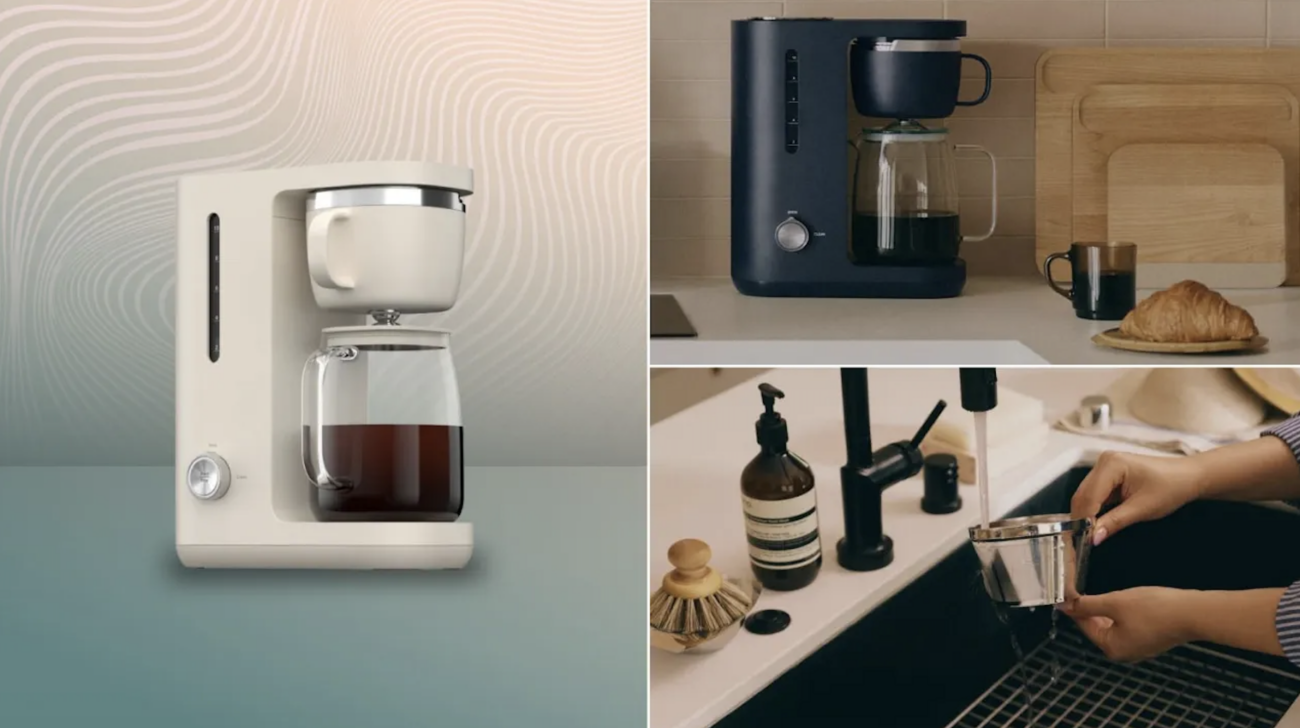
- Reusable stainless steel filter
- Glass carafe
The result is that water and brewed coffee are not intended to come into contact with plastic as they move through the machine.
That matters because many conventional automatic coffee makers contain plastic reservoirs, tubing, brew baskets, or other components that come into contact with water — including while that water is being heated.
Caraway has also said the Coffee Maker is made without PFAS, lead, and cadmium, with those claims verified through independent laboratory testing.
The design represents a larger shift in how wellness-oriented consumers are thinking about kitchen products.
The question is no longer only:
What am I eating or drinking?
Increasingly, it is also:
What did my food or drink touch before I consumed it?
Why Microplastics Are Becoming Part of the Coffee Conversation
The timing is important.
Microplastics have moved rapidly from an environmental issue into a consumer wellness conversation.
Researchers have detected microplastics in food, water, beverages, household environments, and human tissues. At the same time, scientists are still working to determine what different levels and types of exposure mean for long-term human health.
Coffee provides an interesting case because brewing combines two factors that researchers increasingly examine: plastic contact and heat.
A study published in Food Chemistry examined plastic-containing drip coffee bags and found that brewing with water at approximately 95°C could release thousands of microplastic particles. That study investigated coffee bags rather than automatic coffee machines, so the results cannot simply be applied to every plastic component inside a coffee maker. But it does illustrate why researchers are interested in what happens when hot water repeatedly interacts with certain plastics.
Another study examining common beverages sold in the UK detected microplastics across the beverages tested and reported higher average concentrations in hot beverages than comparable cold ones. The researchers suggested temperature may contribute to microplastic release from packaging materials.
None of that establishes that conventional coffee makers are inherently dangerous.
That distinction matters.
There is not currently enough evidence to say that switching from a conventional drip machine to a stainless-steel-and-glass machine will produce a measurable improvement in health.
Instead, Caraway is addressing a more straightforward consumer desire: reducing unnecessary plastic contact when an alternative exists.
That idea mirrors a broader trend Vital Report has been following. As we explored in our article on the rise of microplastic testing in everyday products, consumers are increasingly looking beyond food labels and examining bottles, storage containers, cookware, clothing, tea bags, and other products that may contribute to everyday plastic exposure.
The Coffee Maker brings that thinking directly into one of America’s most common daily routines.
Caraway Still Had to Make a Good Coffee Maker
Removing plastic would not matter much if the machine made bad coffee.
Caraway therefore appears to have spent considerable development time addressing extraction as well as materials.
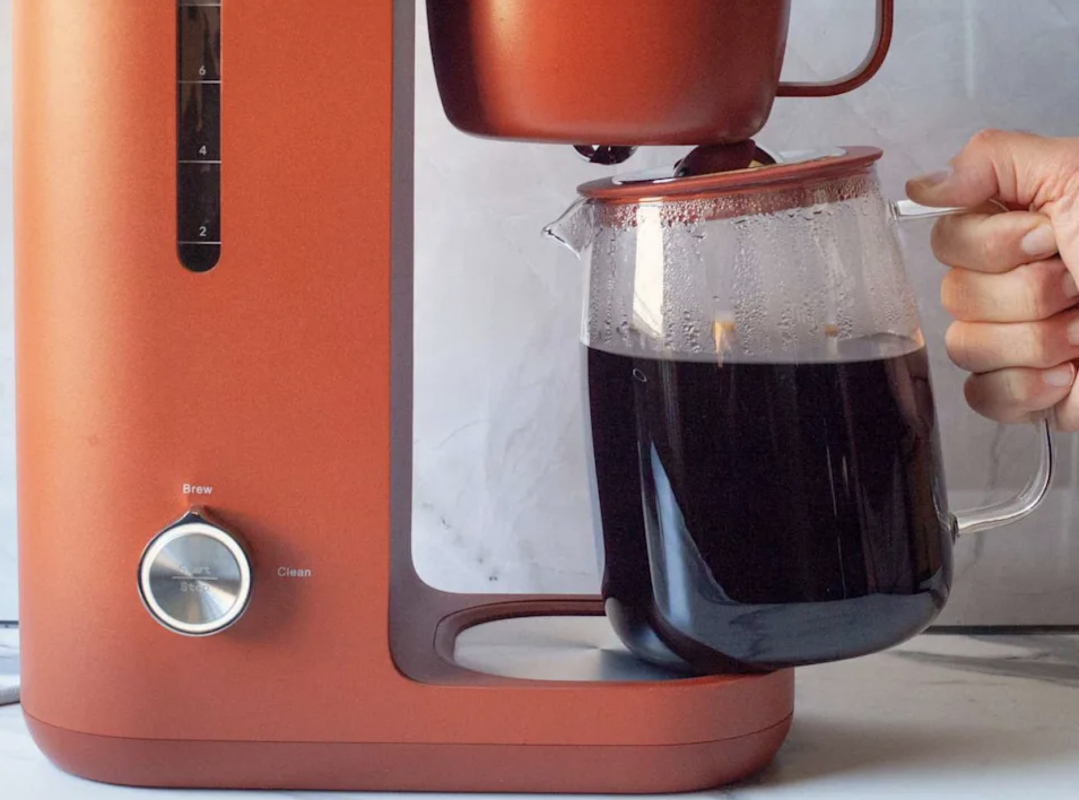
The machine operates between approximately 195°F and 205°F, a range commonly associated with proper drip-coffee extraction. It can brew between two and 10 cups and is designed to complete brewing within roughly four to eight minutes, depending on volume.
There is also a controlled bloom cycle.
Blooming involves initially wetting freshly ground coffee with a smaller amount of hot water, allowing trapped carbon dioxide to escape before the primary extraction continues.
It is a familiar step for people who make manual pour-over coffee, but less visible in conventional automatic drip machines.
Caraway’s stainless steel showerhead then distributes water across the coffee bed rather than concentrating water in one location.
Together, the temperature control, bloom cycle, and even saturation are designed to recreate some of the precision associated with manual brewing without requiring users to stand over a pour-over setup every morning.
The Machine Is Deliberately Simple
Caraway is also avoiding the increasingly complicated interface found on some premium appliances.
There is no giant touchscreen.
There are not dozens of coffee profiles.
Instead, the machine is controlled primarily through a single dial.
That decision fits Caraway’s broader approach to design: make the object attractive enough to leave on the counter but simple enough that using it does not feel like operating another piece of technology.
The machine also includes a built-in cleaning and descaling cycle, removable components, and dishwasher-safe parts.
Once brewing is complete, a stainless steel warming plate can keep the glass carafe warm for up to 90 minutes.
The Coffee Maker comes in Cream, Stone, Midnight, and Clay, allowing it to visually match other Caraway products.
Then There Is the $495 Price
The biggest barrier is obvious.
At $495, Caraway is not trying to compete with the inexpensive drip machine sitting in an office break room.
It is positioning the Coffee Maker as a premium kitchen appliance.
That puts the purchasing decision in a different category.
Consumers are not simply paying for a machine that puts hot water through coffee grounds. They are paying for the materials, industrial design, reusable filter, simplified interface, brand, and — perhaps most importantly — the plastic-free brew path.
That could make the product particularly attractive to consumers who have already switched to glass food containers, stainless steel water bottles, wooden cutting boards, plastic-free tea bags, and other products designed to reduce routine plastic contact.
For someone who drinks coffee every morning, the argument is that the coffee maker may be one of the most frequently used food-contact products in the kitchen.
Caraway is betting that a growing group of consumers will consider that worth paying more for.
Caraway Is Entering a Bigger “Clean Home” Opportunity
The Coffee Maker may also reveal where Caraway wants to go next.
The company started with cookware.
Then came bakeware, food storage, kitchen tools, linens, and other home products.
Now comes a powered appliance.
Caraway itself describes the Coffee Maker as its first powered appliance, making this less of a one-off product and potentially more of a new category for the company.
That opens an interesting question:
If consumers care about the materials inside their coffee maker, what appliance comes next?
Electric kettles.
Blenders.
Toasters.
Air fryers.
Food processors.
Rice cookers.
The modern kitchen contains numerous products where food, water, steam, or heat interact with plastic and other materials.
Caraway’s opportunity is to apply the same playbook that helped transform cookware into a wellness purchase across the rest of the kitchen.
Plastic-Free Could Become a Bigger Appliance Category
Caraway is unlikely to be the last company to focus on this.
For years, kitchen appliance marketing has centered primarily around convenience, speed, smart features, performance, and aesthetics.
Materials could become another major selling point.
The shift would mirror what happened in several other consumer categories.
Water bottles moved from disposable plastic toward reusable stainless steel and glass.
Food storage increasingly moved toward glass.
Cookware brands began competing around ceramic coatings, stainless steel, cast iron, and PFAS-related claims.
Even cutting boards are now being reconsidered as consumers become more aware of potential plastic shedding.
Coffee machines are a logical next target because they combine something consumed every day with heat and repeated material contact.
That does not mean every plastic component needs to disappear from every appliance.
It does mean brands may increasingly need to explain where plastic is used, whether it contacts food or water, and what happens when those materials are heated.
Transparency itself could become part of the product.
The Bigger Story Is Not Just Coffee
The Caraway Coffee Maker is interesting because it sits at the intersection of several trends.
Consumers are drinking coffee every day.
Premium coffee culture continues to turn brewing into a ritual.
Microplastics are receiving more attention.
Consumers are scrutinizing household materials.
And wellness is increasingly moving beyond supplements, workouts, and wearables into the physical environment people live in.
Caraway is packaging all of those trends into a single countertop appliance.
The $495 price will make it unrealistic for many consumers, and there is not enough scientific evidence to claim that using a plastic-free coffee maker will meaningfully improve someone’s health.
But that may not be necessary for the product to succeed.
Consumers do not always need proof that an alternative will transform their health before deciding they would rather have hot water travel through stainless steel instead of plastic.
Sometimes the appeal is simply reducing an exposure that feels unnecessary.
The Bottom Line
Caraway built its brand by asking consumers to think about the materials touching their food.
Now it wants them thinking about the materials touching their coffee.
Its new 10-cup Coffee Maker brings the company’s materials-first philosophy into powered appliances for the first time, using glass and stainless steel throughout the brew path so no plastic touches the water or coffee.
The machine combines that construction with controlled blooming, even saturation, 195–205°F brewing temperatures, a reusable stainless steel filter, a 90-minute warming plate, and Caraway’s signature minimalist design.
At $495, it is undeniably a premium purchase.
But the launch could point toward something much larger than one expensive coffee maker.
The clean-home movement is expanding from what consumers put into their bodies to what their food and beverages touch along the way.
If that shift continues, the inside of an appliance may soon matter just as much as what it can do.
And Caraway wants to get there first.