
Stress tracking has become one of the biggest features in wearable health.
Oura estimates it.
Garmin tracks it.
WHOOP builds recovery insights around it.
Smartwatches increasingly use heart rate, heart-rate variability, sleep, activity, and other physiological signals to tell users when their bodies appear to be under strain.
Mira wants to take a different approach.
Instead of estimating stress from the wrist, the women’s health technology company wants users to measure a biological signal associated with it directly at home.
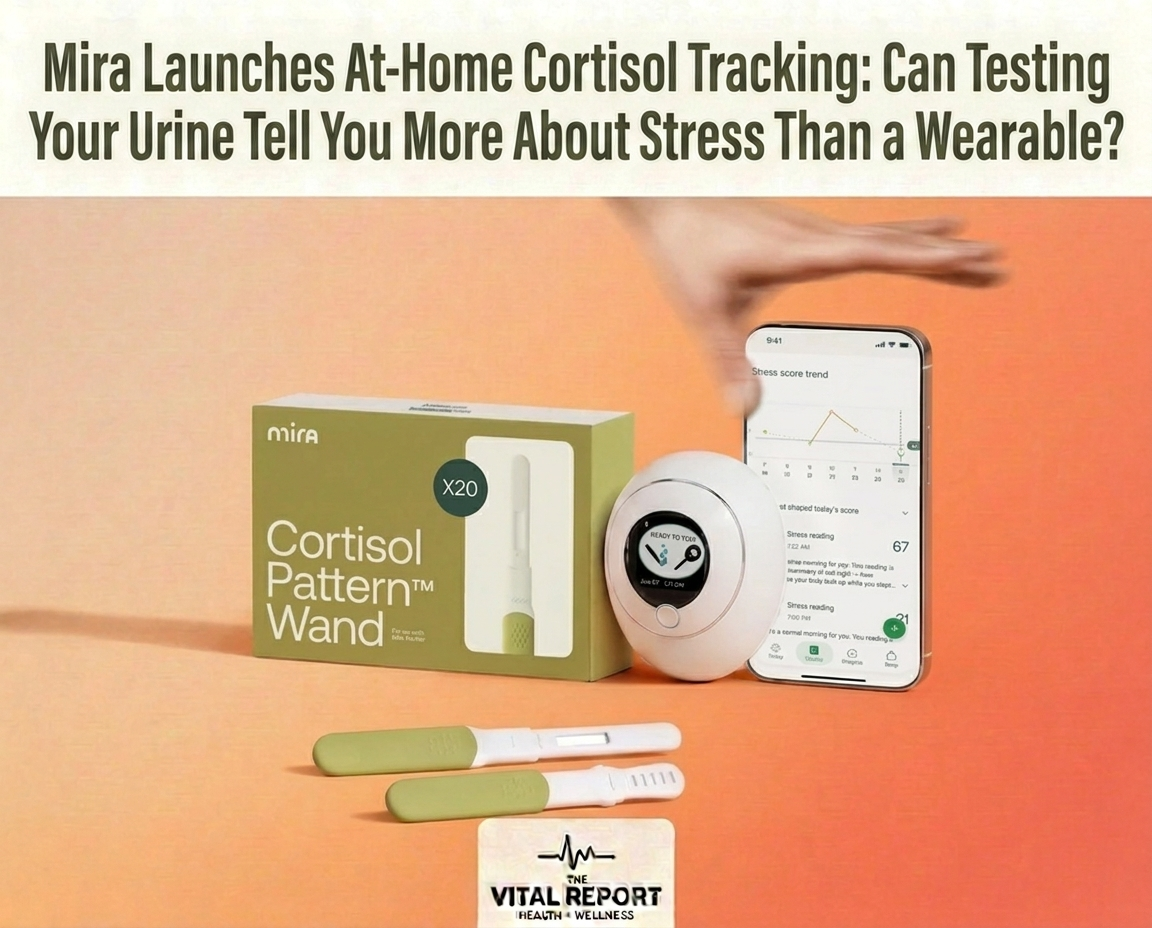
Mira has introduced its new Cortisol Pattern Kit, an at-home testing system designed to measure urinary free cortisol and show users how their cortisol patterns change across days and weeks.
The launch expands Mira beyond the fertility and reproductive hormone tracking that built its business and into the much larger world of everyday wellness.
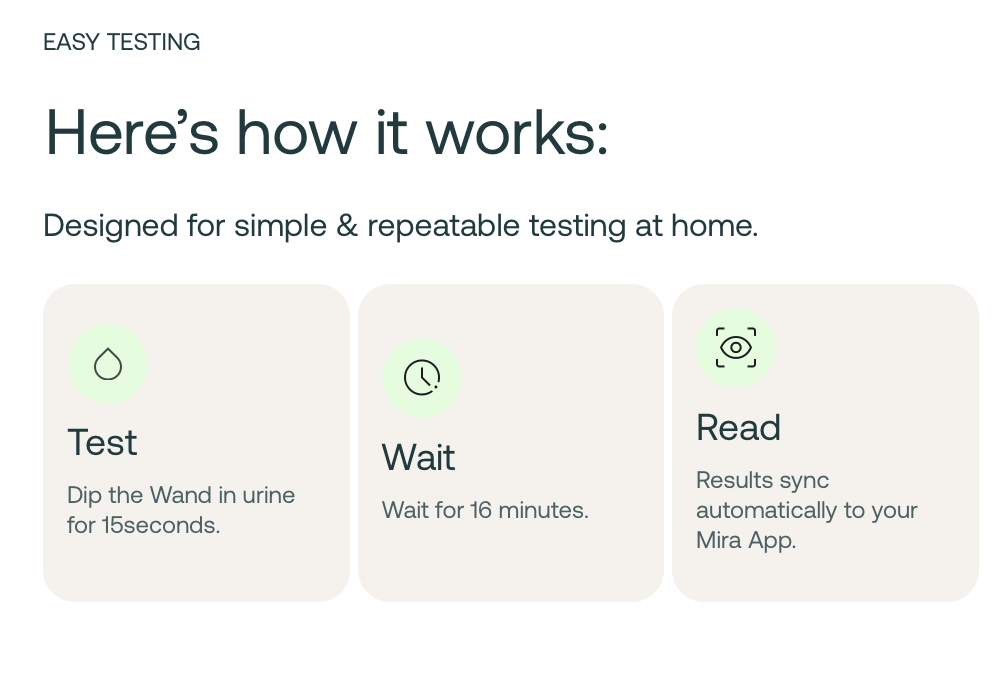
Users dip a disposable Cortisol Pattern Wand into urine, insert it into the existing Mira Monitor, and receive results through the Mira app in about 16 minutes. After roughly a week of testing, Mira builds a personalized baseline designed to show how an individual’s stress pattern changes over time.
And for Mira, that’s the key distinction.
It isn’t trying to give everyone the same definition of "normal."
It’s trying to show users what normal looks like for them.
Mira Is Moving Beyond Fertility
Mira originally built its platform around a very different use case.
Hormone tracking.
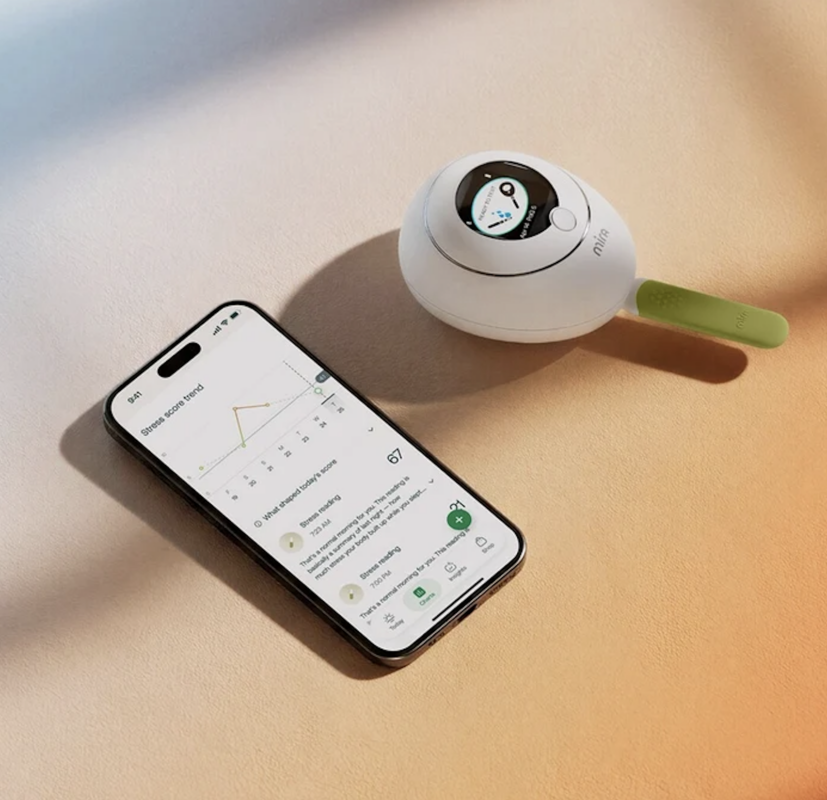
Its existing system allows women to test reproductive hormones at home using disposable testing wands, the Mira Monitor, and an accompanying app.
That model helped the company build a user base of more than 350,000 women, according to Mira.
Now the company is extending that same testing behavior into stress.
Instead of asking existing users to buy another wearable or learn another platform, Cortisol Pattern Wands work with the same Mira Monitor and app.
That could be strategically important.
Someone already using Mira to follow their cycle or hormone patterns can now theoretically place cortisol information beside that existing data.
Cycle.
Hormones.
Daily habits.
Cortisol.
All inside one platform.
Mira CEO and founder Sylvia Kang described the expansion as taking the company beyond reproductive health and into everyday wellness.
That’s a meaningful shift.
Because fertility may have been Mira’s entry point, but cortisol potentially gives it a reason to stay relevant to users much more frequently and across more stages of life.
What Exactly Is Mira Measuring?
The Cortisol Pattern Wands measure urinary free cortisol.
Cortisol is a steroid hormone produced by the adrenal glands and plays roles in metabolism, immune function, cognition, circadian rhythms, and the body’s response to stress.
But cortisol isn’t simply a "stress hormone" that should always be as low as possible.
Its levels naturally change throughout the day.
An overview from the National Center for Biotechnology Information on measuring human stress explains that cortisol follows circadian patterns and also responds to routine events and unexpected stressors. Cortisol measurements can be taken through blood, saliva, urine, and even hair, with each method capturing somewhat different information.
That natural variability is exactly why Mira isn’t positioning a single cortisol measurement as the answer.
It’s focusing on patterns.
Users repeatedly test and compare results against their own baseline.
Instead of:
"Is my cortisol high?"
The more relevant question becomes:
"Is my cortisol behaving differently from how it usually does?"
That’s a much more nuanced way to approach the hormone.
Morning vs. Evening Could Be Especially Interesting
Timing matters with cortisol.
In people following conventional sleep schedules, cortisol generally rises around waking, peaks in the morning, and then declines throughout the day before reaching lower levels at night.
That’s why looking at one isolated measurement can provide limited information about an individual’s overall pattern.
Mira offers two testing options.
The 20-Wand option is designed around once-daily morning testing.
The 30-Wand option allows users to test in the morning and again in the evening, providing a deeper view of how their cortisol pattern changes throughout the day.
For the second measurement, Mira recommends testing roughly 10 to 12 hours after waking rather than following one universal clock time.
That makes sense given cortisol’s relationship with circadian rhythm.
The National Heart, Lung, and Blood Institute notes that clinicians and researchers can use changes in cortisol alongside other signals when evaluating natural sleep-wake patterns.
Mira isn’t diagnosing circadian disorders.
But it is borrowing the broader idea that the shape of a hormone’s pattern can matter more than one number.
Mira Wants to Compete With Wearable Stress Scores
This may be the most interesting part of the launch.
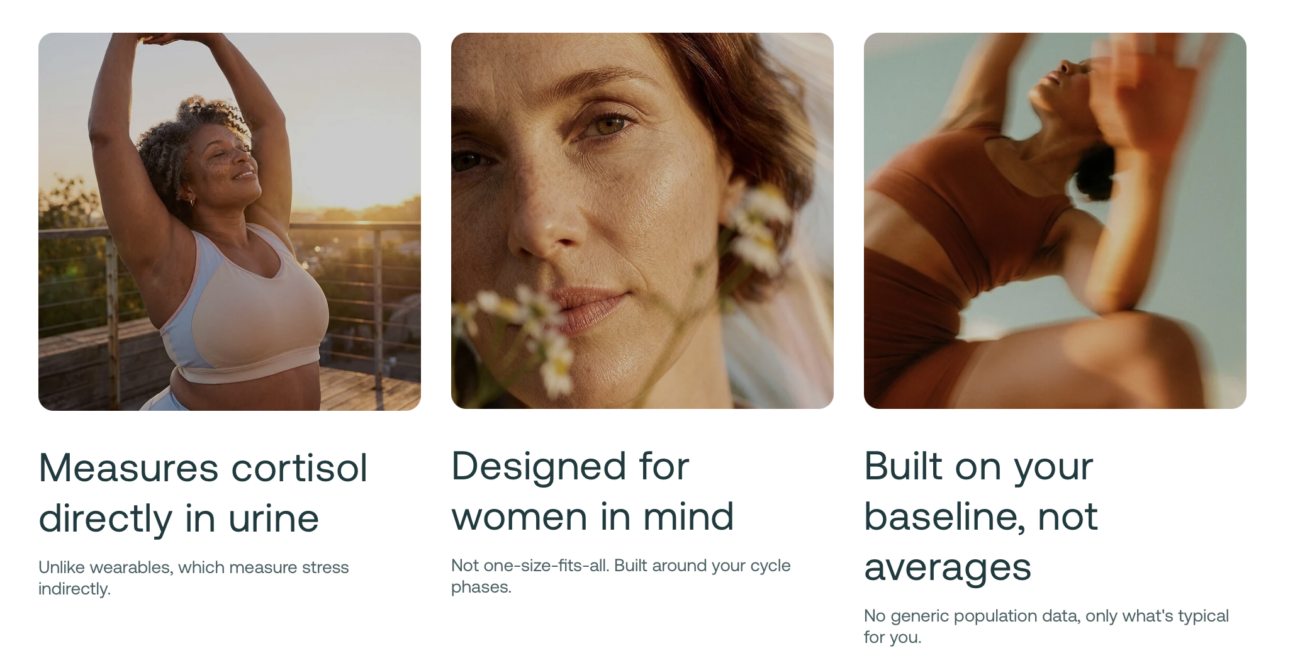
Consumer wearables generally don’t measure cortisol directly.
Instead, they estimate physiological stress from other signals.
Heart rate.
HRV.
Temperature.
Sleep.
Movement.
Those metrics can provide useful information, but they’re still indirect indicators.
Mira is making that distinction central to its pitch.
Its Cortisol Pattern Wands measure cortisol directly in urine and then place repeated measurements against an individual’s baseline.
That creates a new kind of competition in consumer health technology:
estimated stress vs. measured biomarkers.
A wearable has one enormous advantage.
It’s passive.
You put on a ring or watch and it collects information throughout the day with very little effort.
Mira requires someone to collect urine, dip a wand, insert it into the monitor, and wait for the result.
But Mira has a different advantage.
It’s measuring an actual biochemical signal.
The trade-off is essentially:
continuous convenience vs. direct measurement.
And that could become a much bigger theme across consumer health.
The Baseline May Be More Important Than the Number
Mira says it typically takes around seven tests to establish a personal baseline.
After that, the app may recommend testing a few times each week rather than every day.
That approach could help avoid one of the problems with consumer health data:
obsessing over individual readings.
Cortisol can fluctuate.
Sleep can affect it.
Exercise can affect it.
Illness can affect it.
Daily schedules and psychological stressors can affect it.
And time of day matters significantly.
Research into cortisol measurement has long emphasized the importance of repeated sampling when researchers want to characterize daily cortisol patterns. A study indexed by PubMed examining sampling intensity and diurnal cortisol highlights how the number and timing of measurements influence researchers’ ability to capture features of the cortisol rhythm.
Mira’s consumer version simplifies that concept.
Don’t obsess over one result.
Build your baseline.
Then watch what changes.
But Cortisol Isn’t a Perfect "Stress Score"
This is where some caution is necessary.
Cortisol is associated with the body’s stress response.
But it isn’t a direct numerical measurement of how psychologically stressed someone is.
Cortisol has many physiological roles and follows a natural daily rhythm independent of whether someone feels stressed.
That means a high or low reading shouldn’t automatically be interpreted as proof that something is wrong.
There are also major differences between wellness tracking and medical cortisol testing.
When doctors evaluate disorders involving abnormal cortisol production, testing may involve 24-hour urinary free cortisol, late-night salivary cortisol, blood measurements, dexamethasone suppression testing, or combinations of tests.
The National Institute of Child Health and Human Development’s overview of Cushing syndrome testing, for example, describes 24-hour urine collection and late-night salivary testing among the methods clinicians may use when investigating abnormal cortisol production.
Mira isn’t replacing those tests.
The company explicitly says its Cortisol Pattern Kit is a wellness product and isn’t intended to diagnose stress, an endocrine condition, or another medical condition.
That’s an important distinction.
This Could Connect Stress With Women’s Hormone Data
Where Mira may have an advantage is context.
Cortisol trackers don’t exist in isolation inside its platform.
Users may already be following reproductive hormone and cycle information.
Now cortisol can sit alongside it.
That could allow someone to notice patterns around periods of poor sleep, demanding weeks, changes in routine, exercise, or different points in their cycle.
Mira is specifically positioning the product around women’s biology rather than a one-size-fits-all stress score.
That fits with the company’s broader strategy.
It began with fertility.
Expanded toward cycle and hormone tracking.
Moved into perimenopause.
And now it’s adding stress-pattern information.
Vital Report has been watching the same trend across women’s health technology. In our recent coverage of Eli Health and the move toward easier at-home hormone tracking, we explored how consumer health companies are trying to make hormone information more accessible outside traditional clinical testing.
Mira is pushing that concept in a different direction.
Instead of adding another reproductive hormone, it’s adding a biomarker that could connect reproductive health with everyday wellness.
Consumer Health Is Moving Toward Biomarkers
The bigger story may not actually be cortisol.
It’s consumer access to biomarkers.
For years, most consumer health technology lived on the surface of the body.
Watches measured heart rate.
Rings measured temperature.
Accelerometers counted movement.
Algorithms combined those signals into increasingly sophisticated scores.
Now consumer health companies are pushing deeper.
Continuous glucose monitors have brought glucose data into everyday wellness.
At-home fertility platforms measure hormones.
Blood-testing startups are making lab panels easier to order.
And emerging wearable technologies are attempting to measure more biochemical information without requiring traditional clinical testing.
Mira’s Cortisol Pattern Kit fits directly into that evolution.
It asks users to do slightly more work than wearing a smartwatch.
But in return, it offers something most wrist-based devices can’t:
a direct biochemical measurement.
The Bottom Line
Mira is turning cortisol into another consumer health metric.
Its new Cortisol Pattern Kit measures urinary free cortisol at home using disposable wands that plug into the same Mira Monitor already used for hormone tracking. Results appear in the Mira app in roughly 16 minutes, and about a week of consistent testing is used to establish a personal baseline.
Users can then follow how their cortisol patterns change across days and weeks—and potentially compare those shifts with their cycle, hormone data, sleep, routines, and other parts of daily life.
That’s fundamentally different from the stress score on a smartwatch.
Wearables estimate.
Mira measures a biomarker.
But that doesn’t make cortisol a perfect measurement of "stress," nor does it make the product a substitute for medical cortisol testing. Mira itself makes clear that the Cortisol Pattern Kit isn’t intended to diagnose stress or endocrine disease.
The more interesting opportunity is somewhere in between.
Consumer health technology has spent years telling people how many steps they took, how well they slept, and whether their heart rate looked different from normal.
Now the next generation of devices is starting to ask a deeper question:
What if consumers could track what’s happening biochemically, too?
For Mira, cortisol is the next step.
And it could mark an important transition for the company itself—from a fertility tracker into a much broader at-home health platform.
Tighten the opening for faster impact