

Creatine doesn’t exactly need reinventing.
It’s inexpensive, widely available, extensively studied, and has become one of the most recognizable supplements in sports nutrition.
But that hasn’t stopped supplement brands from trying to rethink how people take it.
The latest example comes from Promix Nutrition.
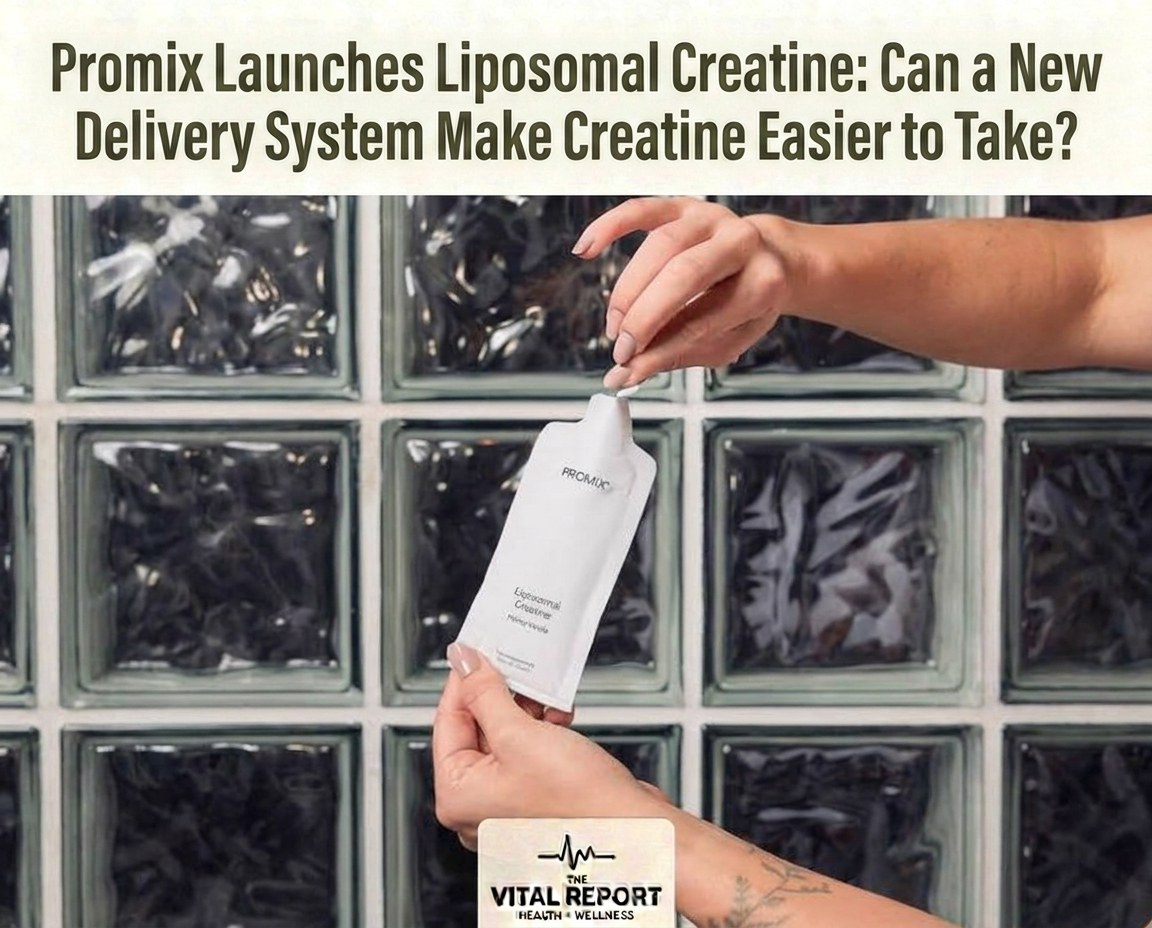
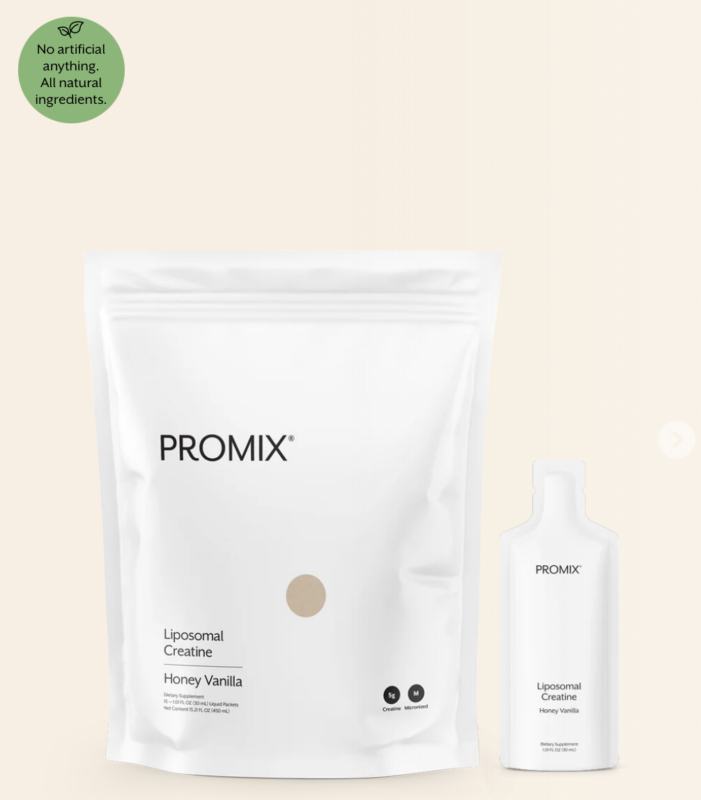
The company has launched a new Liposomal Creatine, replacing the familiar tub-and-scoop experience with individual liquid packets containing 5 grams of micronized creatine monohydrate.
According to Promix, the product combines creatine with coconut glycerin and a liposomal mixture made with California almonds and avocado oil. The company positions the formula around easier digestion, convenience, and what it describes as enhanced absorption.
Each pouch contains 15 individual packets and currently costs $39, putting the price at roughly $2.60 per serving.
That’s dramatically more expensive than conventional creatine powder.
So Promix isn’t really trying to compete with basic creatine on price.
It’s betting that delivery format can become the next point of differentiation in one of the supplement industry’s most established categories.
Creatine Is Having a Much Bigger Moment
Creatine has been used in sports nutrition for decades, but its audience has expanded far beyond bodybuilders.
The basic mechanism is well established.
Creatine helps increase the body’s phosphocreatine stores, which can help regenerate ATP during short bursts of high-intensity activity. That is one reason creatine supplementation has become so closely associated with strength, power, training capacity, and lean mass.
The International Society of Sports Nutrition’s position stand on creatine describes creatine monohydrate as one of the most effective ergogenic nutritional supplements available for increasing high-intensity exercise capacity and lean body mass during training.
But the conversation around creatine is also getting broader.
Research has increasingly explored its potential role in cognition and brain health, particularly because the brain also relies heavily on cellular energy.
That has helped shift creatine’s image.
Instead of being viewed exclusively as something athletes take before or after lifting weights, it is increasingly being positioned as an everyday wellness supplement.
Promix is leaning into both sides.
The company markets its Liposomal Creatine around lean muscle and cognition, rather than limiting the product exclusively to sports performance.
So What Exactly Is Liposomal Creatine?
This is where the new product gets more interesting.
A liposome is essentially a microscopic structure built from lipids that can encapsulate another substance.
Liposomal delivery systems are already used across pharmaceuticals, cosmetics, and supplements. The basic idea is to surround an active ingredient with a lipid-based structure that may change how it is protected, transported, or absorbed.
Promix is applying that concept to creatine.
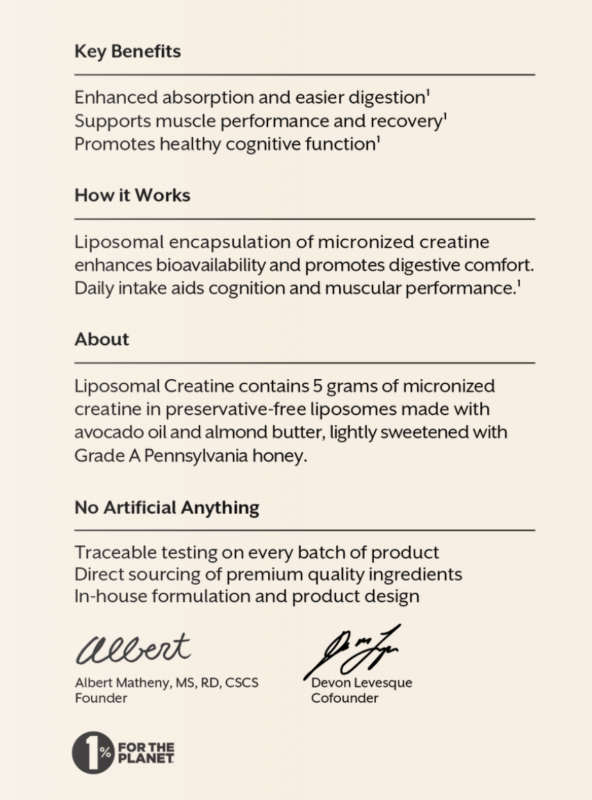
Its formula combines 5 grams of micronized creatine monohydrate with coconut glycerin, California almonds, avocado oil, honey, and other ingredients. The almonds and avocado oil provide the lipid components used to create the liposomal structure.
Unlike powdered creatine, the product arrives pre-mixed in a 30-milliliter packet.
You can take it directly or mix it into a beverage.
No scoop.
No shaker.
No waiting for powder to dissolve.
That convenience may ultimately be one of the product’s strongest arguments.
Promix Is Making Absorption the Big Pitch
Promix describes its Liposomal Creatine as offering enhanced absorption and easier digestion.
The company says the liposomal structure protects the creatine and acts as a carrier designed to help move nutrients through the intestinal wall more efficiently.
That’s an attractive pitch.
But there’s an important distinction consumers should understand.
The evidence supporting creatine monohydrate itself is extensive.
The evidence specifically supporting liposomal creatine is not.
Promix actually acknowledges this in its own educational material.
In a September 2026 article examining creatine timing, Promix notes that it could not identify a published human trial specifically testing liposomal creatine. The company explicitly distinguishes its own enhanced-bioavailability claims from what has currently been demonstrated in peer-reviewed human research.
That’s an important piece of context.
It doesn’t mean liposomal creatine cannot work.
It means consumers shouldn’t confuse the enormous research base supporting creatine supplementation with direct evidence that a liposomal version produces better outcomes than conventional creatine monohydrate.
For now, the strongest established ingredient in the packet remains the same one people have been taking for decades:
creatine monohydrate.
The 5-Gram Dose Matters
One thing Promix isn’t doing is shrinking the amount of creatine just because it changed the delivery system.
Each packet contains 5 grams of micronized creatine monohydrate.
That’s significant because some alternative supplement formats can trade dosage for convenience.
Gummies are a good example.
Putting active ingredients into smaller, more consumer-friendly formats can sometimes limit how much of the ingredient actually fits into each serving.
Promix avoids that issue.
Its liposomal packet contains the same 5-gram amount offered by a standard serving of the company’s micronized creatine powder.
So the comparison isn’t necessarily:
more creatine vs. less creatine.
It’s:
5 grams in powder form vs. 5 grams in a pre-dissolved packet.
That makes the product much easier to understand.
But Convenience Comes With Calories
The Liposomal Creatine also isn’t nutritionally identical to a scoop of plain creatine powder.
Each packet contains 140 calories and 25 grams of carbohydrates, including 2 grams of added sugar. It also contains almonds, making that allergen relevant for consumers.
The ingredient list includes coconut glycerin, California almonds, Grade A Pennsylvania honey, avocado oil, and vanilla extract alongside the micronized creatine.
That’s a meaningful difference.
Someone adding a scoop of plain creatine monohydrate to water is essentially taking the active ingredient itself.
Promix’s Liposomal Creatine is closer to a formulated supplement experience.
That may be attractive for someone who values taste, convenience, or the grab-and-go format.
But someone specifically trying to minimize calories or carbohydrates may prefer conventional powder.
The Price Difference Is Even Bigger
Then there’s cost.
Promix currently sells a pouch containing 15 servings for $39, or approximately $2.60 per serving.
Its conventional creatine looks very different economically.
The company’s 180-serving micronized creatine powder currently costs $59, which comes out to roughly $0.33 per serving.
That makes the liposomal version roughly eight times more expensive per serving at current one-time purchase pricing.
And both provide 5 grams of creatine monohydrate.
That price difference makes the value proposition pretty clear.
Consumers aren’t paying for more creatine.
They’re paying for the format.
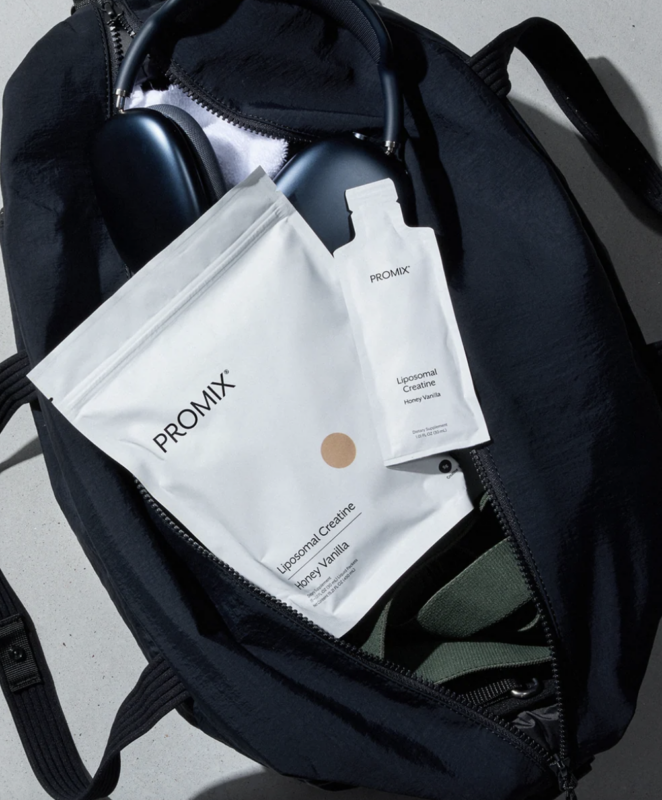
Individual packets are easier to throw into a gym bag, backpack, office drawer, or carry-on. They don’t require measuring or mixing. And for people who dislike the texture or routine of creatine powder, that could make consistent supplementation easier.
That last point matters because creatine isn’t something that needs to feel complicated.
Consistency is more important than creating an elaborate supplementation ritual.
Supplements Are Becoming More Format-Driven
Promix’s launch also fits into a much bigger wellness trend.
Supplement brands are increasingly rethinking not just what consumers take, but how they take it.
Powders are becoming sticks.
Pills are becoming gummies.
Electrolytes are becoming flavored packets.
Protein is moving from tubs into bars, cereal, chips, coffee, desserts, and ready-to-drink beverages.
And now one of the most traditional powder-based sports supplements is being turned into a portable liquid packet.
That’s partly about convenience.
But it’s also about expanding the audience.
Someone who has been taking creatine powder every morning for five years may have little reason to change.
The bigger opportunity could be consumers who know about creatine but haven’t built the habit because they don’t want another tub of powder sitting on their kitchen counter.
Make the experience easier and more familiar, and suddenly the addressable audience becomes larger.
Creatine Is Becoming a Wellness Ingredient
There’s another reason the timing makes sense.
Creatine itself is undergoing a repositioning.
Its traditional identity was almost entirely connected to muscle.
Now brands are increasingly talking about brain health, healthy aging, recovery, and everyday performance alongside strength.
Vital Report has been tracking that shift across the supplement category, including our recent look at the most popular creatine brands and how creatine is moving further into mainstream wellness.
Promix’s positioning reflects exactly that evolution.
The product page lists the Liposomal Creatine as best for “cognition and lean muscle.”
Those two words tell you a lot about where the category is going.
Creatine is no longer being sold only to someone chasing a new bench-press PR.
It’s increasingly being marketed to anyone interested in physical and cognitive performance.
The Bottom Line
Promix isn’t reinventing creatine.
It’s reinventing the package around it.
Its new Liposomal Creatine delivers 5 grams of micronized creatine monohydrate in an individual liquid packet made with coconut glycerin, almonds, avocado oil, honey, and other ingredients. The company positions the liposomal system around improved absorption and digestive comfort while giving consumers a scoop-free, shaker-free way to take creatine.
But there’s an important caveat.
Creatine monohydrate has a deep body of research behind it. Liposomal creatine does not yet have comparable human evidence, and Promix itself says it could not find a published human trial specifically testing the format as of September 2026.
So the clearest innovation here isn’t necessarily better creatine.
It’s easier creatine.
And that may still be valuable.
As supplements move from niche performance products into everyday wellness routines, brands increasingly have to compete on more than ingredients.
They have to compete on convenience, experience, portability, and whether people actually want to take the product every day.
Promix is betting that even something as established as creatine monohydrate still has room for a new format.